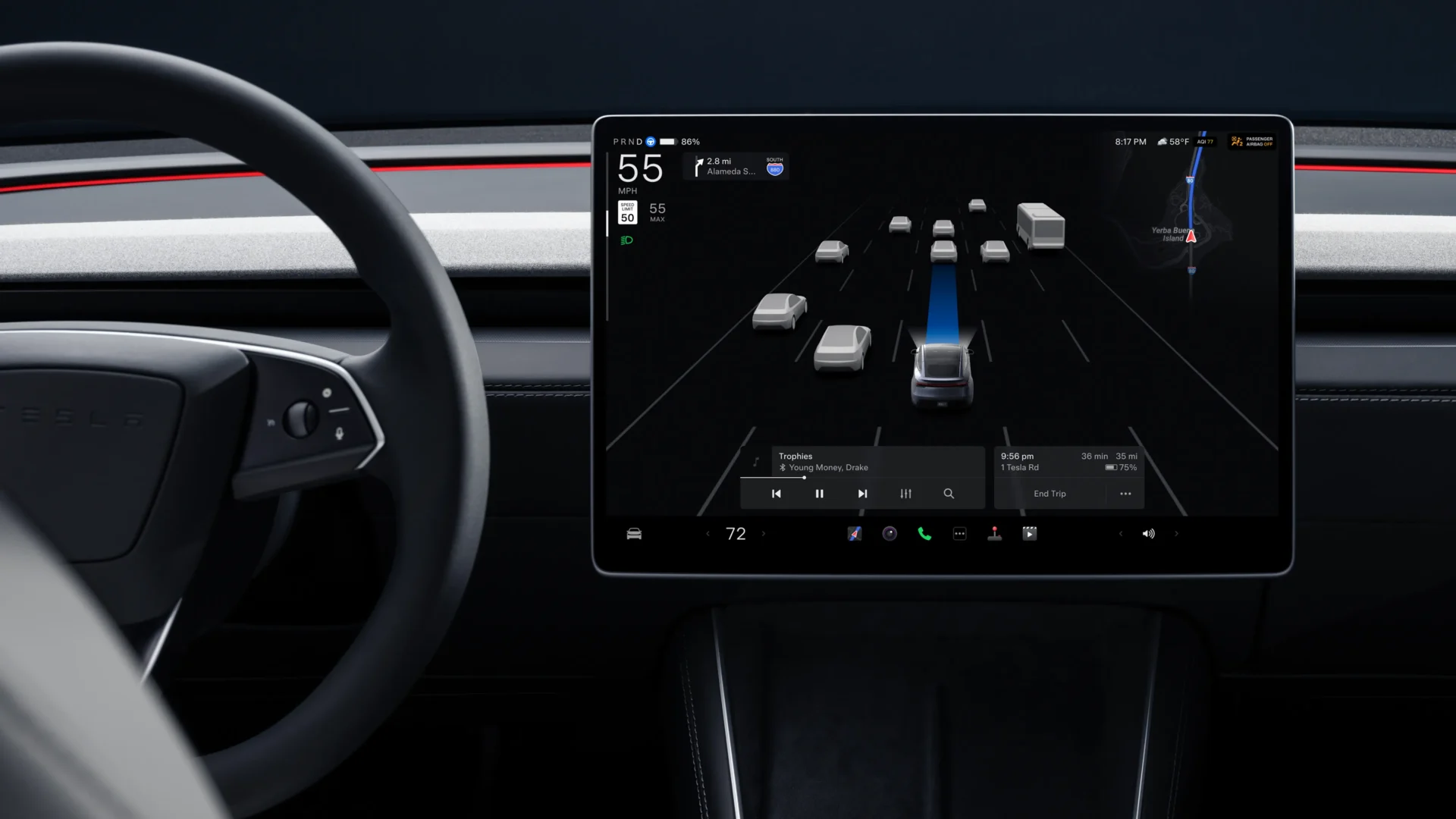

Elon Musk said Tesla is working on a Full Self-Driving (Supervised) update that will remember individual user preferences, and his post said drivers will not need to keep correcting the car in the same ways.

He had already said FSD will remember specific interventions and adapt to each owner’s driving preferences, which marks a move away from one fixed driving style for every user.
Earlier that week, Musk replied to an owner who said FSD kept leaving express or carpool lanes too early and moving into slower traffic, and he answered that the car will start to remember specific interventions and match each person’s individual preferences. That reply is the clearest public sign yet that Tesla wants the software to learn from repeated owner corrections instead of treating every driver the same way.
In June, Musk said destination parking is now the biggest reason people intervene with FSD, and he added that critical safety interventions have become extremely rare. He said future releases will remember preferred parking spots at common places such as home, work, and school, and the system should learn if an owner likes to back into a space or pull straight in.
How Tesla is collecting the data
Tesla has already added a more structured feedback flow after FSD disengagements, and drivers now see a prompt that asks why they took over. The menu uses labels such as Preference, Discomfort, Navigation, and Critical, and some builds let owners record a short voice note after the takeover.
Then Tesla revised the menu by replacing “Other” with “Navigation” after owners said route-choice errors were hard to report, which gives the company cleaner data on lane and routing complaints. That change is relevant here, since repeated interventions with clear labels give Tesla a path to connect owner feedback with future behavior on similar drives.
What owners may notice first
If Tesla ties those intervention labels to a driver profile, FSD could start staying in fast lanes for owners who routinely correct early exits, and it could choose routes that match repeated manual decisions. It could do the same with parking behavior, including usual spots at familiar places and the choice between backing in or pulling forward.
And comfort preferences may become more personal too, with repeated “Discomfort” interventions helping the system learn gentler gaps, calmer turns, or more conservative merges for drivers who want that behavior. But Tesla has not published a technical guide that spells out exactly how many of those behaviors will be adjustable in the first release.
Tesla is also preparing FSD version 15 with roughly ten times more parameters than the current consumer model, with timing described as later this year or early next year. A larger model could give Tesla more room to handle the same road case in different valid ways, which is a basic requirement for software that tries to drive more like its owner.
Still, Tesla’s own support pages say FSD (Supervised) does not make the car autonomous and requires an attentive driver who is ready to intervene at any time. Tesla says feature timing can depend on software development and regulatory approval, and Musk has not given a firm release date or version number for full preference memory.
Questions remain on how Tesla will store personal driving profiles, how owners may reset them, and how clean the training data will be if some drivers tap random feedback just to clear the prompt.
Many current interventions are no longer about avoiding danger, but about getting the car to act the way the owner expects on familiar roads and at familiar destinations. And if Tesla gets this right, FSD will still be supervised, but it should feel less generic on daily drives and require fewer repeat corrections from owners who use it often.
We’ve launched an official Tesla Owners Online Forum. Join early and claim your "Founding Fuel" badge.