
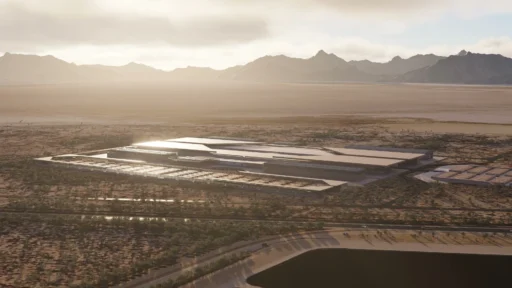
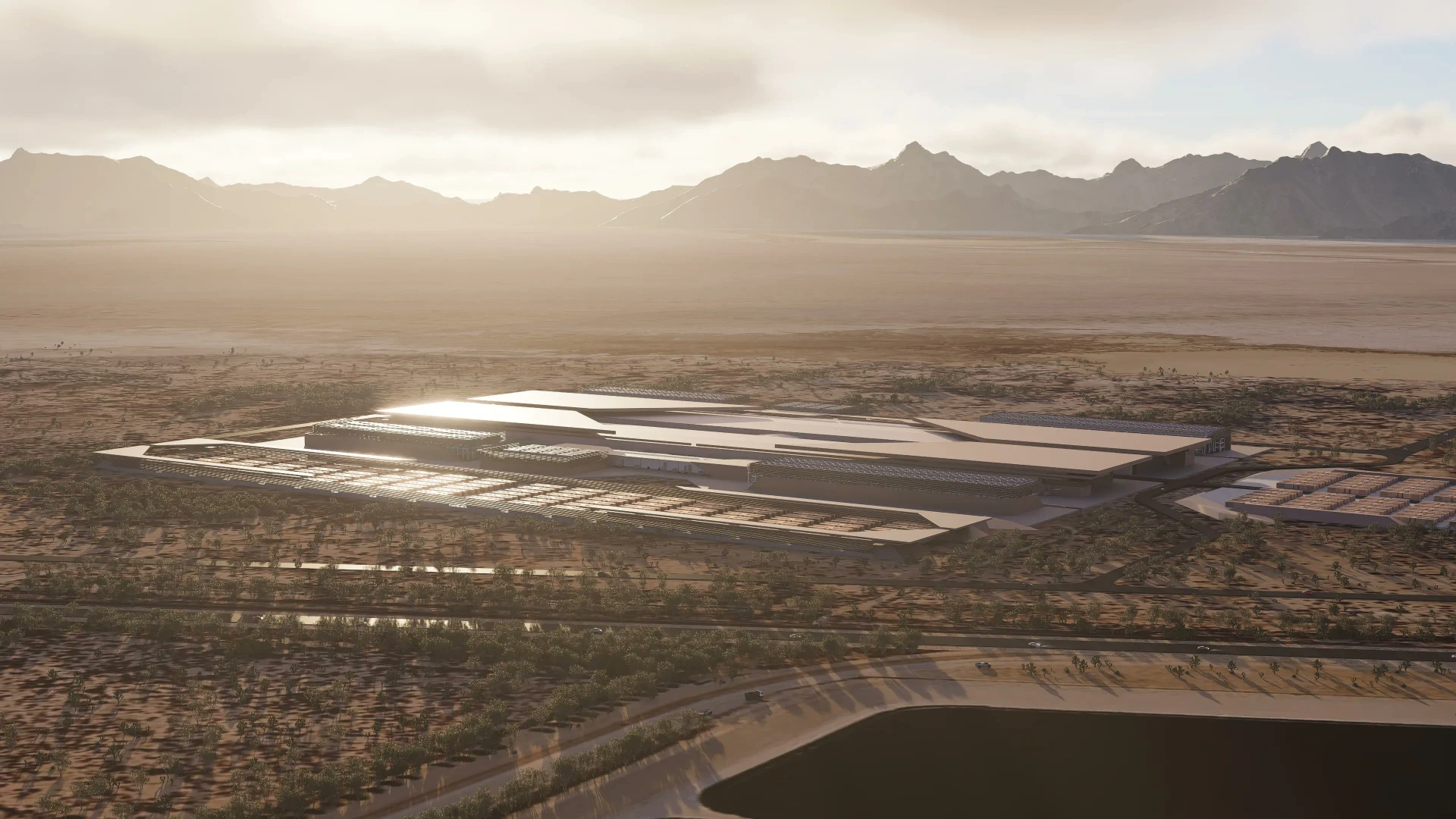

SpaceX said on Thursday it plans to spend about $50 billion on an artificial intelligence supercomputing campus in Cochise County, Arizona, and the site could draw up to 6 gigawatts of electricity at full buildout. The company announced the project together with a $24 billion supercompute facility at Starbase, Texas, which brings its planned spending on the two sites to more than $74 billion. The Arizona campus still needs county approval.
What SpaceX plans to build
Called the Cochise Supercomputer Campus, the development would sit on 747 acres along U.S. Highway 191, next to the Apache Generating Station and a few thousand feet from the Willcox Playa, about 80 miles east of Tucson. Company filings indicate up to nine buildings of roughly 493,000 square feet each, or 4.44 million square feet in total before support facilities.
According to SpaceX, the campus will train its superintelligence models and back scientific and engineering work. Construction is scheduled to start in 2027, with capacity arriving in four phases of about 1.5 GW each. An Arizona Republic analysis found the campus would use about 2.5 times the electricity of every data center in Maricopa County combined.
The Oct. 30 permit application came from an affiliate called Tombstone Resources LLC, and a SpaceX representative later told residents the company’s name “draws attention” from outside the county.
Grid supply and battery storage
All of the campus’s electricity would come from the grid. Under the plan, the wholesale cooperative AEPCO would handle generation and transmission, and Sulphur Springs Valley Electric Cooperative, or SSVEC, would provide retail service. SpaceX says it will fund about $3.6 billion in grid upgrades and transfer them to AEPCO at no cost to its members.
On top of that, the company plans up to 24 GWh of grid-connected battery storage, which would rank among the largest battery installations planned in the United States. The batteries would provide backup electricity, stabilize the regional grid, support local voltage and absorb swings in demand, and new solar generation in the region would supply electricity during the day.
There would be no dedicated on-site generating plant, fuel storage yard or gas turbines. However, each building would keep 10 MW of natural gas standby generators for critical equipment, running only during utility outages and periodic tests. Still, filings do not fully identify where the new supply would come from.
Promised savings for co-op members
SpaceX projects that SSVEC residential customers would see electricity bills fall by 10% to 40%. Beyond that, it expects up to $260 million a year in extra benefits for cooperative members at full buildout, plus up to $200 million a year for co-op members across the state. But the bill cuts need approval from the Arizona Corporation Commission, and a letter from SSVEC in the filing describes the benefits as still under discussion and not guaranteed.
Water use and cooling
Water is a sensitive issue in the Willcox basin. Instead of evaporative cooling, the buildings would use dry cooling with a closed-loop system that is filled once and reused for up to 10 years. The company projects zero ongoing industrial water consumption, with yearly use equal to about 20 to 30 Arizona homes, or less than 2.5% of what a single center-pivot irrigation system uses in a year.
The project would bring roughly 5,500 construction jobs and about 1,000 permanent positions. SpaceX estimates up to $103 million in new property tax revenue each year, which it says would support public education, infrastructure and essential local services, and it is inviting local suppliers to bid on construction work.
Wildlife, lighting and noise
Each winter, sandhill cranes gather at the Willcox Playa, and SpaceX says the campus design accounts for that habitat. Outdoor lights would stay off unless work is underway, with active fixtures shielded and aimed downward under Cochise County’s dark-sky rules, and the company plans to seek waivers when nighttime construction lighting is needed. To cut noise, equipment would be placed away from neighboring properties where possible, with setbacks and extra screening.
Local reaction
Nearly 300 people packed a SpaceX-hosted meeting at Cochise Elementary School on Nov. 4, and many held “No Data Center” signs. A petition asking county officials to deny the permit has collected about 2,400 signatures. Some residents, however, applauded the company’s presentation.
The land is zoned rural, so SpaceX needs a special use authorization. The Cochise County Planning and Zoning Commission will hear the request on Dec. 9 in Bisbee, and analysts say projects of this size are often scaled back before construction begins.
Discuss this on Tesla Owners Forum →
We’ve launched an official Tesla Owners Online Forum. Join early and claim your "Founding Fuel" badge.