
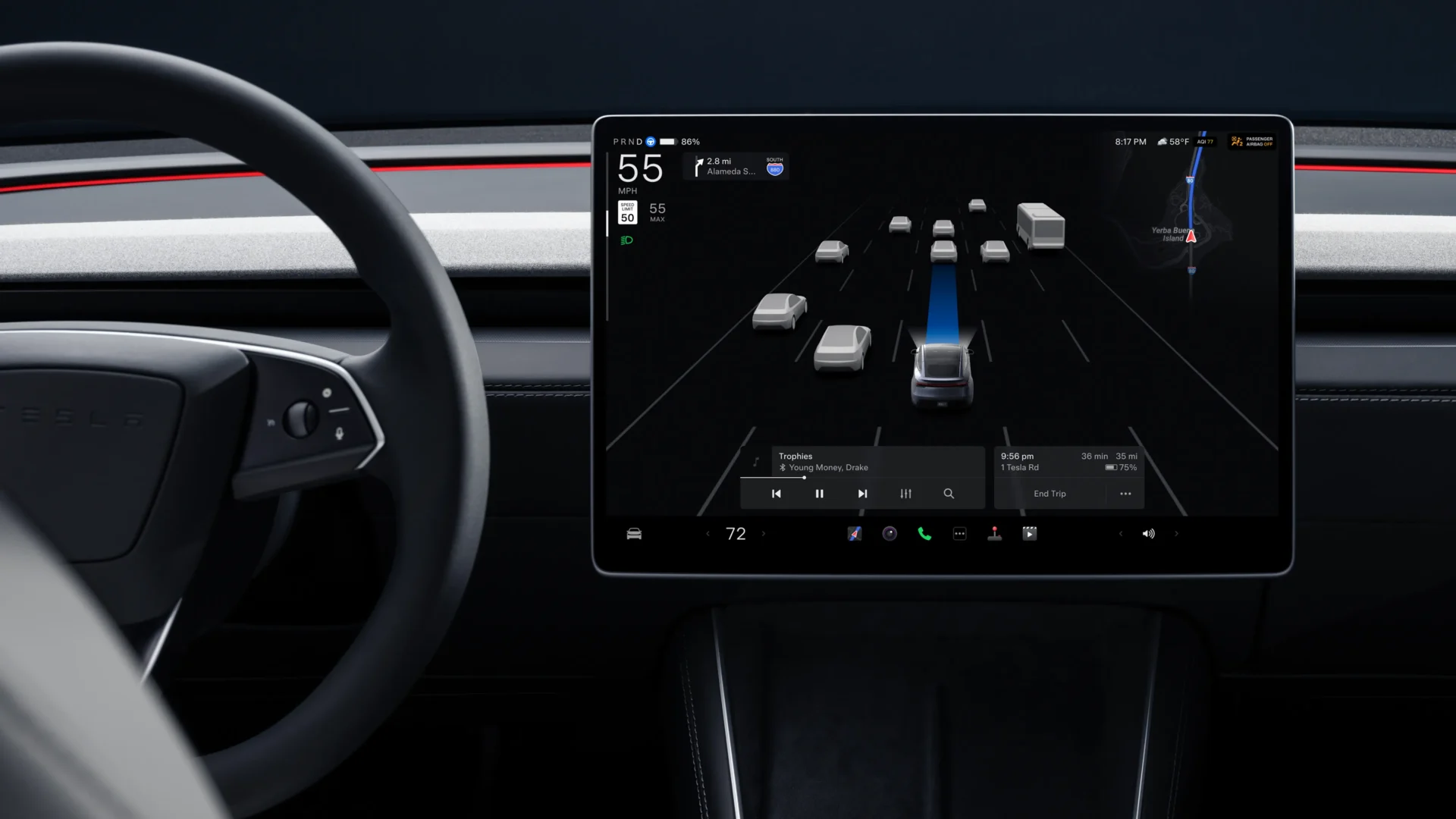
Elon Musk says Tesla is working on a new step for Full Self-Driving. Cars that learn from the way each owner intervenes and then adjust future behavior to fit that person’s habits.
The comment came after Whole Mars Catalog complained that Tesla FSD leaves the carpool or express lane too early and then gets trapped in slower traffic, even when the driver wants the system to stay in the faster lane longer.
Musk answered on X that the car will start to remember specific interventions and match each person’s individual preferences, putting personalization at the center of Tesla’s next FSD push.
“The car will start to remember your specific interventions and match each person’s individual preferences”

And that marks a break from the current setup, where FSD often handles similar road situations in much the same way for different drivers.
Tesla has been building the feedback loop
Tesla has already been collecting more structured feedback from disengagements, and reports in May said FSD v14.3.2 began requiring drivers to log a reason after many takeovers instead of letting the prompt disappear right away.
The revised intervention menu grouped takeovers into categories such as preference, discomfort, navigation, and critical. Labeled feedback aligns with a system that can learn from repeated corrections, rather than treating every intervention uniformly.
Parking memory and voice input
This work did not start with lane choice alone, and in June Musk said future FSD releases will remember parking preferences at places like home, work, and school drop-off locations. He added that destination parking is the biggest reason people still intervene, and current FSD behavior can stop at the first open space in a lot instead of the place a driver usually wants.
And Musk has tied that update to a wider voice-control push, with reports saying Tesla plans to let drivers give spoken directions to FSD through Grok during a trip.
Tesla is still releasing FSD (Supervised) v14 builds for Hardware 4 vehicles, and a lighter v14 path is already rolling out to Hardware 3 owners.
Musk has said serious safety-related interventions are now rare, yet Tesla is still using owner feedback to fix route choice, parking, and comfort problems that lead to disengagements.
A memory-based layer could make Tesla FSD less uniform from car to car, since one driver may want longer express-lane use and another may want a calmer route home. And that is the core point from Musk’s reply. Tesla appears to be training FSD to learn personal driving habits, which could make routine trips feel more natural if the rollout arrives as described.
We’ve launched an official Tesla Owners Online Forum. Join early and claim your "Founding Fuel" badge.
Yes, parking and route preferences are the only times I
intervene in FSD now.