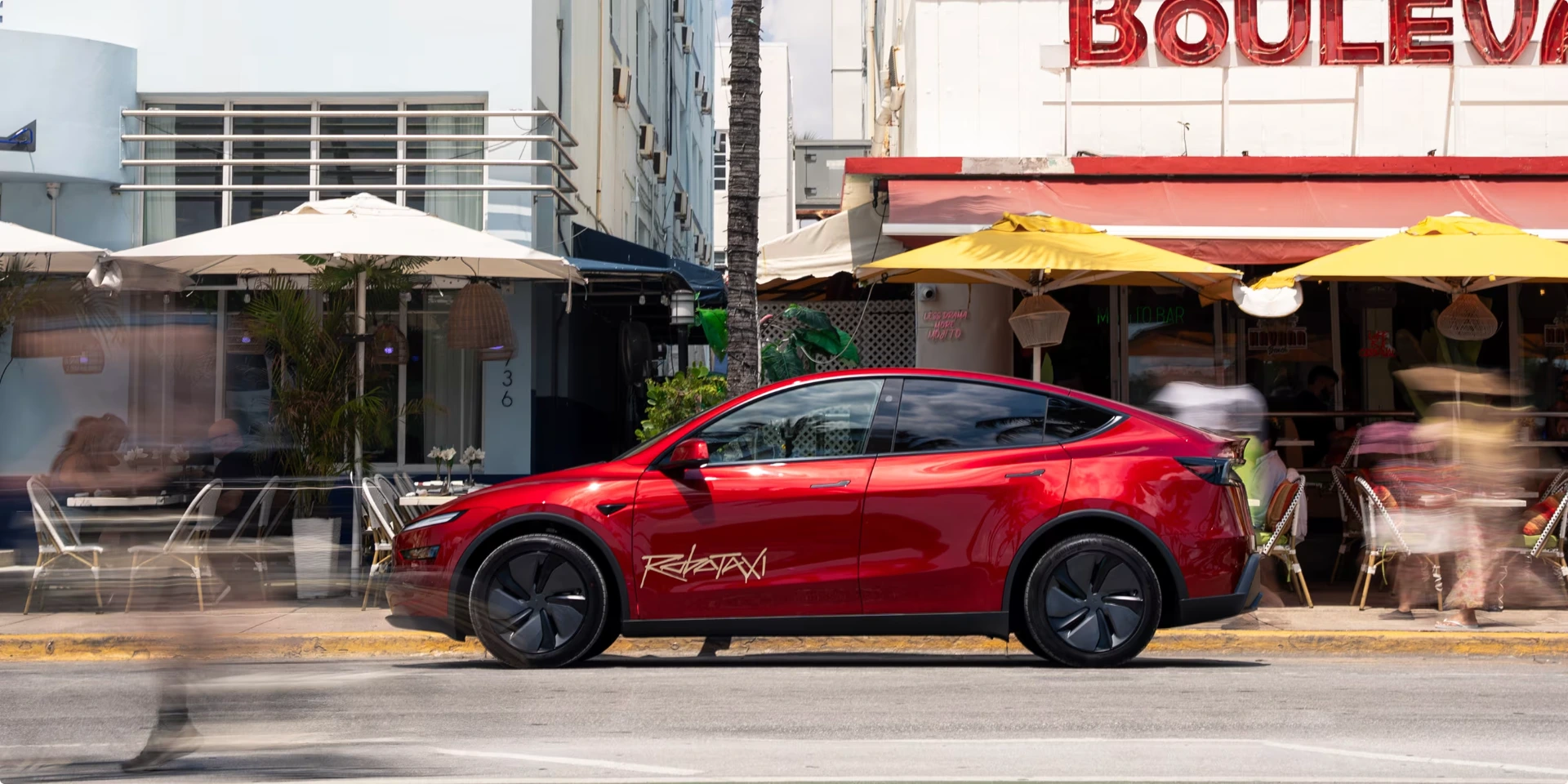

Tesla could begin trials as early as next month that let owners add their own cars to its Robotaxi network and earn money from paid rides, Chief Executive Elon Musk said on Monday, though he made the timing depend on how testing goes.
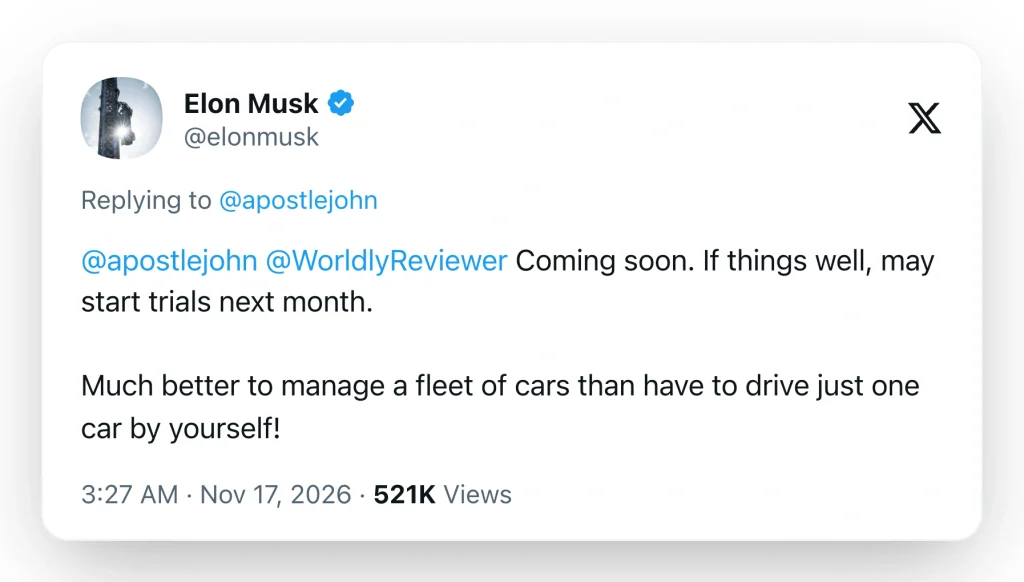
Musk made the comment on X in reply to an Austin-based Uber driver who uses a Model Y with Full Self-Driving. The driver said he keeps only 49% to 63% of each fare after the platform takes its cut, and he wanted his car to earn money without him behind the wheel.
“Coming soon. If things well, may start trials next month. Much better to manage a fleet of cars than have to drive just one car by yourself!” Musk wrote.
Ahead of Tesla’s own schedule
A December start would put the program roughly six months ahead of the timeline Tesla gave investors less than a month ago. On the company’s Oct. 21 earnings call, Ashok Elluswamy, Tesla’s vice president of AI, said the first customer cars would likely join later.
“We suspect somewhere around Q2 next year is when we can turn on some of the first customer vehicles to be part of the robotaxi fleet,” he said.
Elluswamy said the main work left was connecting owners’ cars to the geofencing and fleet management systems Tesla uses for its own driverless vehicles. He told investors the Cybercab and Tesla’s Model Y robotaxis run the same software, and the Cybercab uses the same AI4 computer found in current Model Y cars.
In practice, an owner’s car would run under Tesla’s central dispatch inside approved service zones. It would not be able to drive itself unsupervised anywhere the owner wants to go.
Questions over cost and eligibility
Most of the business terms have not been made public. Tesla is expected to take a share of each fare from privately owned cars, but it has not announced a revenue split or said which operating costs owners would pay.
It is unclear if owners would keep paying the $99 monthly Full Self-Driving subscription, move to the $299 monthly fee charged to Cybercab buyers or pay something new. Hardware could limit the early pool too, since company-run robotaxis carry extra equipment such as additional cameras and cleaning systems.
The Cybercab itself comes with tight rules. Since Nov. 13, Tesla has invited select customers to buy the two-seat car for personal use at $29,990 plus a required $299 monthly Autonomy Subscription, with deliveries expected in December.
Under the purchase terms, owners cannot put the car on Tesla’s Robotaxi network, Uber, delivery apps or rental platforms without Tesla’s written approval. The car can only run inside Tesla’s service zones, and the company can change the subscription price with a month’s notice.
Musk has since said the $299 fee is too high and should be closer to about $115 a month. He has not said if Cybercab buyers would join the December trials.
A service still finding its scale
Tesla now offers driverless rides in eight U.S. cities across Texas and Florida. It runs a separate service in the San Francisco Bay Area, where California rules require a safety driver in every car.
Austin came first in June 2025. Dallas followed in April this year, then Miami, Orlando and Tampa in July, and Houston is live with unsupervised Model Y vehicles. This month the company opened Fort Worth on Nov. 2 and San Antonio on Nov. 9.
Austin remains the center of the program and the likely site of any owner trial. Tesla widened its service area there to 272 square miles in late October, and it began Cybercab rides in the city on Sept. 3. On Nov. 12, the company said Robotaxi now runs 24 hours a day in every city it serves.
Regulation and liability
Texas law adds another hurdle. Under Senate Bill 2807, enforced since May 28, any company carrying passengers commercially in a vehicle with no human driver needs approval from the state’s Department of Motor Vehicles and must carry liability insurance or self-insurance.
Tesla Robotaxi LLC received that approval on the first day, with 42 Model Y vehicles listed at the time. How privately owned cars would fit under that approval is unclear, and the split of liability and insurance between Tesla and individual owners is likely to draw close attention from regulators and insurers.
Letting owners supply cars is Tesla’s bet on growing faster than rivals that must buy and run every vehicle. Alphabet’s Waymo and Amazon’s Zoox use only company-owned fleets, and Waymo ran about 4,000 vehicles giving more than 500,000 trips a week across 14 cities as of Nov. 4.
Tesla’s possible supply is far larger. The company delivered 486,532 vehicles in the third quarter, and Full Self-Driving was included in more than 75% of its new North American deliveries. Even a small share of those cars in the right service zones would outnumber its current Robotaxi fleet.
Musk first described owners earning money from a shared Tesla fleet in his 2016 Master Plan, Part Deux. In 2019, he predicted Tesla would have a million robotaxis on the road within about a year.
So investors and owners will be watching for an official sign-up page. Tesla has said its v15 software will reach the Robotaxi fleet before customer cars, and the timing of that release could affect when owners get their turn.
Discuss this on Tesla Owners Forum →
We’ve launched an official Tesla Owners Online Forum. Join early and claim your "Founding Fuel" badge.