All software updates

What you would gain

Updating to 2026.38

2026.27 2026.38
20 new features 11 releases
Your version
Available on
Model 3Model X

Supercharger Site Maps

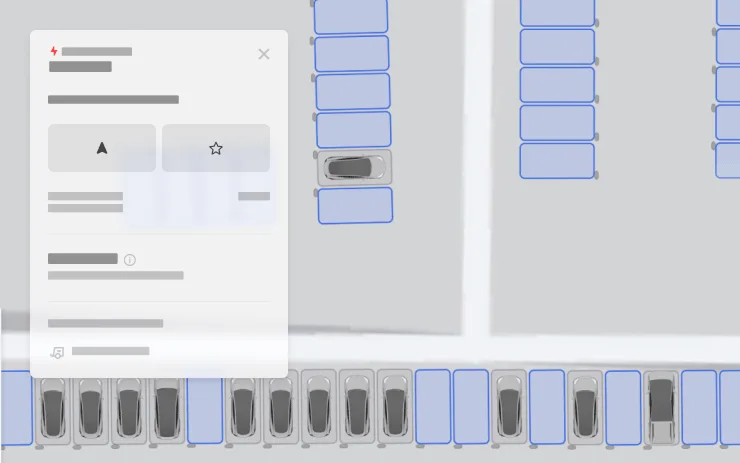
You can now see a detailed view of select Tesla Superchargers by tapping "View Site Map." When navigating to a pilot location, the site layout and live occupancy (Available / Occupied / Down) will be displayed upon arrival.
Available on
Model 3

Visual Updates

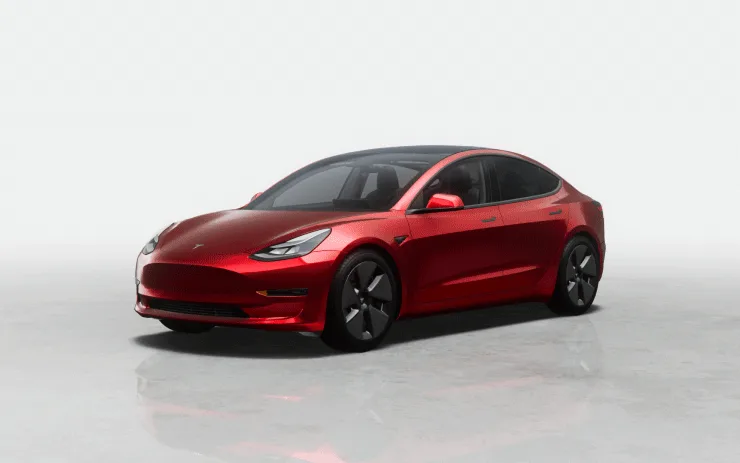
The center display now features higher quality images of your Tesla, and an enhanced park scene environment.

Available on
Model 3Model YModel SModel S (Refresh)Model X (Refresh)Model X

Apple Music

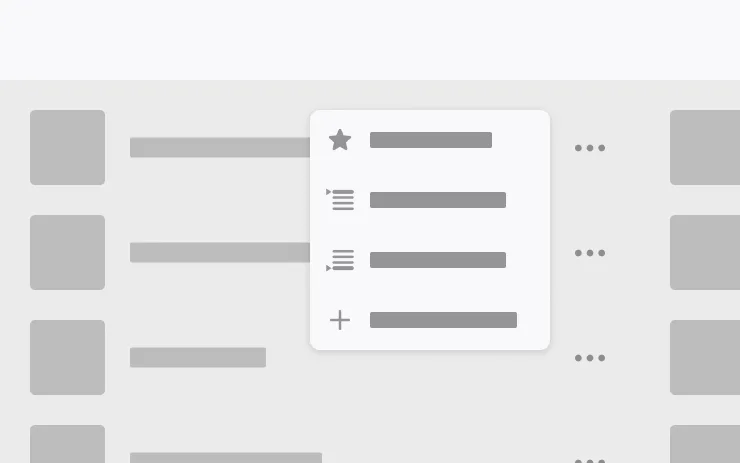
Add songs to your Apple Music queue directly from Search results and Artist pages. Tap and hold a song, or tap the three-dot menu to play next, add to queue, save to your library, or mark as a favorite. Requires an active Apple Music subscription.

Available on
Model 3

Recall Notice

This software update includes the remedy for EU Recall Submission 2026_103555. It restores compliance with UNECE Regulation No. 135.

After this update installs successfully, you do not need to take any further action for this recall. No service visit is required.

Available on
Model YModel 3Model X (Refresh)Model S (Refresh)

Wheel Selection

Choose from new wheel options to customize the appearance of your Tesla.

Available on
Model 3

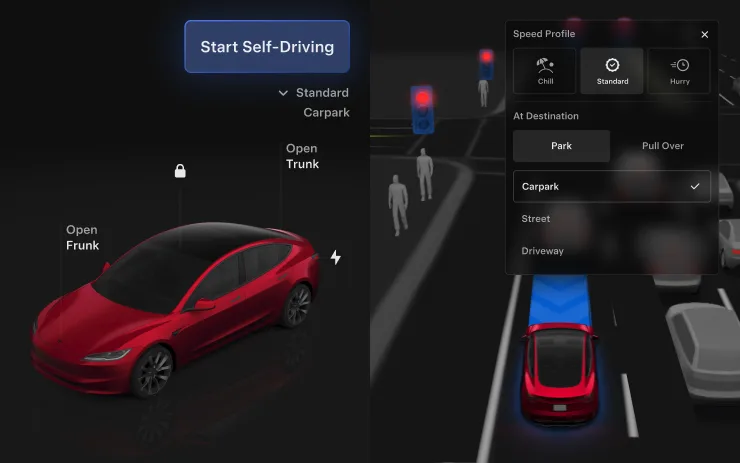
Arrival Options

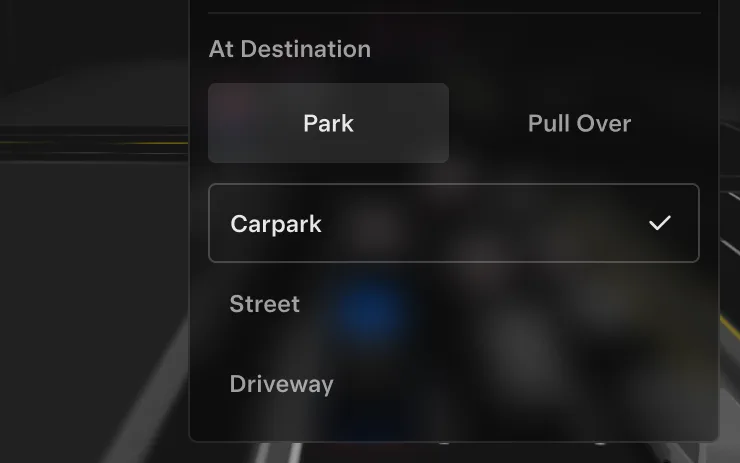
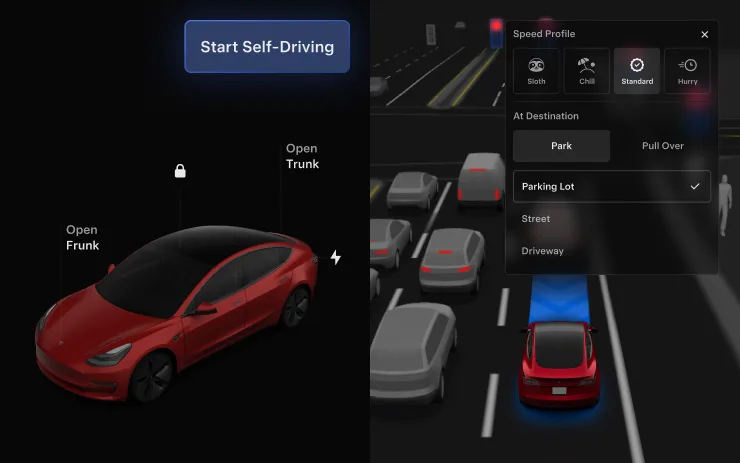
  • You can now select an arrival option such as Carpark, Indoor Carpark, Street, Driveway, and Pull Over for Robotaxi-style drop offs.
  • Your preferences for arrival options and preferred parking positions are persisted for each destination.
  • Our reasoning model will assess the suitable options for your destination and pick an intuitive default.
  • The navigation pin will be adjusted based on the selected Arrival Option.
Available on
Model 3

Brake Confirm

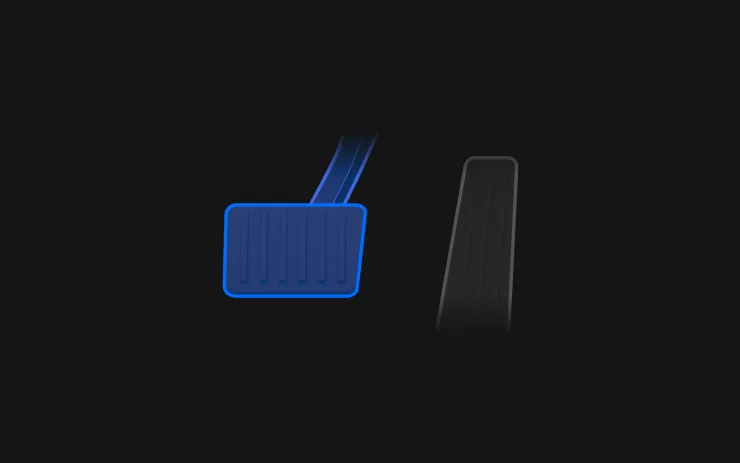
Brake Confirm for the Start Self-Driving button is now defaulted off. When disabled, Start Self-Driving will not require you to press and release the brake to confirm engagement.

You can enable Brake Confirm in Self-Driving > Brake Confirm.

Available on
Model 3

FSD (Supervised) v14.3.9 Down Under

Full Self-Driving (Supervised) v14.3.9 includes:

  • Upgraded the Reinforcement Learning (RL) stage of training the FSD neural network, resulting in improvements in a wide variety of driving scenarios.
  • Upgraded the neural network vision encoder, improving understanding in rare and low-visibility scenarios, strengthening 3D geometry understanding, and expanding traffic sign understanding.
  • Rewrote the AI compiler and runtime from the ground up with MLIR, resulting in 20% faster reaction time and improving model iteration speed.
  • Mitigated unnecessary lane biasing and minor tailgating behaviors.
  • Increased decisiveness of parking spot selection and maneuvering.
  • Improved parking location pin prediction, now shown on a map with a P icon.
  • Enhanced response to emergency vehicles, school buses, right-of-way violators, and other rare vehicles.
  • Improved handling of small animals by focusing RL training on harder examples and adding rewards for better proactive safety.
  • Improved traffic light handling at complex intersections with compound lights, curved roads, and yellow light stopping — driven by training on hard RL examples sourced from the Tesla fleet.
  • Improved handling for rare and unusual objects extending, hanging, or leaning into the vehicle path by sourcing infrequent events from the fleet.
  • Improved handling of temporary system degradations by maintaining control and automatically recovering without driver intervention, reducing unnecessary disengagements.
  • Improved driver monitoring system sensitivity with better eye gaze tracking, eye wear handling, and higher accuracy in variable lighting conditions.
  • Help Tesla improve Self-Driving by selecting an intervention reason on the main screen after taking over.
  • You can now see distance traveled in FSD (Supervised) without an intervention. The Self-Driving App will also show your longest intervention-free streak.
  • Parking options now display on the map when arriving at your destination.

Upcoming Improvements:

  • Expand reasoning to all behaviors beyond destination handling.
  • Add pothole avoidance.
Available on
Model 3

Full Self-Driving (Supervised) Down Under

Under your supervision, Full Self-Driving (Supervised) Down Under can drive your Tesla almost anywhere. It will make lane changes, select forks to follow your navigation route, navigate around other vehicles and objects, and make left and right turns. You and anyone you authorise must use additional caution and remain attentive. It does not make your vehicle autonomous. Do not become complacent.

Full Self-Driving (Supervised) Down Under is enabled on your vehicle. To use the feature, press the right scroll wheel button once. You can disable Full Self-Driving (Supervised) Down Under in Self-Driving Settings.

Be aware of road conditions or hazards (such as pot holes and speed bumps) and operate the vehicle responsibly under all circumstances.

Available on
Model 3

Speed Profiles

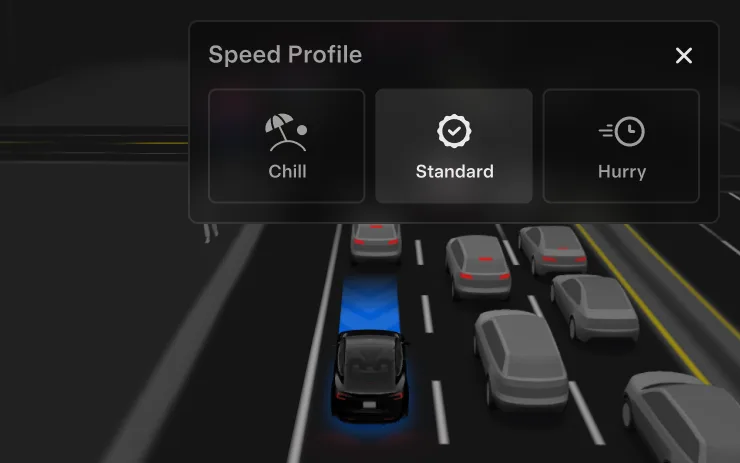
FSD (Supervised) will now determine the appropriate speed based on a mix of driver profile, speed limit, and surrounding traffic.

  • Driver profile now has a stronger impact on behavior. The more assertive the profile, the higher the max speed.
  • Right scroll-wheel up/down now adjusts Speed Profile setting rather than your precise max speed offset selection in mph or km/h.
  • Introduced new Speed Profile SLOTH, which comes with lower speeds & more conservative lane selection than CHILL.
Available on
Model 3

UI Improvements

  • You can now view your Self-Driving stats under Controls > Self-Driving.
  • Start Self-Driving with a tap of the touchscreen from Park, or any time during your drive.
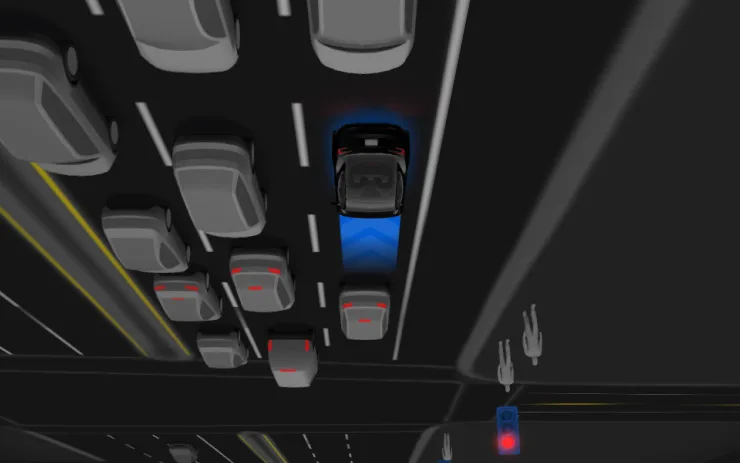
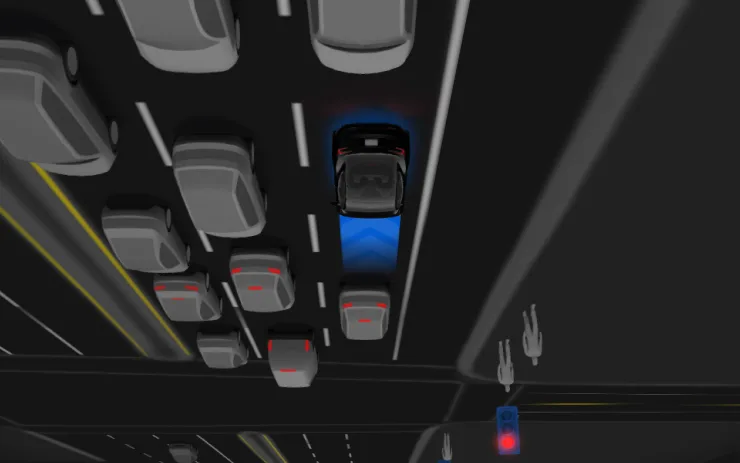
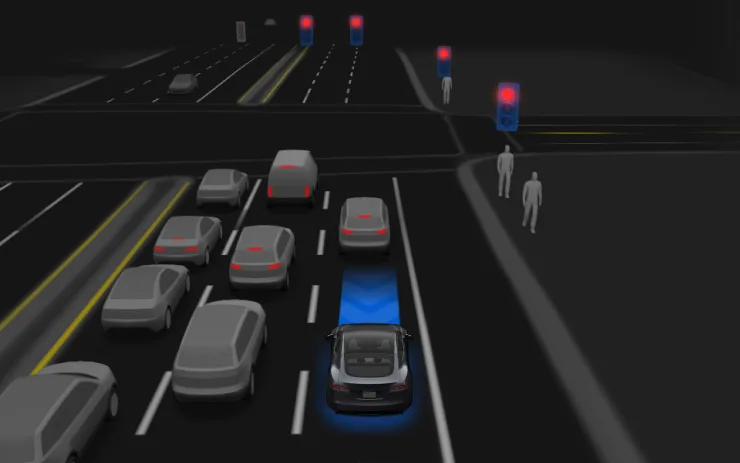
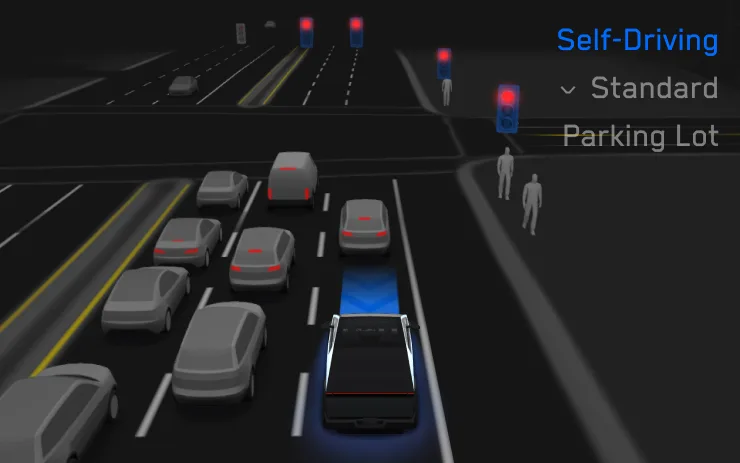
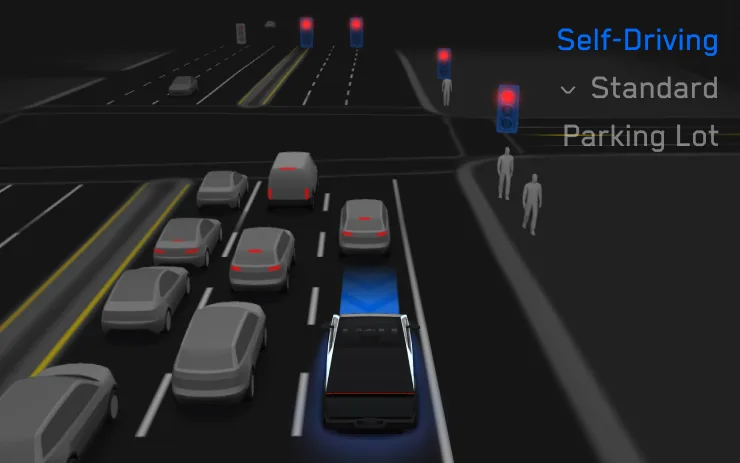
  • Adjust settings like the Speed Profile and Arrival Options directly from the Self-Driving visualization on the center display.
Available on
Model X (Refresh)Model YModel 3Model S (Refresh)

FSD (Supervised)

Under your supervision, FSD (Supervised) can drive your Tesla almost anywhere. It will start from a parked position, make lane changes, select forks to follow your navigation route, navigate around other vehicles and objects, make left and right turns and stop at your destination. You and anyone you authorize must use additional caution and remain attentive. It does not make your vehicle autonomous. Do not become complacent.

FSD (Supervised) is enabled on your vehicle. To use the feature, first watch the tutorial and take the quiz, available in the new Self-Driving App or in Control > Self-Driving. Then press the Start FSD (Supervised) button on the UI, or press the right scroll wheel button once. You can disable FSD (Supervised) in Self-Driving Settings.

Available on
Cybertruck

Automatic Collision Evasion

Automatic Collision Evasion activates Full Self-Driving (Supervised) to try to keep your vehicle safe and then continue driving. It can engage while you are driving manually and detects that you are not sufficiently attentive to the road (for example, reaching toward the back seat), and that Full Self-Driving (Supervised) may have been unintentionally disengaged.

See your Owner's Manual for more details.

Available on
Cybertruck

FSD (Supervised) v14.3.10

Full Self-Driving (Supervised) v14.3.10 includes:

  • Upgraded the Reinforcement Learning (RL) stage of training the FSD neural network, resulting in improvements in a wide variety of driving scenarios.
  • Upgraded the neural network vision encoder, improving understanding in rare and low-visibility scenarios, strengthening 3D geometry understanding, and expanding traffic sign understanding.
  • Rewrote the AI compiler and runtime from the ground up with MLIR, resulting in 20% faster reaction time and improving model iteration speed.
  • Mitigated unnecessary lane biasing and minor tailgating behaviors.
  • Increased decisiveness of parking spot selection and maneuvering.
  • Improved parking location pin prediction, now shown on a map with a P icon.
  • Enhanced response to emergency vehicles, school buses, right-of-way violators, and other rare vehicles.
  • Improved handling of small animals by focusing RL training on harder examples and adding rewards for better proactive safety.
  • Improved traffic light handling at complex intersections with compound lights, curved roads, and yellow light stopping — driven by training on hard RL examples sourced from the Tesla fleet.
  • Improved handling for rare and unusual objects extending, hanging, or leaning into the vehicle path by sourcing infrequent events from the fleet.
  • Improved handling of temporary system degradations by maintaining control and automatically recovering without driver intervention, reducing unnecessary disengagements.
  • Improved driver monitoring system sensitivity with better eye gaze tracking, eye wear handling, and higher accuracy in variable lighting conditions.
  • Unified the model between Actually Smart Summon, FSD, and Robotaxi for more capable and reliable behavior.
  • Help Tesla improve Self-Driving by selecting an intervention reason on the main screen after taking over.
  • You can now see distance traveled in FSD (Supervised) without an intervention. The Self-Driving App will also show your longest intervention-free streak.
  • Parking options now display on the map when arriving at your destination.

Upcoming Improvements:

  • Expand reasoning to all behaviors beyond destination handling.
  • Add pothole avoidance.
Available on
Model 3

FSD (Supervised) v14.2 Lite

FSD (Supervised) v14.2 Lite includes:

  • Distilled the intelligence from HW4 V14 into HW3. This allows HW3 to directly learn how to handle scenarios using HW4 V14 as a guide. This process unlocks the improvements that have been made to HW4 including Reinforcement Learning (RL) and offline models for HW3.
  • Improved both proactive and reactive responsiveness across a wide variety of categories including navigation handling, merges and forks, pedestrian interactions, traffic lights, and vehicle cut-in scenarios.
  • Improved general comfort in nominal scenarios through fewer false slowdowns, smoother steering and more consistent lane centering.
  • Introduced parking, unparking, and reversing capabilities.
  • Added Arrival Options for you to select where FSD should pull over or park: in a Parking Lot, on the Street, in a Driveway.
  • Speed Profiles are now available at all times, to further customize driving style preference.
Available on
Model S (Refresh)Model 3Model YCybertruck

Full Self-Driving (Supervised)

Under your supervision, Full Self-Driving (Supervised) can drive your Tesla almost anywhere. It will start from a parked position, make lane changes, select forks to follow your navigation route, navigate around other vehicles and objects, make left and right turns and park at your destination. You and anyone you authorize must use additional caution and remain attentive. It does not make your vehicle autonomous. Do not become complacent.

Full Self-Driving (Supervised) is enabled on your vehicle. To use the feature, press the Start Self-Driving button on the UI, or press the right scroll wheel button once. You can disable Full Self-Driving (Supervised) in Self-Driving Settings.

Available on
Model 3

Start Self-Driving from Park

A button will appear on the screen when driver requirements are met. Driver requirements include (but are not limited to):

  • Driver is seated in driver's seat
  • Driver is buckled
  • Cabin Camera is unobstructed

Brake Confirm requires the driver to press and release the brake pedal before FSD (Supervised) can be activated. When Brake Confirm is disabled, pressing the button will allow Self-Driving to apply the brakes and engage FSD (Supervised). If driver detection requirements are not met or if FSD (Supervised) does not detect a driver, you will be required to press and release the brake pedal to confirm. You can enable Brake Confirm in Self-Driving > Brake Confirm.

This feature does not make your vehicle autonomous and you must remain attentive and be ready to take over at any time. Only a licensed driver authorized to operate the vehicle should be allowed access to the driver's seat position any time the vehicle is not in Theater or Arcade modes.

Available on
Cybertruck

Vehicle-to-Home with Powerwall

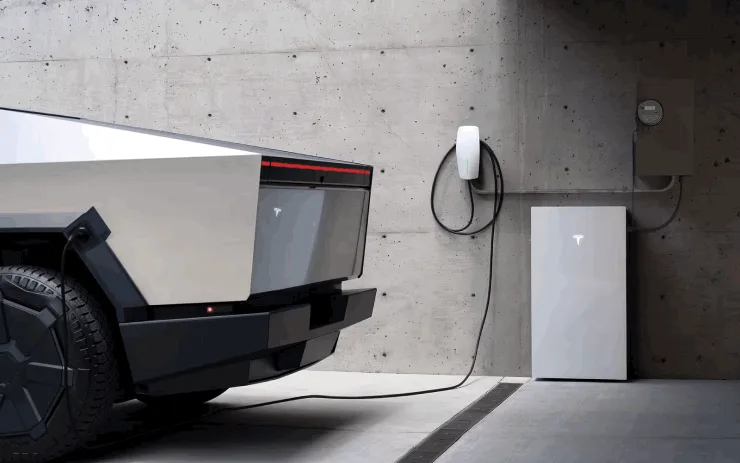
Your Tesla can now extend your home's backup power duration during an outage by sharing its battery with your Powerwall. When plugged in and enabled, your vehicle automatically supplements your home's energy supply when needed.

To enable, go to Charging > Powershare. This feature works when your vehicle is parked and plugged into a compatible Wall Connector with charge above your set discharge limit. Requires a Powerwall.

Available on
Model Y

FSD (Supervised) v14.1 Lite

FSD (Supervised) v14.1 Lite includes:

  • Distilled the intelligence from HW4 V14 into HW3. This allows HW3 to directly learn how to handle scenarios using HW4 V14 as a guide. This process unlocks the improvements that have been made to HW4 including Reinforcement Learning (RL) and offline models for HW3.
  • Improved both proactive and reactive responsiveness across a wide variety of categories including navigation handling, merges and forks, pedestrian interactions, traffic lights, and vehicle cut-in scenarios.
  • Improved general comfort in nominal scenarios through fewer false slowdowns, smoother steering and more consistent lane centering.
  • Introduced unparking and reversing capabilities.
  • Introduced Speed Profiles to further customize driving style preference.
Available on
CybertruckModel S (Refresh)Model YModel 3Model X (Refresh)

FSD (Supervised) v14.3.9

Full Self-Driving (Supervised) v14.3.9 includes:

  • Upgraded the Reinforcement Learning (RL) stage of training the FSD neural network, resulting in improvements in a wide variety of driving scenarios.
  • Upgraded the neural network vision encoder, improving understanding in rare and low-visibility scenarios, strengthening 3D geometry understanding, and expanding traffic sign understanding.
  • Rewrote the AI compiler and runtime from the ground up with MLIR, resulting in 20% faster reaction time and improving model iteration speed.
  • Mitigated unnecessary lane biasing and minor tailgating behaviors.
  • Increased decisiveness of parking spot selection and maneuvering.
  • Improved parking location pin prediction, now shown on a map with a P icon.
  • Enhanced response to emergency vehicles, school buses, right-of-way violators, and other rare vehicles.
  • Improved handling of small animals by focusing RL training on harder examples and adding rewards for better proactive safety.
  • Improved traffic light handling at complex intersections with compound lights, curved roads, and yellow light stopping — driven by training on hard RL examples sourced from the Tesla fleet.
  • Improved handling for rare and unusual objects extending, hanging, or leaning into the vehicle path by sourcing infrequent events from the fleet.
  • Improved handling of temporary system degradations by maintaining control and automatically recovering without driver intervention, reducing unnecessary disengagements.
  • Improved driver monitoring system sensitivity with better eye gaze tracking, eye wear handling, and higher accuracy in variable lighting conditions.
  • Unified the model between Actually Smart Summon, FSD, and Robotaxi for more capable and reliable behavior.
  • Help Tesla improve Self-Driving by selecting an intervention reason on the main screen after taking over.
  • You can now see distance traveled in FSD (Supervised) without an intervention. The Self-Driving App will also show your longest intervention-free streak.
  • Parking options now display on the map when arriving at your destination.

Upcoming Improvements:

  • Expand reasoning to all behaviors beyond destination handling.
  • Add pothole avoidance.

Also included

Maintenance and security

Rolled out across 1 release in this range.

Available on
Model 3Model YModel X

Security Improvements

This update includes important security fixes and improvements.

Available on
Model 3Model YModel SModel S (Refresh)Model X (Refresh)Model X

Minor Fixes

This release contains minor fixes and improvements

Data via Teslascope