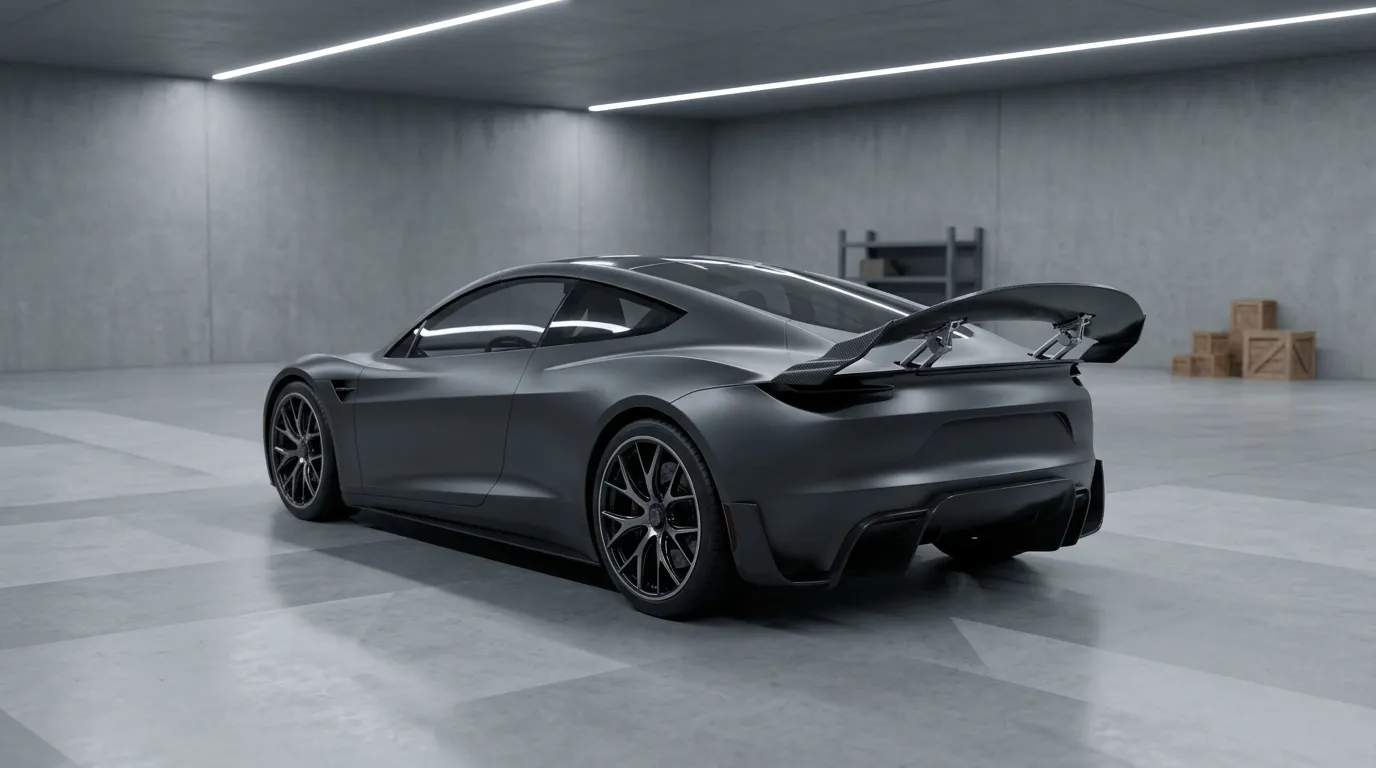

Tesla has filed a U.S. patent application for a retractable rear-wing system that could add downforce at speed, reduce drag on demand and retract during a detected rear-end collision. The filing does not name the next-generation Roadster, yet it arrived one week before Tesla’s October 1 Roadster unveiling.
The U.S. Patent and Trademark Office published application US 2026/0285418 A1 on September 24. The application is titled “Deployable and Active Rear Wing Assembly with Safety Features,” and it lists Tesla as the applicant.
Company filings describe a two-part wing assembly mounted at the rear of a low-slung coupe. Its drawings have led to Roadster speculation, though Tesla has not confirmed that the system will reach the production car.
Wing remains hidden in normal driving
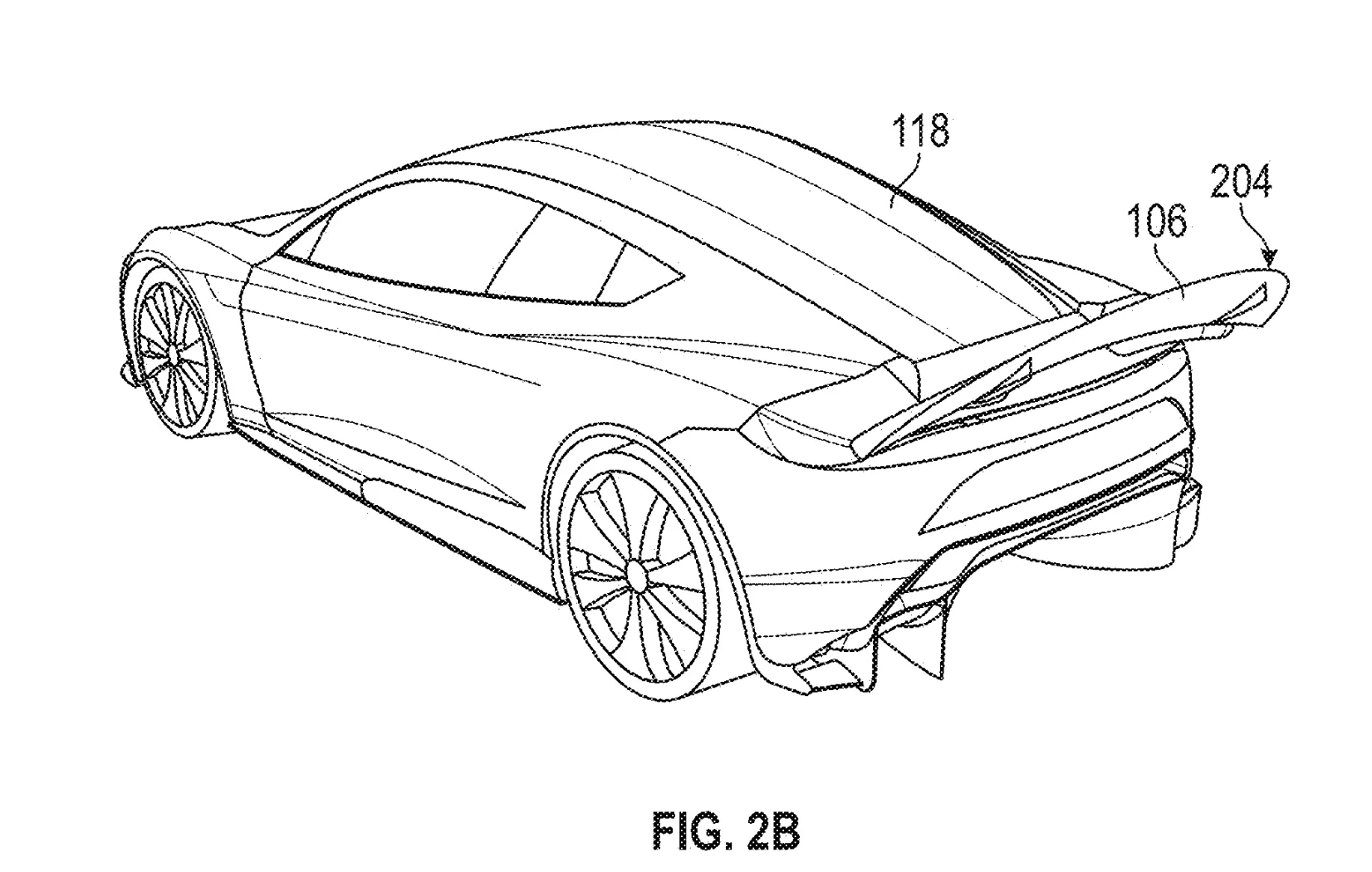
Tesla’s system uses a primary wing section and a smaller front section, often called a slat. The main section can sit flush with the rear deck when the car does not need extra aerodynamic grip.
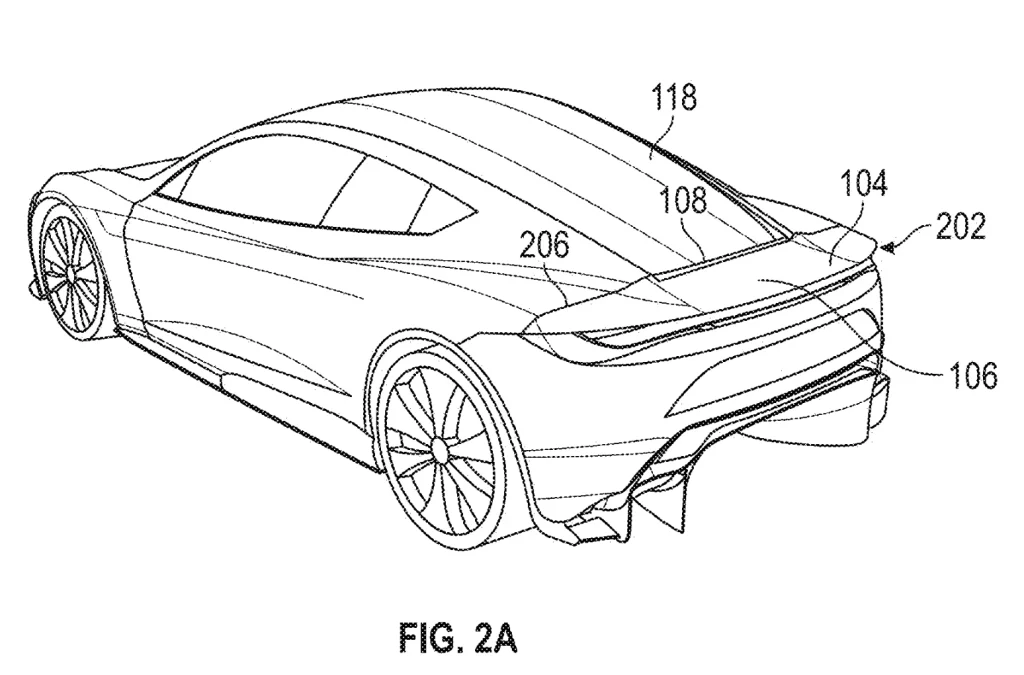
The smaller front section sits beneath the rear body panel in the stowed position. That layout would keep the rear of the vehicle cleaner than a fixed wing, which stays exposed at all times.
When the car needs more rear grip, the wing can lift from the body and move rearward. Tesla describes a four-bar linkage as one option, though the application covers linear rails and lead-screw arrangements too. The filing states that full deployment could take less than three seconds. It also describes a separate system that can change the wing angle in less than 0.25 seconds.
Downforce and drag settings
Tesla’s filing describes several operating positions. In a high-downforce setting, the wing could create up to 700 kilograms, or about 1,540 pounds, of downforce at top speed.
That figure is not a confirmed Roadster specification. It appears in a patent application, which often includes projected performance figures and technical examples that may never reach a customer vehicle.
The system could use a flatter position similar to a drag-reduction system, reducing aerodynamic resistance when peak downforce is not needed. Tesla describes this mode as capable of removing 250 drag counts after the wing deploys.
The application also describes 350 drag counts from deploying the wing and 1,000 counts of downforce in one operating example. Such adjustments could help the vehicle balance straight-line efficiency, high-speed stability and cornering grip.
Vehicle software could control it
Tesla describes a controller that can use speed, acceleration, steering angle, brake input, GPS data and automated-driving sensor information to select the wing position. A lower-drag setting could be used on a straight road. A steeper position could be selected when the car enters a fast corner or when braking demands more rear stability.
The filing also describes location data that could identify a racetrack. This could allow the system to use a different aerodynamic strategy during track driving than it would on public roads.
Tesla lists cameras, radar and lidar as possible sensor inputs in the application. That language covers potential configurations and does not confirm hardware planned for a future Roadster.
Safety system addresses rear impacts
A large deployed wing can extend beyond the rear bumper area. Tesla’s filing addresses that risk through mechanical releases and software that can begin retraction before an impact.
The mechanical system uses latches that can release after an impact exceeds a specified force level. Once released, the wing can fold until its rear edge no longer extends past the back of the vehicle.
The software approach could use vehicle sensors to identify a likely rear collision and retract the wing before contact. The controller could also weigh the benefit of retraction against the loss of aerodynamic stability caused by changing the wing’s position during a maneuver.
Tesla’s patent drawings include an impact-protection arrangement beneath the rear of the vehicle. The system is intended to reduce the risk created by a wing that remains deployed during a rear collision.
The patent drawings depict a low two-door fastback with proportions similar to a performance coupe. Several automotive outlets have connected that design to the next-generation Roadster, yet the application does not identify the car by name.
Tesla’s 2017 Roadster concept had a removable roof panel and a different rear design. The patent drawings do not provide enough evidence to confirm that Tesla is using the same body design for the production version.
Tesla CEO Elon Musk has said the company will unveil the long-delayed Roadster on October 1. The event comes nearly a decade after Tesla introduced the second-generation Roadster concept.
The timing has attracted attention. Still, patents protect ideas and engineering work, and many patented systems do not enter production. Tesla has not released production specifications for the next-generation Roadster. The October 1 event may answer whether this active-wing system is part of the car’s final design.
You can also read the full patent attached below:
We’ve launched an official Tesla Owners Online Forum. Join early and claim your "Founding Fuel" badge.