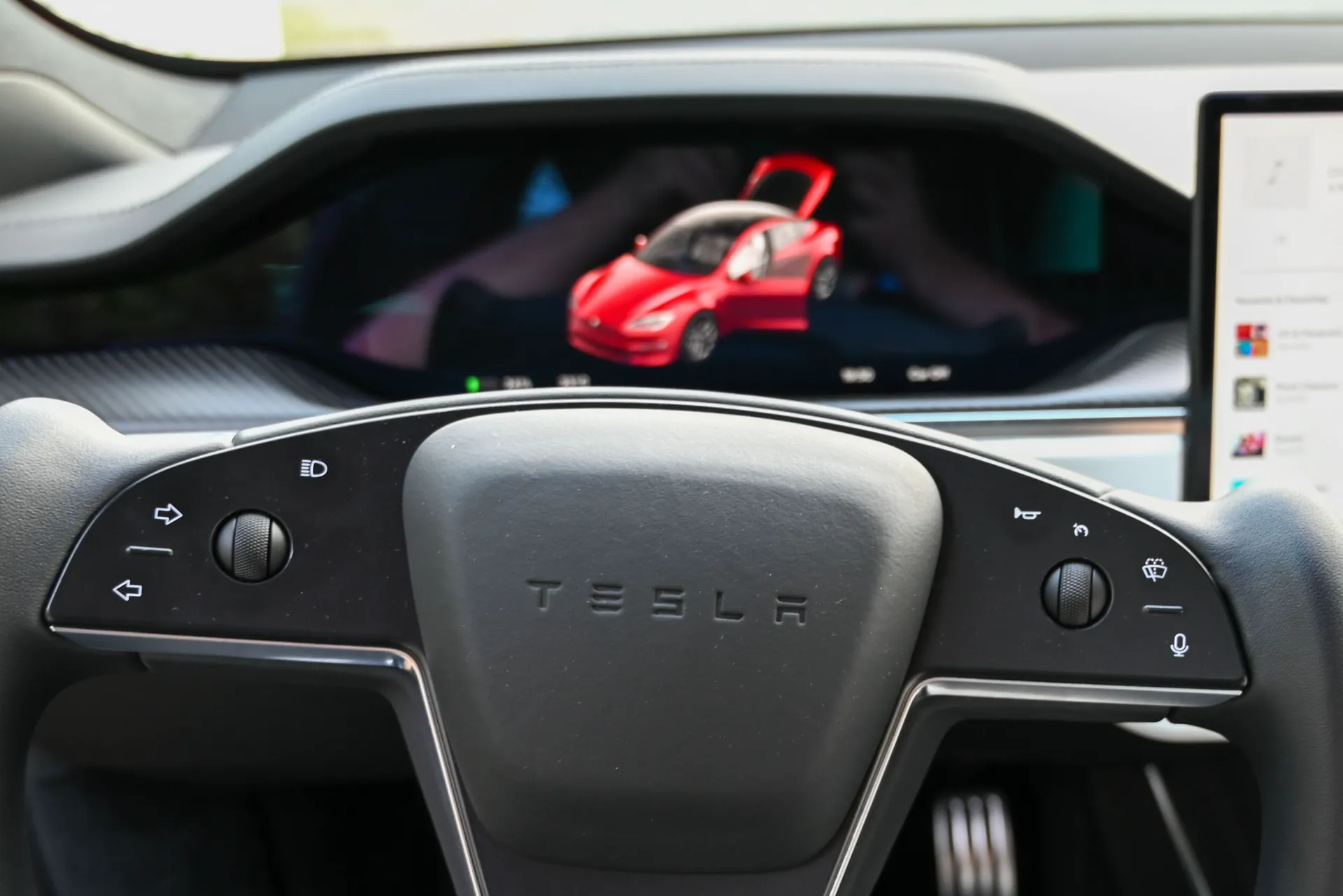

Tesla has started sending FSD (Supervised) v14.2 Lite to some Model S and Model X vehicles equipped with Hardware 3 in the United States.
The update is the first v14 release reported for HW3 versions of Tesla’s flagship sedan and SUV. The software is arriving under version 2026.27.10, according to owner reports and release-notes.
First v14 update for S and X
The rollout was first reported on September 22 after a Model S owner posted release notes. Other owners later reported receiving the same build, adding more evidence that Tesla had started a limited release for HW3 Model S and Model X vehicles.
Video: FSD v14.2 Lite in action
v14 lite 2022 Model S – Start Self Driving from Garage!!
— Vekay (@rajuvamsi007) September 23, 2026
I have been dreaming of this day from 2018!!
A little slower than HW#4 but still awesome.
Notice the Garage auto shut off when car leaves pic.twitter.com/vAgaLUHajt
Tesla AI chief Ashok Elluswamy had earlier said the Model S and Model X version was expected to arrive during the previous week. The delay appears to have involved vehicle-specific testing, since the same FSD v14 Lite software had already reached many HW3 Model 3 and Model Y vehicles.
The rollout completes the first phase of Tesla’s effort to bring v14 software to its main HW3 vehicle lines. Model 3 and Model Y owners began receiving FSD v14 Lite earlier in 2026, and Model S and Model X vehicles followed later.
What v14.2 Lite includes
FSD v14.2 Lite is a smaller version of Tesla’s main v14 system. Tesla created it for Hardware 3 vehicles, which have less computing capacity than cars equipped with Hardware 4.
The company used a process known as model distillation. In this process the smaller system learns from the larger model used on newer hardware. Tesla says the result keeps key parts of the v14 driving system while using fewer computing resources.
Tesla has said the Lite version runs about 30% faster than the previous HW3 software. The update carries improvements in several driving situations, including navigation decisions, lane changes, merges, forks, traffic lights, pedestrian interactions and vehicles entering the car’s path.
The software should reduce some unnecessary slowdowns and provide smoother steering and more consistent lane centering. It includes new parking, unparking and reversing functions too.
Other features listed in the release notes include Arrival Options and Speed Profiles. Arrival Options lets the driver choose whether the car should pull into a driveway, stop on the street or continue to a parking area. Speed Profiles let the driver select how the vehicle should manage speed during FSD operation.
HW3 still has major limits
The update does not turn the older cars into autonomous vehicles. FSD v14.2 Lite remains a supervised Level 2 driver-assistance system, so the driver must watch the road and be ready to take control at any time.
That limitation applies to every HW3 Model S and Model X receiving the update. Tesla has said the vehicles cannot support unsupervised driving with their current computer.
The company has further indicated that HW3 cars will not receive the upcoming FSD v15 software. Hardware 3 has much less memory bandwidth than Hardware 4, which limits the size and performance of the neural-network models the vehicles can run. For that reason the Lite version is a compromise. It gives older vehicles several newer driving features, but it does not provide the same software path available to HW4 cars.
A long wait for older owners
HW3 Model S and Model X vehicles had remained on older FSD software while Tesla moved newer vehicles through v13 and v14 releases. The delay left many owners using the FSD 12.x branch for an extended period.
Tesla first began testing FSD v14 Lite with selected HW3 vehicles in June 2026. A wider U.S. and Canadian release followed in July through software version 2026.20.6.11.
By September 15 Tesla had started distributing FSD v14.2 Lite to more HW3 Model 3 and Model Y vehicles through version 2026.27.6. The Model S and Model X release arrived about a week later under version 2026.27.10.
The two vehicle lines required separate validation work. Model S and Model X use different vehicle systems and configurations from Model 3 and Model Y, so Tesla had to test the software on the older flagship platform before releasing it more broadly.
Rollout remains limited
The current release does not appear to be available to every eligible owner. Tesla usually sends software updates in stages, and more vehicles can receive the build after early installations remain stable. Owners can check the software page in the Tesla mobile app or the vehicle’s touchscreen. A car may receive the update later based on region, configuration, software history and Tesla’s release schedule.
U.S. customers are receiving the update first. Tesla has indicated that international releases will follow after additional technical checks, regional adaptation and regulatory work. That timing could vary by market. The company has not provided a complete international schedule for FSD v14.2 Lite on HW3 Model S and Model X vehicles.
The update gives HW3 Model S and Model X owners access to newer supervised-driving behavior and several features that had been limited to later software branches. It does not change the legal or operational requirement for driver supervision.
Tesla has not confirmed a general HW3 computer replacement program or provided a firm timetable for hardware upgrades. The company is using the Lite software as the main way to bring selected v14 improvements to older vehicles. The first reports confirm that Tesla has started the Model S and Model X rollout. The broader release will depend on Tesla’s testing process and the performance of early installations.
We’ve launched an official Tesla Owners Online Forum. Join early and claim your "Founding Fuel" badge.