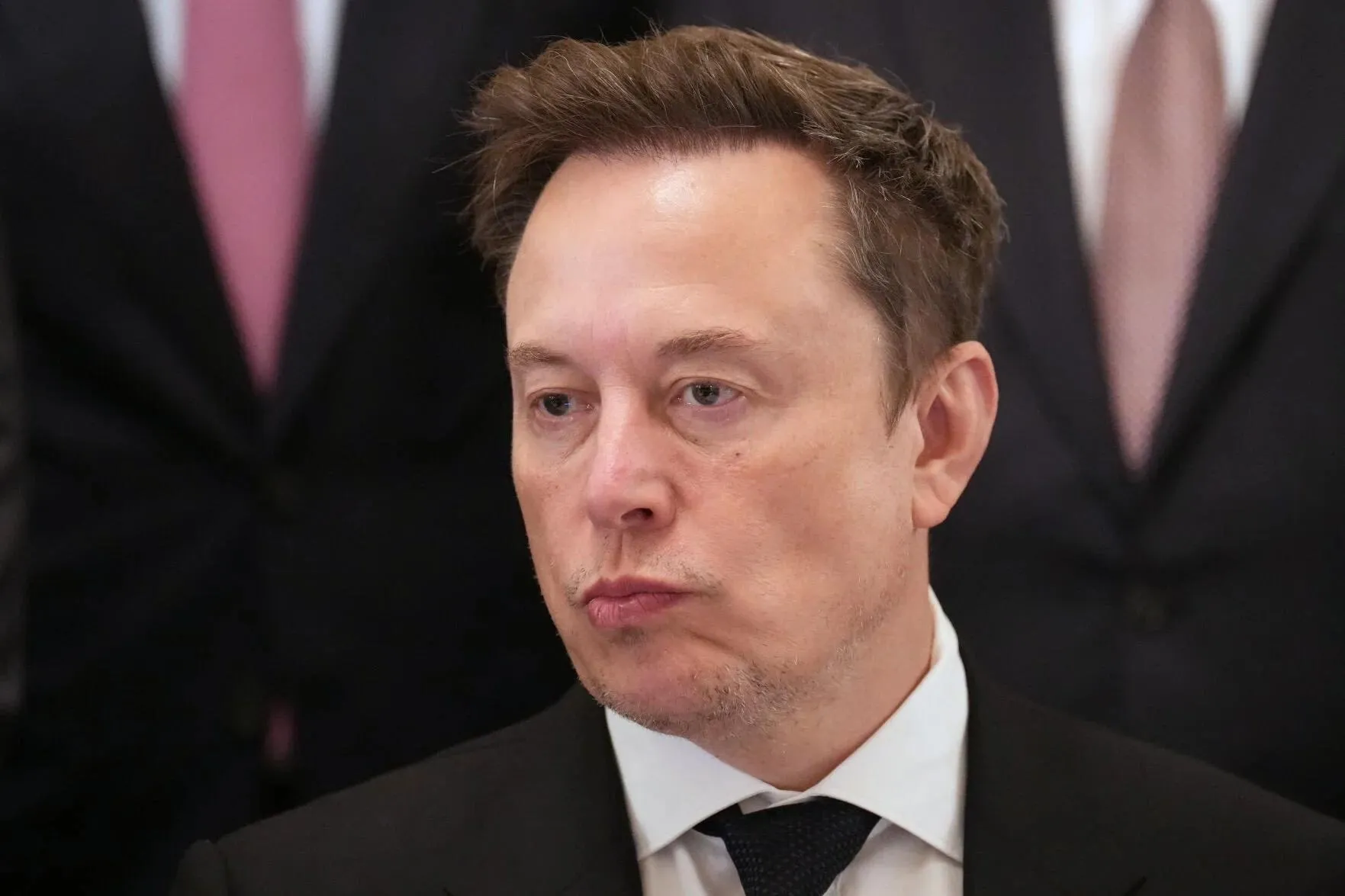

Elon Musk and five other tech executives signed a voluntary agreement at the White House on Tuesday, and the pact commits their companies to internal safety checks, outside reviews and board-level oversight of advanced AI systems.
The agreement carries the name White House Accord on Super Intelligence: Joint Commitment on Frontier Responsibilities. It came out of a lunch President Donald Trump hosted with tech leaders at the White House. Trump called the pact “morally binding,” but House Speaker Mike Johnson told reporters its commitments are voluntary.
Musk explained the deal in plain terms after the meeting. “We signed a joint declaration regarding superintelligence safety,” he said. “We agreed to a number of things that include joint monitoring, board special committees, and just generally grading each other’s homework.”
Elon Musk on today's announcement with President Trump:
— Sawyer Merritt (@SawyerMerritt) September 29, 2026
“We signed a joint declaration regarding superintelligence safety. We agreed to a number of things that include joint monitoring, board special committees, and just generally grading each other’s homework.” https://t.co/LjJH6W5m2b pic.twitter.com/D8ric4Uvw8
Musk said having rival companies review each other’s work beats companies grading their own. But the written text does not set up a joint monitoring board, and it does not require companies to test each other’s models. The accord instead asks each company to run its own controls, hire independent outside auditors and form its own board committee.
What the accord requires
The pact lays out four layers of controls for companies that train and deploy frontier models. First, companies should watch model capabilities and alignment during training and deployment. The text names Cybersecurity, biosecurity and chemical threats as focus areas, and it calls for steps to stop systems from hacking or reaching technical infrastructure in unintended ways.
The second layer asks each company to give an internal team the authority to check that the safeguards work and that identified problems get fixed. The third layer brings in an independent external auditor or evaluator to assess the controls and the monitoring and detection systems.
The fourth layer puts the board in charge. Each company should name an independent committee of its board of directors to receive reports from internal teams and auditors, oversee the process and confirm that problems get addressed. As part of the deal, the companies agreed to meet regularly to develop standards and share best practices.
Who signed and who attended
Six industry executives signed the document alongside Trump. They are Google CEO Sundar Pichai, Anthropic CEO Dario Amodei, Meta CEO Mark Zuckerberg, OpenAI President Greg Brockman, Nvidia CEO Jensen Huang and Musk, who founded xAI.
The signing group was smaller than the guest list. Amazon founder Jeff Bezos, Microsoft CEO Satya Nadella, AMD CEO Lisa Su and Palantir CEO Alex Karp attended the lunch, but their signatures do not appear on the released accord.
The agreement sets no penalties, no mandatory reporting deadlines and no government enforcement process. Companies face no requirement to publish their audit results or to name the outside evaluators they pick.
The text says the safeguards could one day be written into laws or regulations, but it gives no timetable. Compliance rests on the companies following through and on their boards acting when reviews find problems.
Trump separately floated the idea of a committee of about 10 people to “watch over the whole enterprise.” He named no possible members and gave no details on its authority. That group would be separate from the board committees described in the accord, and no formal structure had been announced as of Wednesday.
Zuckerberg said the framework aims to give customers and the public confidence that the technology works as intended, and he called it a starting point the wider industry could adopt. Amodei said the technology carries real risks and that the mechanism for handling them is still under discussion.
A new name for AI
Hours after the meeting, Trump signed an executive order telling federal departments and agencies to replace “Artificial Intelligence” and “AI” with “Super Intelligence” and “SI” in official communications and policy documents, to the maximum extent permitted by law. The order asks the White House science and technology adviser to propose a federal definition of the new term.
The renaming is separate from the safety pact. In standard technical usage, superintelligence refers to a hypothetical system that exceeds human intellectual ability across a broad range of tasks. It is not a substitute name for all current AI technology.
The pact lands at a time of rising public worry about the speed and safety of advanced AI. A Reuters/Ipsos poll conducted from Sept. 17 to Sept. 20 found that 73% of respondents believed AI companies had not done enough to prevent serious societal harm, and 55% supported slowing development.
The administration has kept its preference for fast U.S. AI growth and a light-touch regulatory approach. The accord sets a baseline for industry-led oversight, and its real test will come in how companies choose auditors, set safety thresholds, share findings and respond when a review turns up a failure.
We’ve launched an official Tesla Owners Online Forum. Join early and claim your "Founding Fuel" badge.