
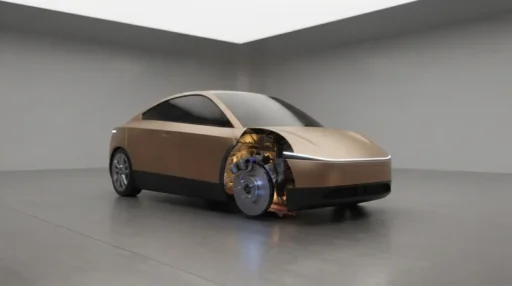
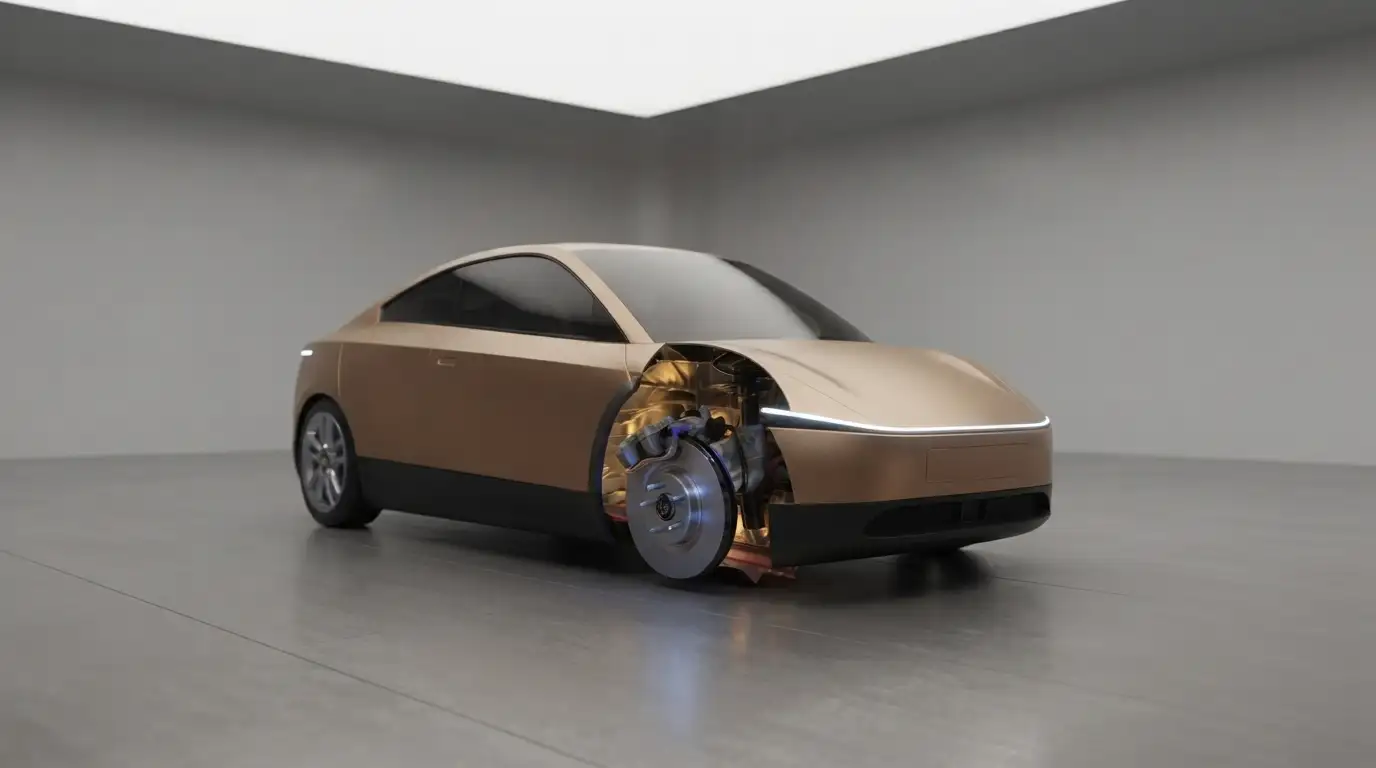

Tesla’s newly launched Cybercab robotaxi in Austin doesn’t just lack a steering wheel and pedals. It also ships without brake fluid, hydraulic brake lines or a central master cylinder. The two‑seat vehicle uses a fully electronic brake‑by‑wire system that removes the traditional master cylinder and hydraulic lines, and instead relies on individual electric actuators at each wheel to apply braking force. It is the first Tesla to ship with this layout and among the first mass‑produced cars globally to use a completely fluid‑free electro‑mechanical brake setup.
What the Cybercab brake system does
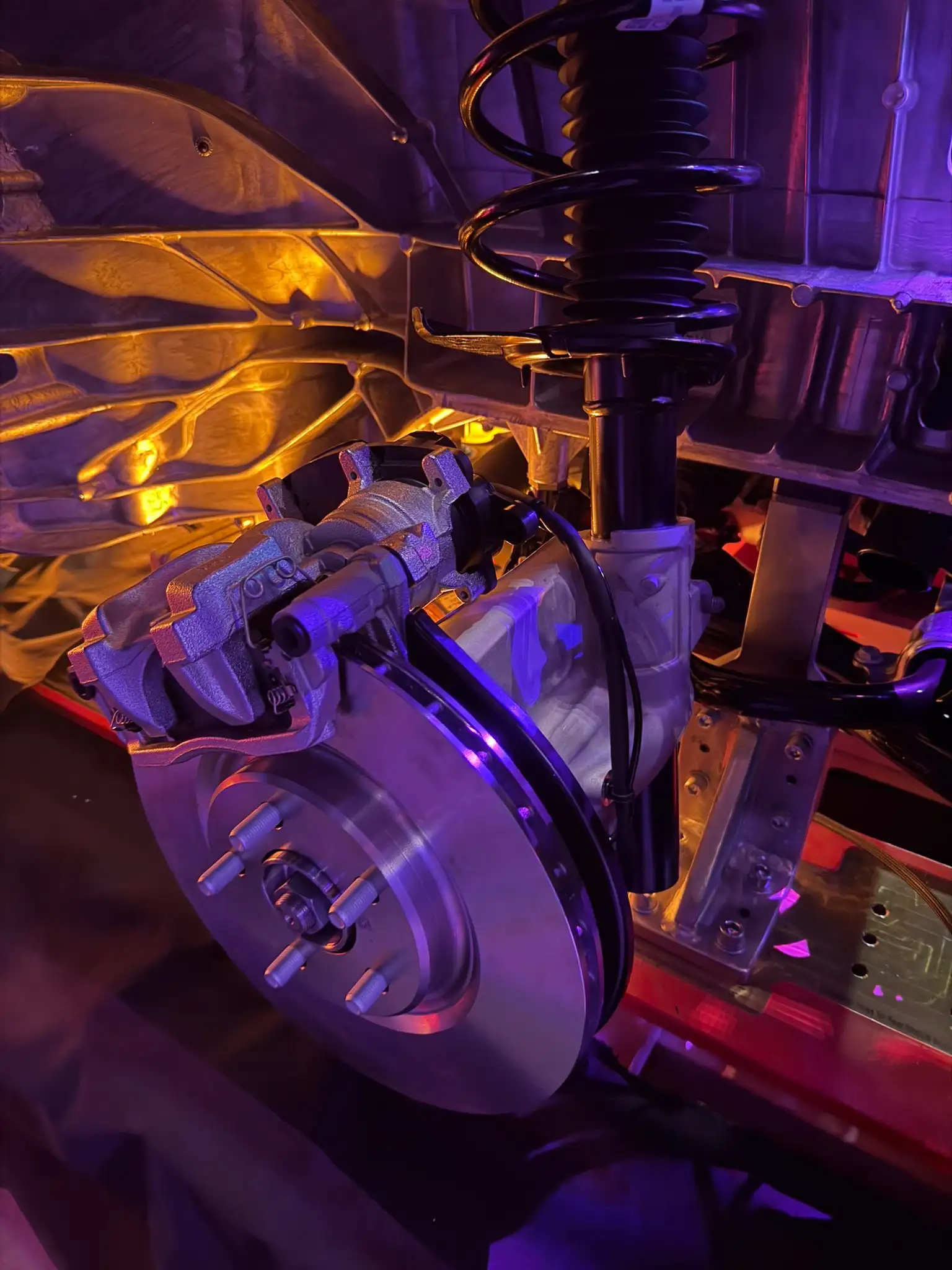
The Cybercab still uses conventional brake discs and calipers, but the clamping force comes from small electric motors inside each caliper rather than pressurized fluid pushed by a master cylinder. There are no brake lines running between wheels and no brake fluid reservoir under the hood, so the layout is often described as dry brake‑by‑wire. Because each wheel has its own actuator, the car can vary braking force corner by corner without the lag and fixed pressure distribution of a shared hydraulic circuit.
This makes the Cybercab the first Tesla with a fully brake‑by‑wire system and one of the first mass‑produced vehicles with a completely fluid‑free electro‑mechanical brake setup, while other cars have used mixed electro‑hydraulic designs that still retain fluid and a backup master cylinder.
How dry brake‑by‑wire differs from hydraulic brakes
In a traditional car, pressing the brake pedal mechanically actuates a master cylinder, sending pressurized brake fluid through lines to each caliper, where that pressure squeezes pads against the rotors. In the Cybercab, the braking command is an electronic signal from the control computer, which tells each wheel’s actuator how much clamping force to apply, without ever converting that command into hydraulic pressure. Because each wheel is actuated independently, the system can apply different braking levels per corner, which is harder to achieve with one shared hydraulic circuit and fixed pressure distribution.
A quick side‑by‑side highlights what’s new:
| Aspect | Traditional hydraulic brakes | Cybercab dry brake‑by‑wire |
|---|---|---|
| Working medium | Pressurized brake fluid in lines | Electric actuators at each caliper, no fluid |
| Master cylinder | Central master cylinder linked to pedal | No master cylinder; commands come from software |
| Plumbing | Hoses routed throughout vehicle, must be filled, bled and checked for leaks | No hydraulic lines between major assemblies; only electrical cables to actuators |
| Force distribution | Same hydraulic pressure to all calipers on a circuit | Wheel‑by‑wheel brake force control by software |
| Maintenance | Fluid changes, bleed procedures, leak checks | Focus shifts to electrical diagnostics |
Why Tesla is removing hydraulics
Elon Musk has publicly framed the decision as a way to avoid the “complexity of a hydraulic system,” emphasizing that there is “no need to route plumbing all around the car” when braking can be handled electrically. Removing the brake fluid reservoir, long brake lines and the master cylinder cuts the parts count and associated labor, which is vital for a robotaxi designed for high‑volume production and heavy utilization.
The system also lets Tesla more finely tune braking for comfort and efficiency, since pads can fully disengage when not needed and software can carefully shape deceleration profiles for passengers. At the same time, eliminating fluid removes a maintenance item that can degrade, leak or boil, especially important for vehicles expected to rack up far more miles per year than private cars.
Also, Observers have tied Cybercab’s brake‑by‑wire design directly to Tesla’s “Unboxed Process,” the manufacturing approach where large vehicle sub‑assemblies are built and tested independently before being joined late in the line. Hydraulic brake plumbing traditionally has to cross those boundaries. Lines must be routed through body structures, connected between front and rear modules, and then filled and bled after the car is fully assembled. By contrast, a dry brake‑by‑wire car can have each module built with its braking hardware already installed and validated, relying mainly on electrical connectors when the modules come together, which meshes cleanly with an unboxed, modular architecture.
Tesla has not disclosed the Cybercab’s brake system supplier, but only a handful of companies currently offer series‑production electromechanical brakes, including Brembo, ZF and Bosch. Brembo announced earlier this year that its fluid‑free Sensify system had entered series production with a global manufacturer it declined to name, sparking speculation that Cybercab may be using some variant of that technology, though this remains unconfirmed.
Tesla is not the first to put fluid‑less braking on a road car. China’s Chery Exeed EX7 launched with a similar dry brake‑by‑wire system in April, and a number of premium models already use mixed electro‑hydraulic “brake‑by‑wire” setups that retain fluid and master cylinders. What makes Cybercab notable is the combination of fully fluid‑free braking, steer‑by‑wire, and the absence of a steering wheel and pedals in a mass‑produced robotaxi aimed at commercial service rather than limited experimental fleets.
While detailed safety architecture hasn’t been published, analysts expect redundant power supplies, multiple control paths and fail‑safe modes so the brakes can still engage if one electrical circuit fails, mirroring best practices in other critical by‑wire systems. The U.S. NHTSA has already opened an audit into how Tesla self‑certified Cybercab for public use, highlighting regulators’ interest in both its driverless operation and its unconventional braking hardware.
In Europe, current rules cap deployments of such driverless vehicles at around 1,500 units, meaning Cybercab’s rollout there will be tightly controlled even if it is approved.
We’ve launched an official Tesla Owners Online Forum. Join early and claim your "Founding Fuel" badge.