

The National Highway Traffic Safety Administration has opened a formal audit into how Tesla certified its Cybercab robotaxi. The agency acted just hours after Tesla started charging the public for rides in Austin, Texas.
The review covers as many as 1,000 vehicles and carries the case number AQ26002. It comes from the agency’s Office of Defects Investigation, and it centers on one basic question. Did Tesla properly certify a car built with no steering wheel, no pedals, and no mirrors?
How the audit came together
Automakers in the United States don’t send new models to Washington for approval before selling them. Instead, they certify on their own that a vehicle meets Federal Motor Vehicle Safety Standards, known as FMVSS, and NHTSA checks that work after the fact. That’s the system Tesla used here, and it’s exactly what regulators now want to look at closely.
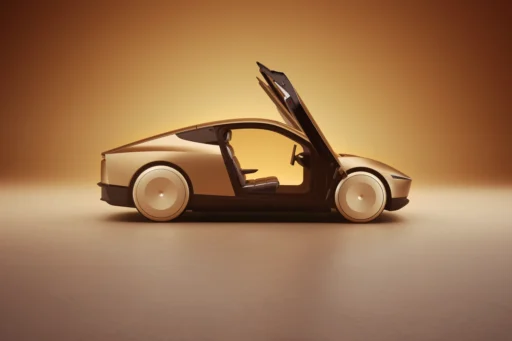
NHTSA said it plans to examine the technical data and the process Tesla relied on when it certified the Cybercab, and how much of that certification rested on Tesla’s own conclusion that certain federal standards simply don’t apply to a car with no human driver controls. That last part is where things get complicated, since so many existing FMVSS rules were written with a person behind the wheel in mind, a driver who can reach a brake pedal, check a mirror, or grip a steering wheel. The Cybercab has none of that equipment, and Tesla still certified it as compliant.
Federal records show Tesla had 420 autonomous vehicles registered in Texas as of Friday morning, including 45 Cybercabs, according to state filings cited in press reports. The vehicle NHTSA is now reviewing lacks permanently attached manual controls of any kind, no brake pedal, no accelerator, no rearview mirrors, and no steering wheel, and that absence is the very thing regulators say they need to understand before they can sign off on Tesla’s certification.
Reuters reported that Tesla appears to have self-certified the Cybercab rather than apply for a formal exemption from those rules, a route other companies have taken before.
A launch with little fanfare, then a fast response
Tesla began commercial Cybercab service on Thursday with a small number of vehicles, and the company said it would grow the service to more vehicles and more cities over time. NHTSA moved fast once the service went live, opening its audit within hours of the first rides.
The Zoox playbook
This isn’t the first time NHTSA has faced a robotaxi with no traditional controls. Amazon’s Zoox unit self-certified its own cube-shaped robotaxi back in 2022, and it also skipped a steering wheel and pedals. NHTSA responded first with a special order asking for more information, then followed up the next year with a formal audit query, the same tool now being used against Tesla.
That process eventually led somewhere. NHTSA ran Zoox through a similar audit and then granted the company an exemption in 2025. Tesla may or may not land in the same place, and how long its own review takes remains an open question for now.
Rules are changing, but not yet finished
NHTSA has already signaled that it wants to make this kind of vehicle easier to certify going forward. In June, the agency proposed ending the federal requirement for a manual brake pedal in self-driving cars, part of a broader effort to rework FMVSS rules under the current administration’s push to support American advances in vehicle technology and safety.
NHTSA Administrator Jonathan Morrison framed the Cybercab audit as consistent with that goal rather than opposed to it. “NHTSA fully supports the safe development and deployment of automated vehicles. But as the federal regulator, we need to ensure that all of our laws are followed,” Morrison said in a press release. He added, “Our approach of balancing innovation with safety oversight will allow the United States to maintain its global leadership in AV innovation.”
The agency said in its announcement that it looks forward to finishing what it called critical updates to federal rules and removing barriers to autonomous vehicle development in the months ahead.
Analysts following the case point out an important distinction. This is a certification audit, not a recall, and NHTSA has not concluded that the Cybercab is defective or unsafe or that it was deployed illegally. The agency is simply checking if Tesla’s self-certification holds up against the actual design of the car and the rules on the books.
It’s also worth separating this review from questions about Tesla’s self-driving software. The audit is about paperwork and engineering justification tied to federal vehicle standards, not about how well the Cybercab drives itself on the road.
Tesla has not issued a public response to the investigation. The case adds one more item to the list of federal reviews already tied to the company’s driverless plans, right as it tries to grow the Cybercab service beyond its first market in Austin.
We’ve launched an official Tesla Owners Online Forum. Join early and claim your "Founding Fuel" badge.