Tesla is preparing another major update to Full Self-Driving (Supervised), and the company’s AI chief has now given new details about the safety work planned for FSD v15.
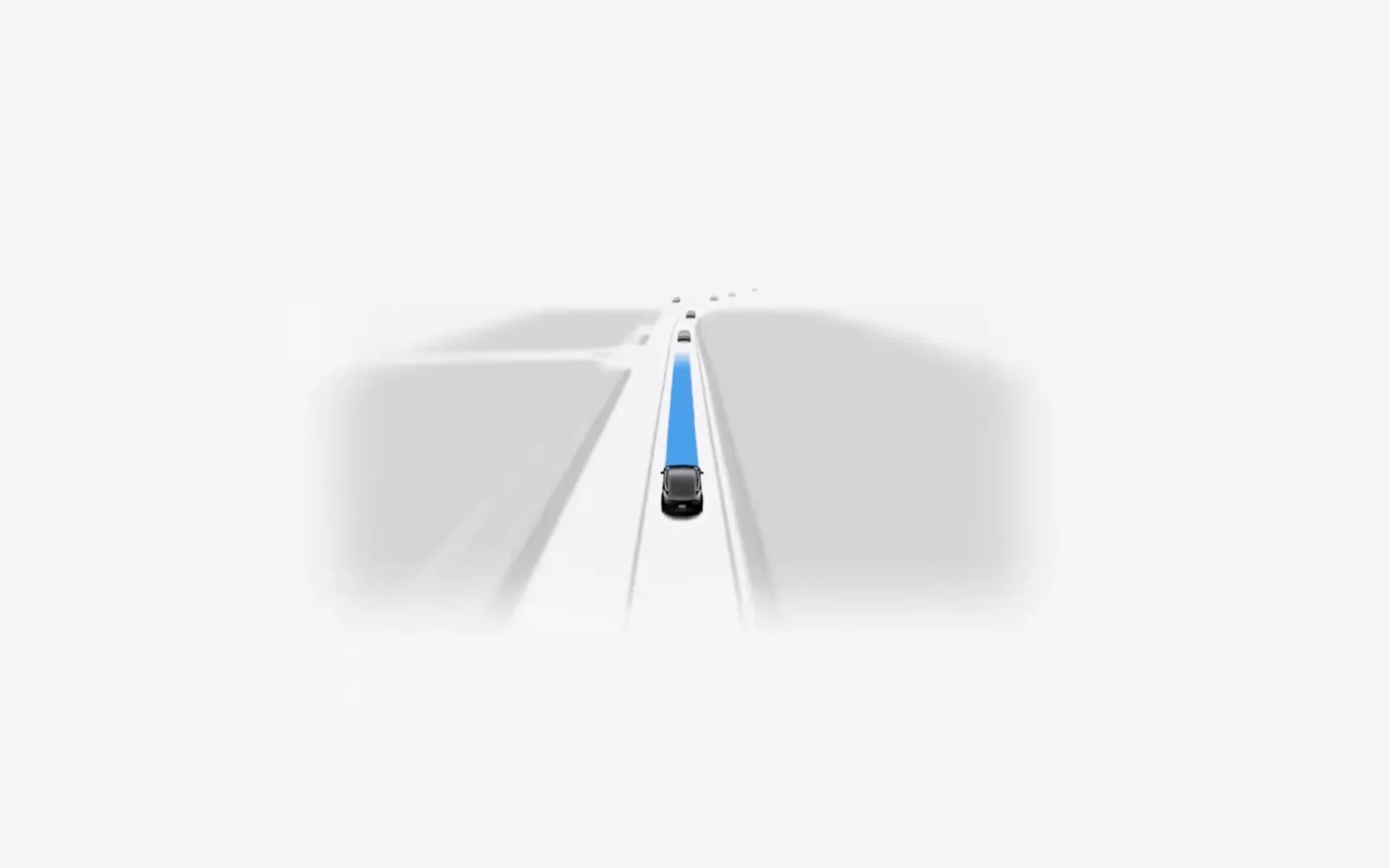
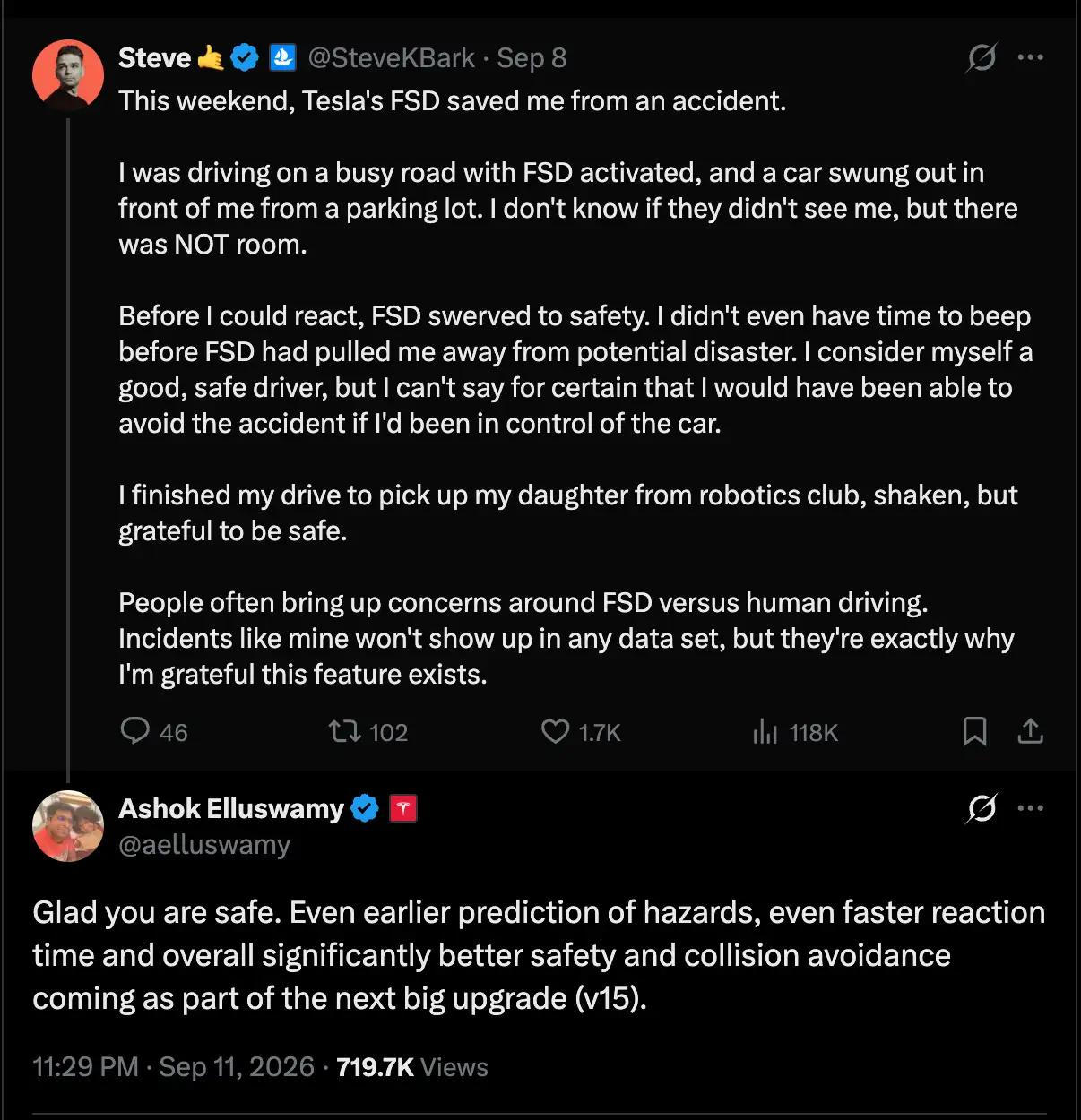
Tesla Vice President of AI Ashok Elluswamy said the coming version is expected to predict road hazards earlier, react faster and deliver major gains in safety and collision avoidance. His comments came after a Tesla owner described a close call in which FSD reportedly took evasive action before the driver could respond.
The owner said another car pulled from a parking lot into his path on a busy road when FSD was active. According to his account, there was too little room for the other vehicle to enter safely, and FSD steered away before he had time to react.
Elluswamy responded:
“Glad you are safe. Even earlier prediction of hazards, even faster reaction time and overall significantly better safety and collision avoidance coming as part of the next big upgrade (v15).”
Earlier hazard prediction is a major target
Earlier prediction could change how FSD handles situations such as a vehicle approaching the edge of a parking lot, another driver entering a lane or a road user moving onto a possible collision path.
Rather than waiting for danger to become immediate, the system could identify the developing risk sooner and prepare a response earlier. That extra time could give the vehicle more options to slow down, change its path or avoid a collision.
Faster reactions form the second part of that work. Tesla has already been reducing response time through updates to FSD v14. Now, Elluswamy says v15 is expected to go further. The combination of earlier prediction and shorter response time could give the system more time between detecting a threat and carrying out an evasive maneuver.
FSD v14.3.9 adds Automatic Collision Evasion
Tesla is already introducing related safety work through FSD (Supervised) v14.3.9, which includes a feature called Automatic Collision Evasion.
Tesla’s release notes describe a system that can use the FSD driving stack during manual driving when it detects an imminent frontal collision and braking may not be enough. The system can take evasive action under qualifying conditions rather than relying on braking alone.
The v14.3.9 branch includes changes to Tesla’s reinforcement-learning training process and neural-network vision encoder. Tesla says the work targets rare driving situations, low-visibility conditions, 3D geometry and traffic-sign recognition. So v14.3.9 provides some context for Elluswamy’s comments about v15. Tesla is already putting more of its driving model into safety interventions, and the next major version is expected to extend that work with earlier prediction and faster responses.
FSD v15 is expected to use a much larger model
Collision avoidance is one part of the planned v15 update. Tesla CEO Elon Musk has previously discussed a much larger driving model for the new generation of FSD. Musk’s comments have put the increase at roughly 10 times the parameter count used by the current model, moving from around 1 billion parameters to about 10 billion.
Musk said in April that Tesla planned to make v15 its larger model after engineers continued finding gains in the smaller architecture used for v14.
More parameters give a neural network greater capacity, yet model size alone does not establish better driving performance or greater safety. Training data, model architecture, inference performance and validation remain major parts of the result.
However, the larger model could provide more capacity for processing complicated road interactions and predicting how other road users may behave.
Early FSD v15 software is already running in Robotaxis
Development has moved beyond internal simulations and training runs. During Tesla’s Q2 2026 earnings discussion, Elluswamy said early FSD v15 software was already running in the company’s Robotaxi fleet.
He described the v15 program as having about 7 major development tracks. At that stage, roughly 40% of those tracks had been merged into the early version operating in Robotaxis.
Software referred to internally as v15 may still lack several parts planned for the completed customer release. Tesla can test individual improvements in its Robotaxi operation and combine more of the development branches as work progresses.
Elluswamy said Tesla was getting encouraging internal results from the program. He confirmed that the same v15 models are planned for Model Y and other Tesla vehicles, along with Cybercab.
Tesla has yet to announce a fixed date for the public rollout of FSD v15. Earlier information has placed the larger v15 architecture around late 2026 or early 2027. That period remains a development target rather than a confirmed customer release schedule, and Tesla’s previous FSD timelines have changed during testing.
Elluswamy’s latest comments add collision prevention to the clearest details released so far, with earlier hazard detection and faster reactions set to be central parts of Tesla’s next major FSD version.
We’ve launched an official Tesla Owners Online Forum. Join early and claim your "Founding Fuel" badge.