
Tesla is developing an in-house mapping and navigation system built on artificial intelligence, and the company expects the first parts of it to reach drivers with Full Self-Driving (FSD) v15. Ashok Elluswamy, Tesla’s head of AI, disclosed the plan on the company’s third-quarter 2026 earnings call, after a shareholder asked why the automaker still relies on map data from other companies.
According to Elluswamy, the system will start by handling the beginning and end of each trip before it takes over the rest of the drive in the months that follow. He said drivers will be able to talk to it, that it will learn their habits and that it will draw on data gathered across Tesla’s fleet.
What Elluswamy told shareholders
The question was one of several submitted by shareholders and read aloud during the Q&A portion of the call. It cited ongoing FSD trouble with speed limits, parking and route selection, and it asked why Tesla had not built maps of its own.
Elluswamy did not push back on the premise of the question. Instead, he agreed with it:
“You’re totally right that we shouldn’t be depending on external people’s maps. So we are building our own maps, but not like the same way as OpenStreetMap. We are building an entirely new architecture with essentially AI-based mapping and navigation.”
He then described what the finished product would look like from behind the wheel:
“It’s going to be super awesome. It’s going to be integrated with voice. You can talk to it, ask for different routes. It’s going to learn your personalized preferences, plus the fleet preferences. The collective intelligence of all the cars is going to flow into making the maps and navigation super cool.”
As for timing, he said the start and end of trips would run on the new technology “pretty soon as part of the V15 release.”
How Tesla navigation works today
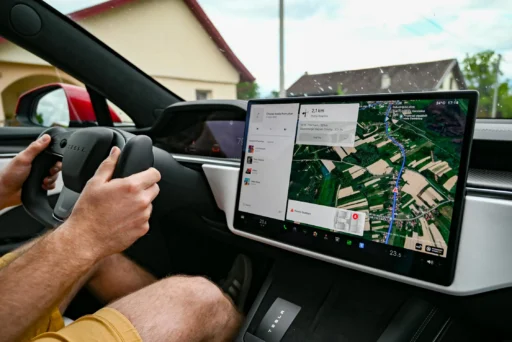
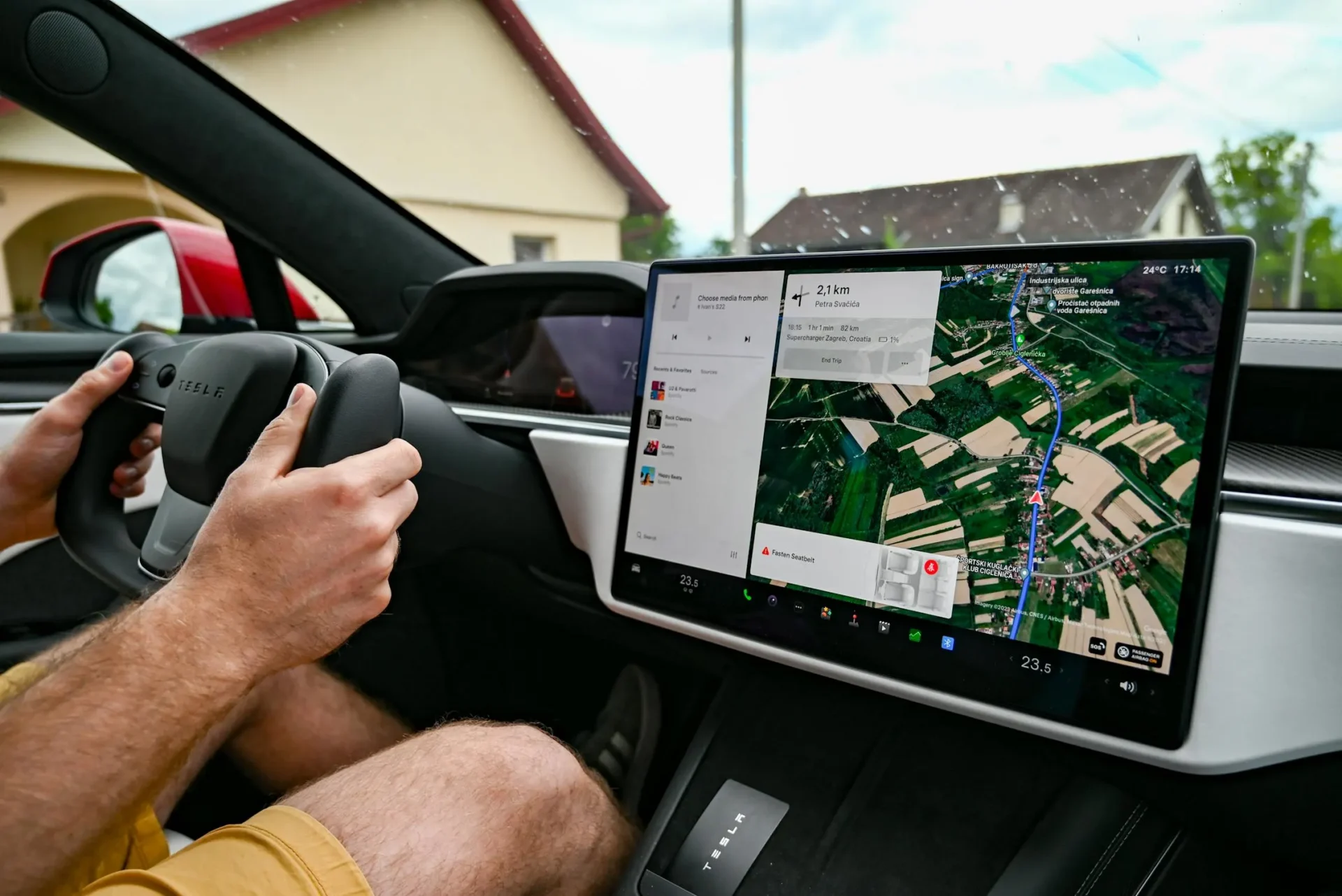
Tesla’s current setup pairs outside data with software the company writes itself. Google supplies map tiles, street-level data, satellite imagery, location listings and live traffic through its APIs, and Tesla builds the navigation app and calculates the routes on its own.
That arrangement leaves FSD exposed to errors in data Tesla does not control. Wrong or outdated speed limits, awkward behavior in parking lots and odd route choices rank among the complaints owners raise most often, and they were the same problems the shareholder listed. With a map layer of its own, Tesla could fix those errors with fleet data instead of waiting for a supplier to update its records.
The company has already taken a few steps in this direction. Its 2026 Summer Update added Preferred Routes, and it extended Automatic Navigation so the car can route on its own to places an owner visits often, beyond home and work.
What the new system would include
Tesla has not published a technical paper on the project, though Elluswamy’s remarks outlined four main parts.
- AI-built maps: In place of a traditional map database that people edit by hand, Tesla is creating a new architecture based on AI.
- Voice control: Drivers would be able to speak to the navigation system and ask for different routes, a feature that fits with the Grok voice controls for FSD that Tesla has promised to deliver this fall.
- Personal learning: The system would remember the preferences of each driver, which takes the idea behind Preferred Routes a step further.
- Fleet learning: Information gathered by millions of Teslas would feed back into a shared map, so a correction picked up by one car could improve routing for every other car on the same road.
Tesla revisits its long-held view on maps
For a company that built its self-driving strategy around cameras, the plan marks a notable change in tone. Back in 2019, at Tesla’s Autonomy Day event, Elon Musk called high-definition maps a “really bad idea” and argued that they make a self-driving system brittle when roads change. Since then, Tesla has maintained that cameras paired with AI should be able to drive almost anywhere without that kind of map.
The plan differs from the approach used by Waymo, which maps cities with lidar-equipped vehicles before it launches service there. Tesla has not mentioned building centimeter-accurate HD maps, and its maps would instead be created and kept current by customer cars.
So why make the move now? The answer appears tied to the company’s autonomy plans. On the same call, Elluswamy said FSD v15 will be the same software that runs Tesla’s Robotaxi fleet, and he projected that customer-owned cars could begin joining that fleet around the second quarter of 2027. For a car with nobody behind the wheel, a wrong speed limit or a missed pickup spot is a far bigger problem than it is for a car with a driver watching the road.
Rollout timeline
Tesla plans to release the system in stages. FSD v15 is targeted for customers in late 2026, and the new maps will first take on trip departures and arrivals before parking, voice-based route changes and the rest of navigation follow over the next several months.
Tesla did not say if the new maps will replace Google data across its navigation app, which vehicles will get the system or how owner data will be collected.
Tesla has missed its own autonomy deadlines in the past, so owners may want to treat these dates as goals and not firm commitments. The first real test will come when FSD v15 ships and drivers can judge for themselves how well it handles pickups and drop-offs.
We’ve launched an official Tesla Owners Online Forum. Join early and claim your "Founding Fuel" badge.