
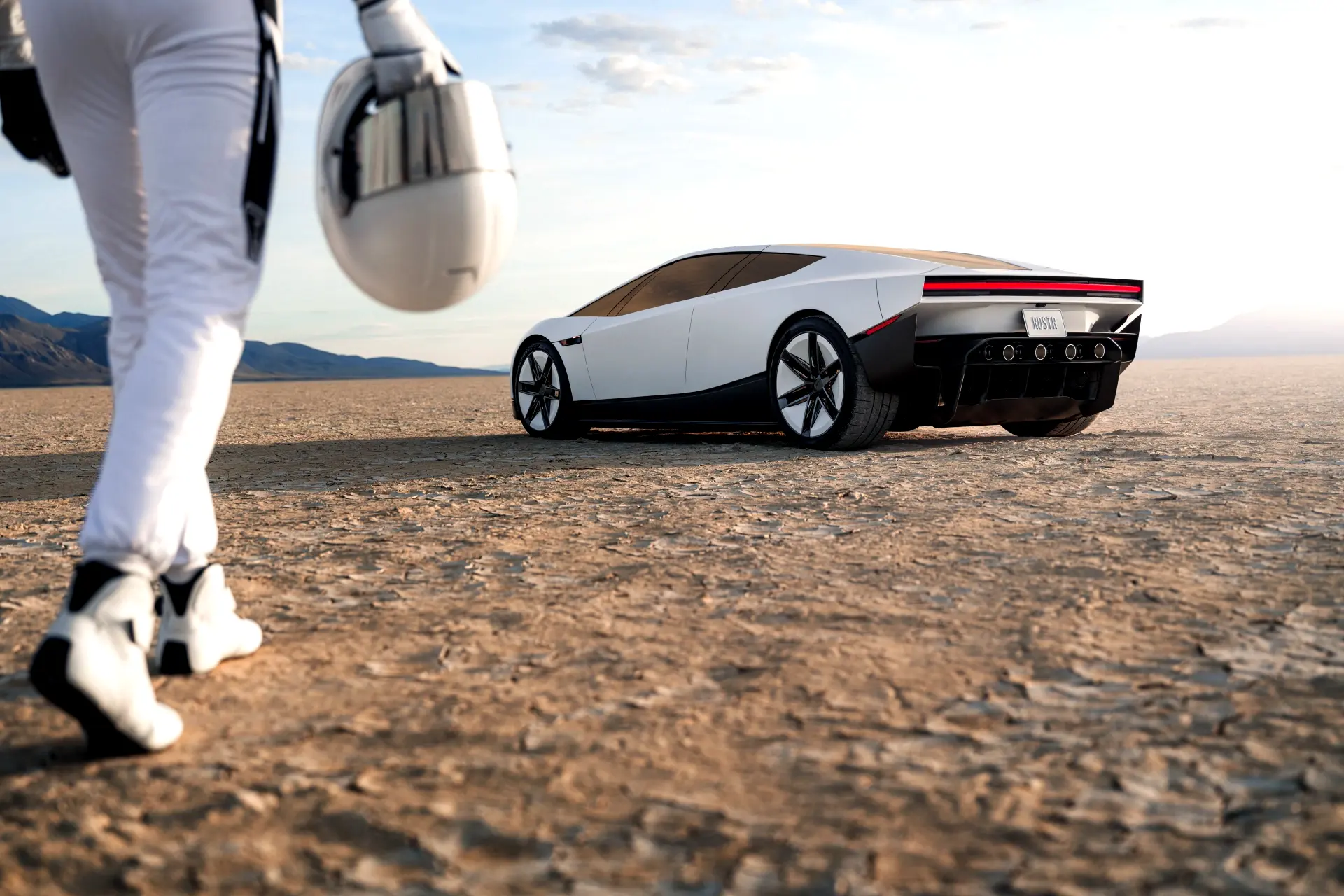

Tesla finally put its second-generation Roadster in front of a live audience on Thursday night, October 15, 2026, and the car did a lot more than drive. The event was held near SpaceX’s McGregor test site outside Waco, Texas, where the Roadster used a mix of fans and cold-gas thrusters to climb a curved ramp until it was running upside down. From there it launched off the end of the ramp, flipped in midair and landed back on the pavement.
“Well, it worked,” Elon Musk told the crowd. “Flying cars are real.”
After that, the demo kept going. In one run the Roadster hovered over a row of Tesla vehicles that included a Cybercab, a Cybertruck, a Tesla Semi, a Model Y and a Model 3, and in another it went from 0 to 60 mph in about one second. Musk told the audience “this will be the actual car that’s on the roads” and said the car “literally is just going to puff itself up” any time an owner wants to try the same moves.
He gave credit to Tesla and SpaceX engineers working together on the project, calling the result “better than any James Bond car.” Tesla design chief Franz von Holzhausen and vehicle engineering head Lars Moravy were on site for the reveal.
Three versions with very different price tags
Tesla is offering the new Roadster in three configurations, and each one is aimed at a different kind of driving. The company calls Performance road ready, Thrust race ready and Rocket air ready. On its Roadster page, Tesla sums up the top model in four words: “So…yes, it can fly.”
| Configuration | Seats | 0–60 mph | Hardware | U.S. deposit | Canada deposit | Availability |
|---|---|---|---|---|---|---|
| Performance | 2 | Under 1.6 seconds | Active aerodynamics and a fan-driven suction system | US$50,000 | C$70,000 | By reservation |
| Thrust | 2 | Under 0.9 seconds | Adds rear-mounted cold-gas thrusters | US$250,000 | C$350,000 | Limited release |
| Rocket | 1 | Under 0.59 seconds | Perimeter-mounted thrusters for forward, upward and rotational movement | Not listed | Not listed | Invite only |
These figures replace the targets Tesla had published before. Buyers can place reservations through the newly reopened configurator, but the amounts above are deposits and not final prices. Tesla lists a top speed above 230 mph and a range of more than 300 miles.
How the Roadster gets off the ground
So how does a car fly without rocket fuel? Tesla’s answer is compressed air. The car stores air in two carbon-fiber overwrapped pressure vessels, known as COPVs, which hold a combined 600 liters and roughly 250 kilograms of air. That air is released through 10 cold-gas nozzles, and the car can refill its own tanks, so no special propellant is needed to repeat a maneuver.
Tesla says the thrusters produce four to five times the force a car’s tires can handle. That figure sits at the center of its pitch, since tire grip is the limit on how hard any conventional car can accelerate. On the Rocket model, thrusters placed around the edge of the body handle forward thrust, lift and rotation, and all-electric actuators make small, fast corrections to keep the car steady in the air.
Before it can fly, though, the Roadster has to stick to the ramp. A fan and ground-sealing system pulls air from under the car and creates enough suction to hold it upside down, even when it’s standing still. During the event, the car was pinned to the ramp by more than 4,700 kilograms of downforce before it took off.
Several basic details are still missing. Tesla hasn’t said how long Rocket can stay airborne, how high it can climb or how quickly the tanks refill, and it’s not yet clear if customer cars will match what the demo car did on stage.
Design, cabin and driving setup
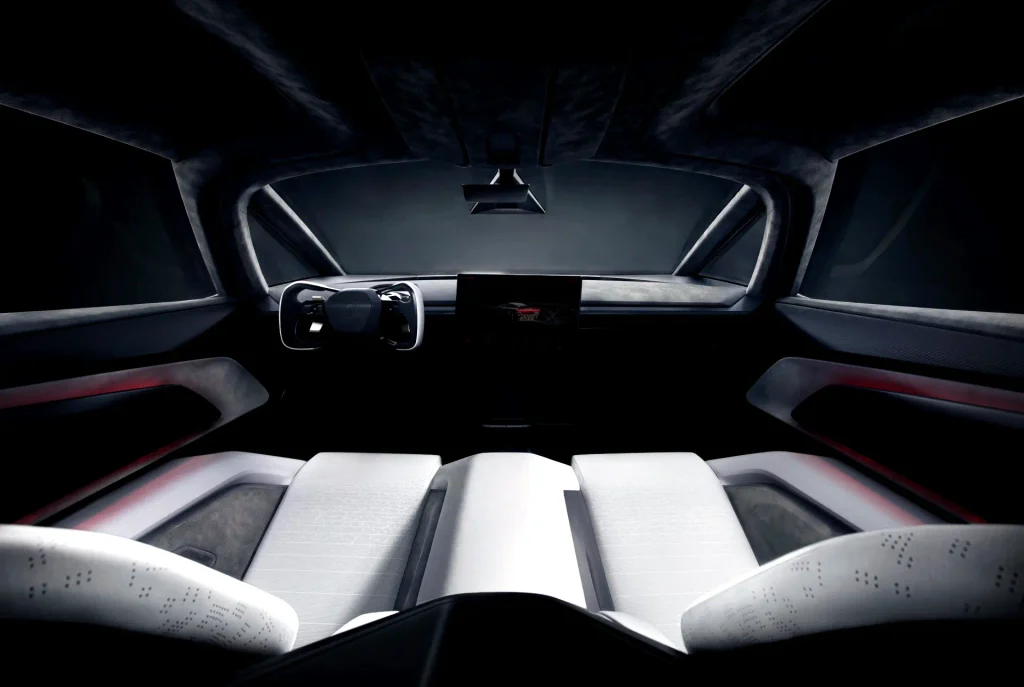
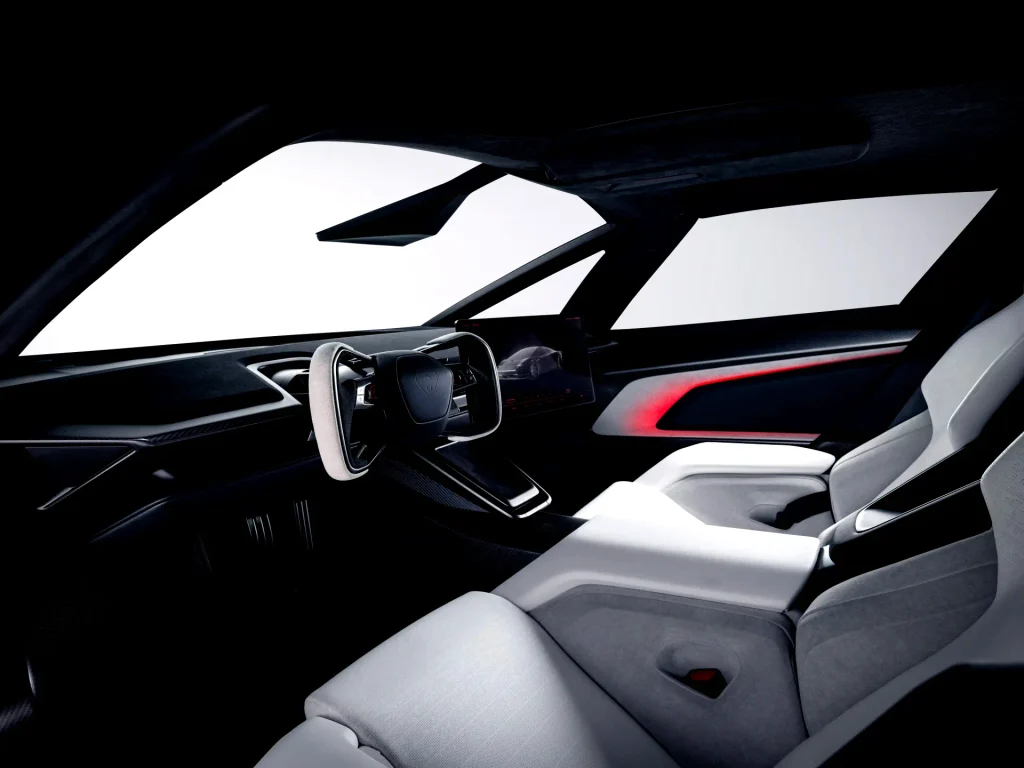
Beyond the thrusters, Tesla has packed the Roadster with hardware meant for the track. The car gets active wings and a Track Mode that lowers its ride height, and steering runs through a steer-by-wire system with a yoke. To keep weight down, engineers turned to magnesium, titanium and carbon fiber and went with manual controls and a fixed seat position.
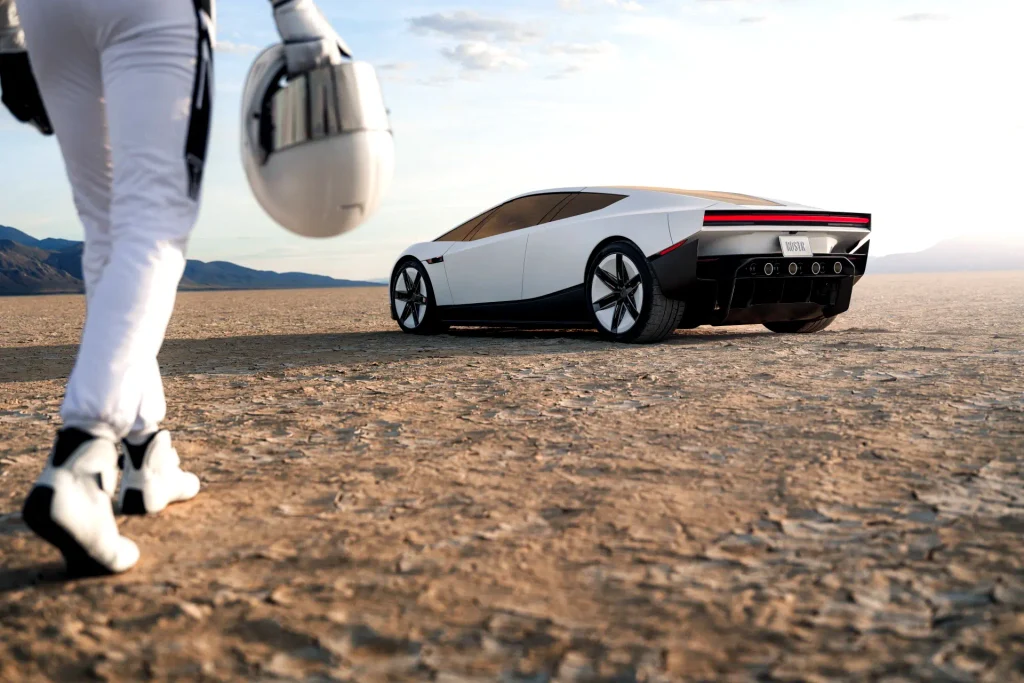
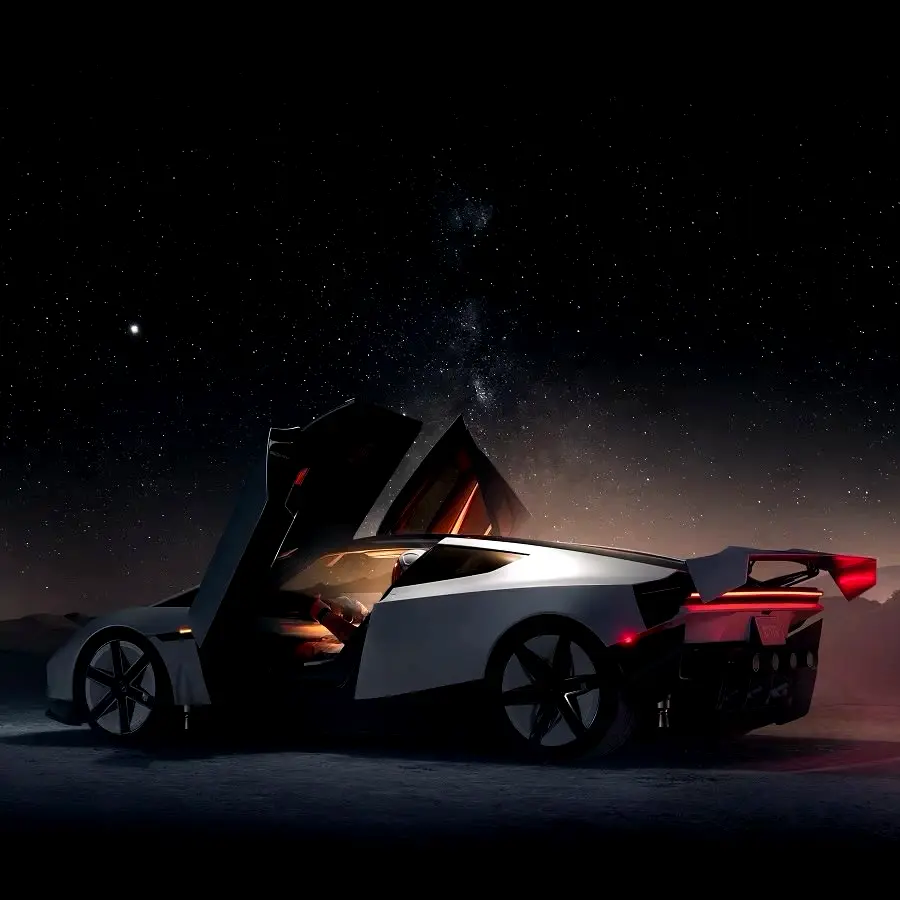
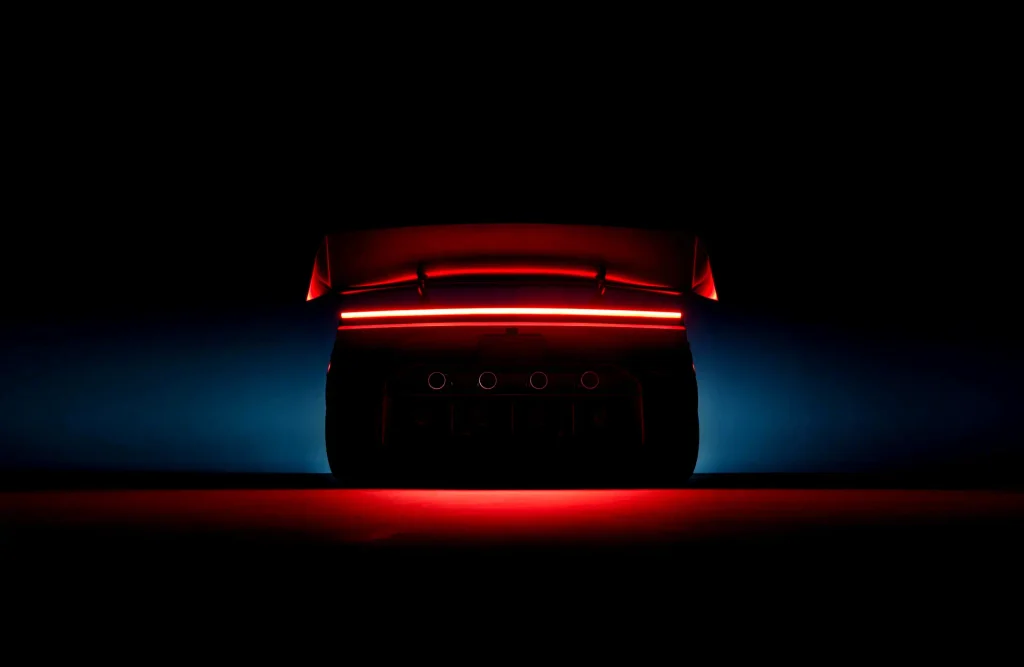
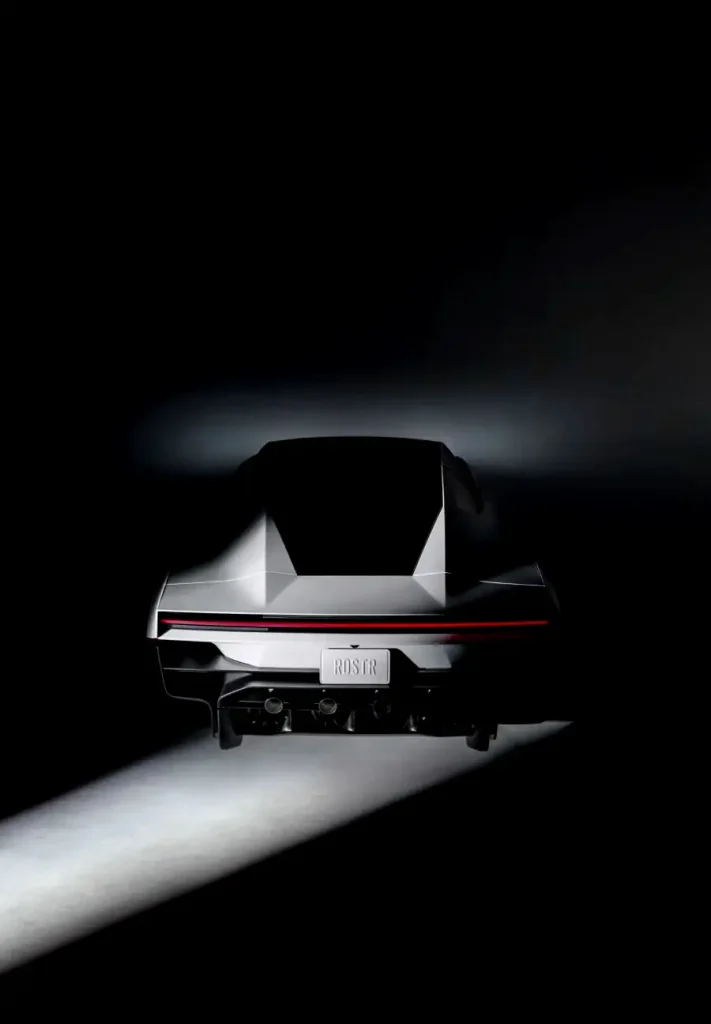
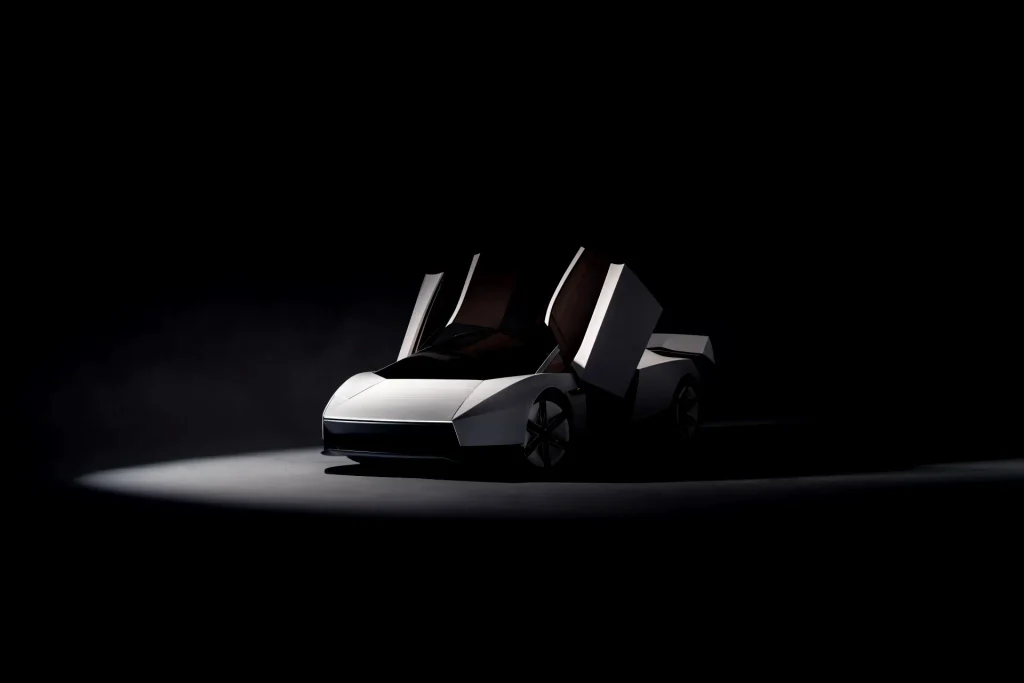
On the outside, the headlights are hidden and one taillight stretches across the full width of the rear. The paint is called Ano White, and Tesla says the aerospace-style finish protects against UV light and cryogenic temperatures and resists corrosion and static buildup. Then there’s the glass, which carries a gold tint modeled on the copper coating of spacesuit visors, with small titanium accents. The wheels are light, with thin spokes that Tesla says add structural strength.
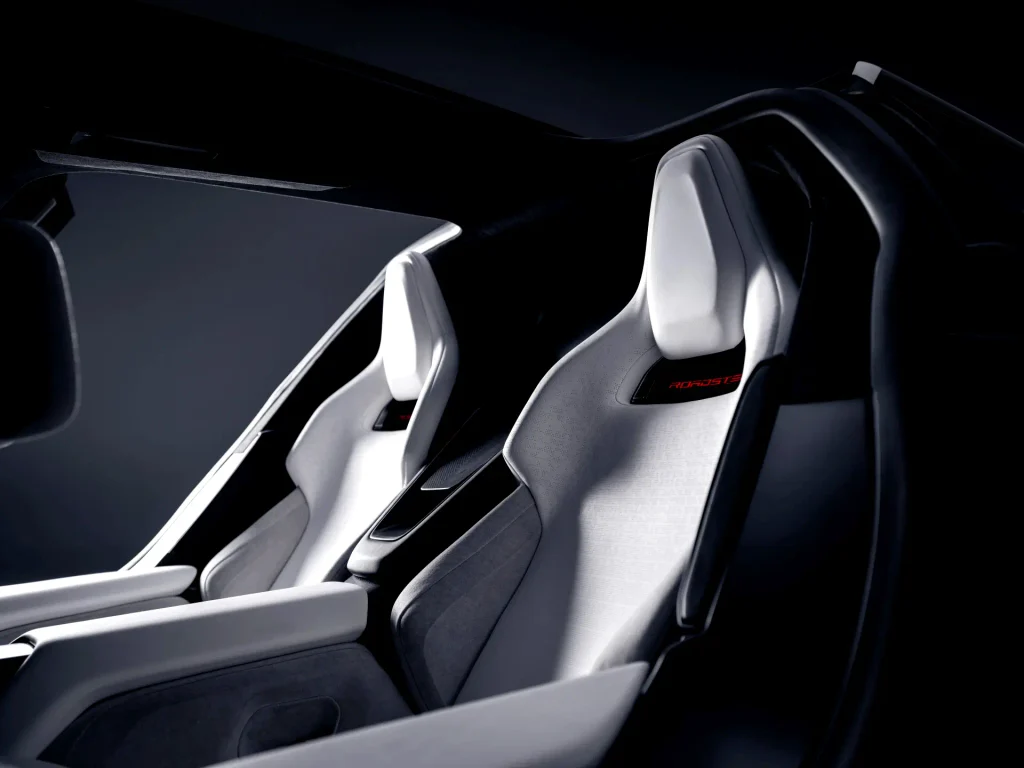
Inside, the setup is just as spare. Owners get an Ultrawhite interior with gray microsuede, a center touchscreen and two smaller displays in front of the driver.
Nine years from first look to first flight
The car took a long time to get here. Tesla first showed the second-generation Roadster in November 2017 and promised a 0-to-60 mph time of 1.9 seconds and a range of 620 miles. After that, the program slipped year after year as the company put its money and engineers into higher-volume vehicles like the Model Y and the Cybertruck.
Along the way, Musk kept teasing a “SpaceX package” built around cold-gas thrusters, and the 2026 version turns that idea into the base of the entire lineup. And in the hours before the event, Musk hinted the demo “could be a bang, quite literally.”
Production plans and pricing
Tesla now plans to build the Roadster at Giga Texas, with production set to begin in 2028, and Musk said it will happen “for real this time.” Earlier, he had said production would follow the demo by 12 to 18 months.
Final prices are still unknown. At this stage the configurator only takes deposits, so buyers can’t yet see what each version will cost once that money is applied. Musk doesn’t expect the car to bring in much revenue either. He has called it a halo product and “the best of the last of the human-driven cars,” and he said he is “not sure it moves the needle massively from a revenue standpoint.”
Safety and legal questions
Tesla’s own fine print raises the first red flag. The company says the Roadster is not approved for public road use, and the Rocket version won’t be offered in every region.
Musk was blunt about the risks too. “I should say that this is not necessarily a safety-optimized car,” he said during the livestream, and he has warned that anyone who puts safety first shouldn’t buy one.
Regulators haven’t commented yet. It’s not clear how a car that can hover and flip would get certified for public roads, or if aviation rules would come into play for Rocket.
Then there’s Tesla’s record on this car. The 2017 performance targets and several later timelines all slipped, and even this reveal was expected on October 1 before it moved to mid-October. As Drive Tesla noted, there are still open questions about how much of the promised performance will make it into the cars customers receive.
Tesla reports third-quarter earnings on October 21, and analysts are likely to press executives on the Roadster’s cost and expected sales volume. Beyond that call, the next steps to watch are final pricing for each version, approval for road use and a clear answer on where Rocket can legally be sold.
Musk has teased one more stunt, an attempt at Evel Knievel’s famous Snake River Canyon jump, and no date has been set. Still, the real test will come in 2028, when Giga Texas is supposed to start building customer cars.
We’ve launched an official Tesla Owners Online Forum. Join early and claim your "Founding Fuel" badge.