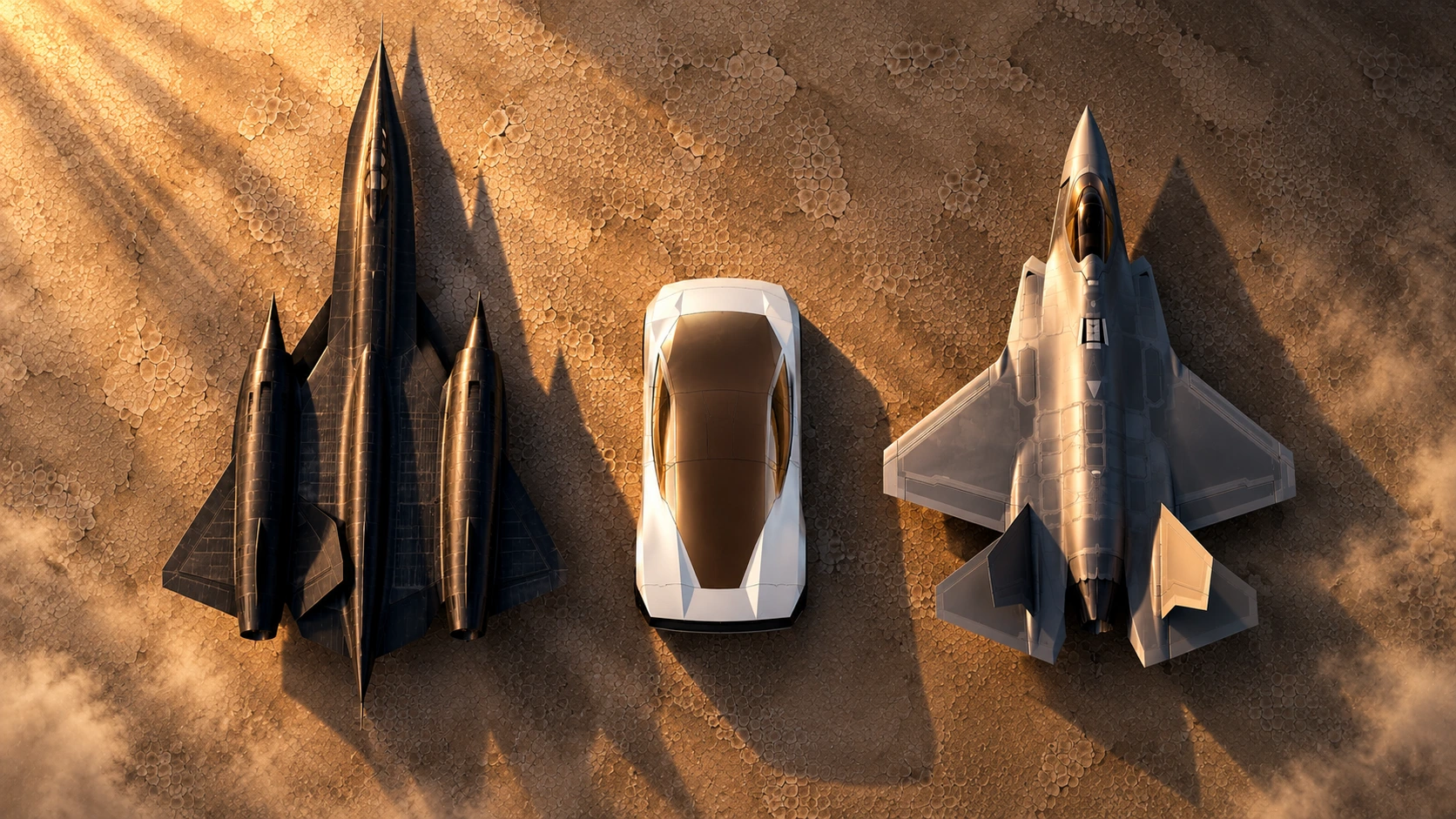

Tesla says the second-generation Roadster it revealed on October 15, 2026, borrows its shape from two military jets, the Lockheed SR-71 Blackbird and the F-35 fighter. The company made the claim in a short design film and a post on X, a day after it put the car through a live demonstration at SpaceX’s McGregor test site near Waco, Texas.
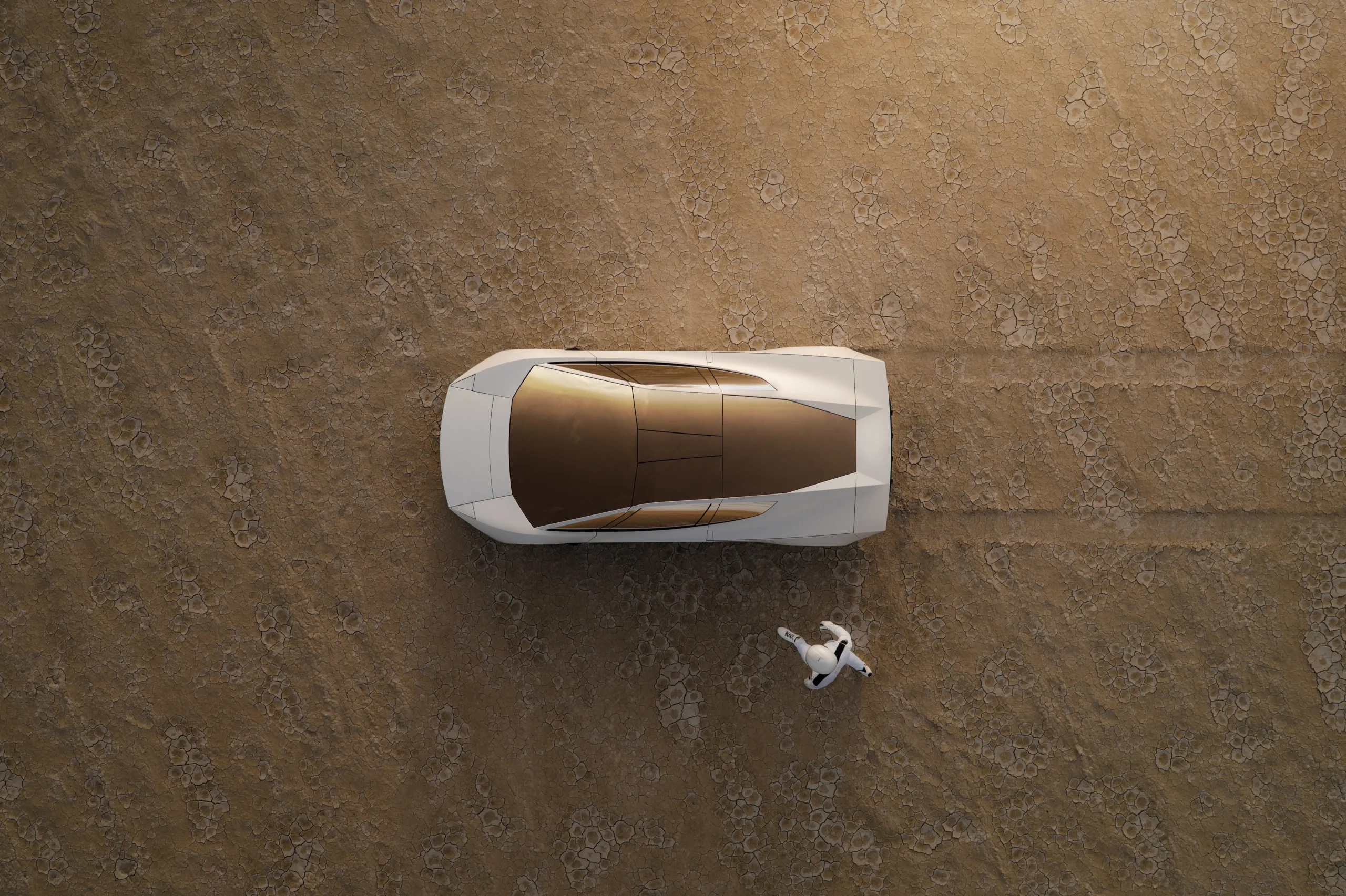
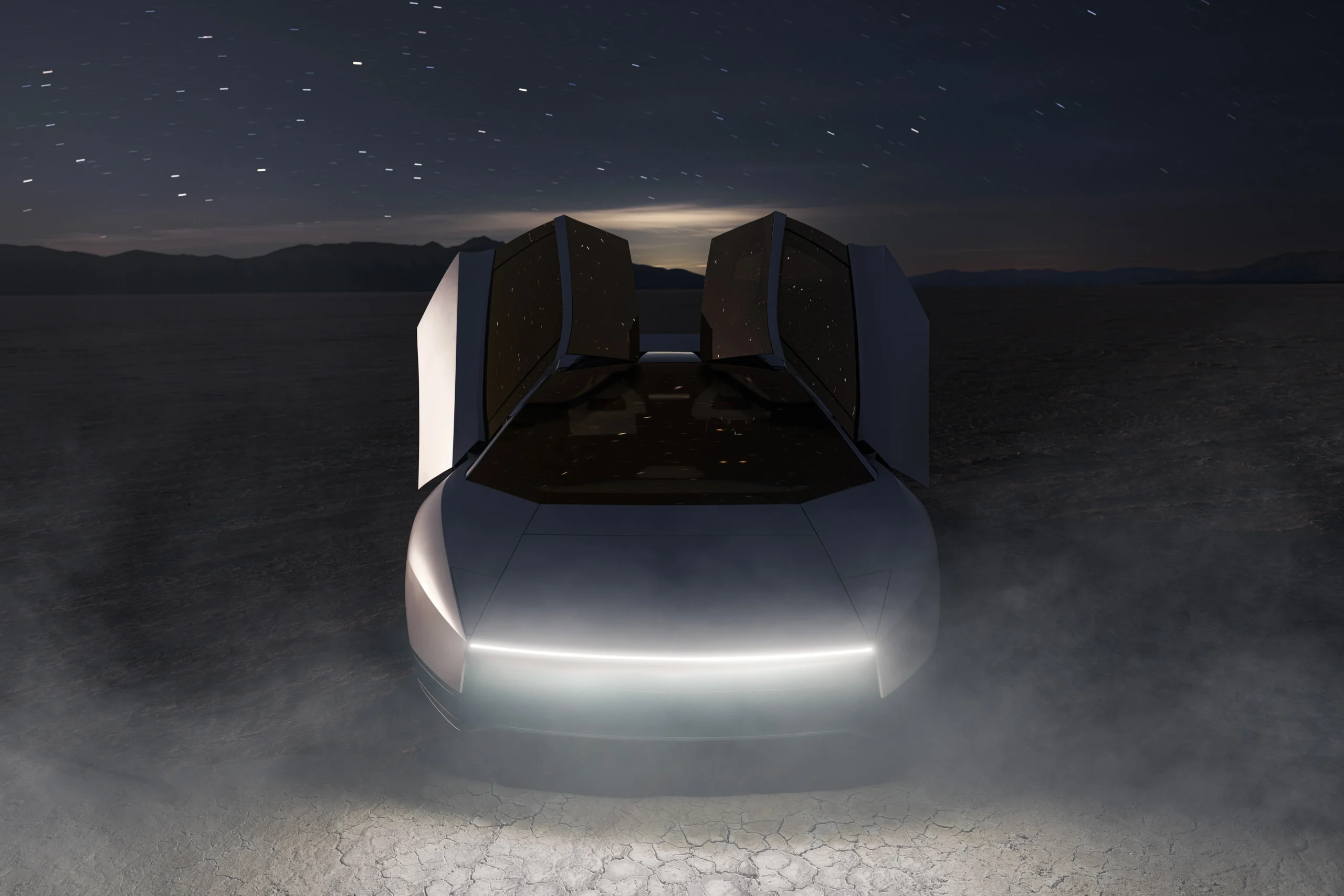
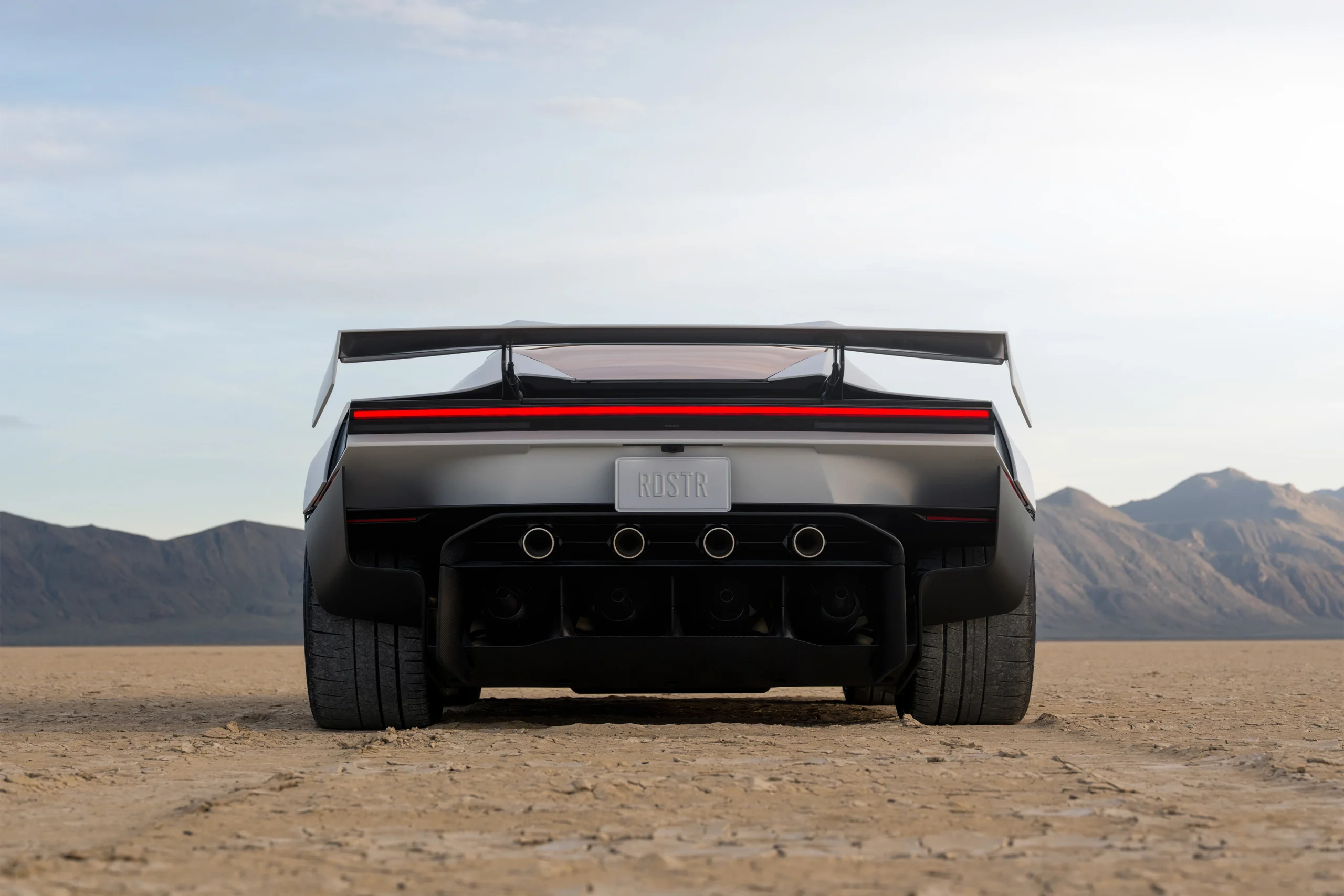
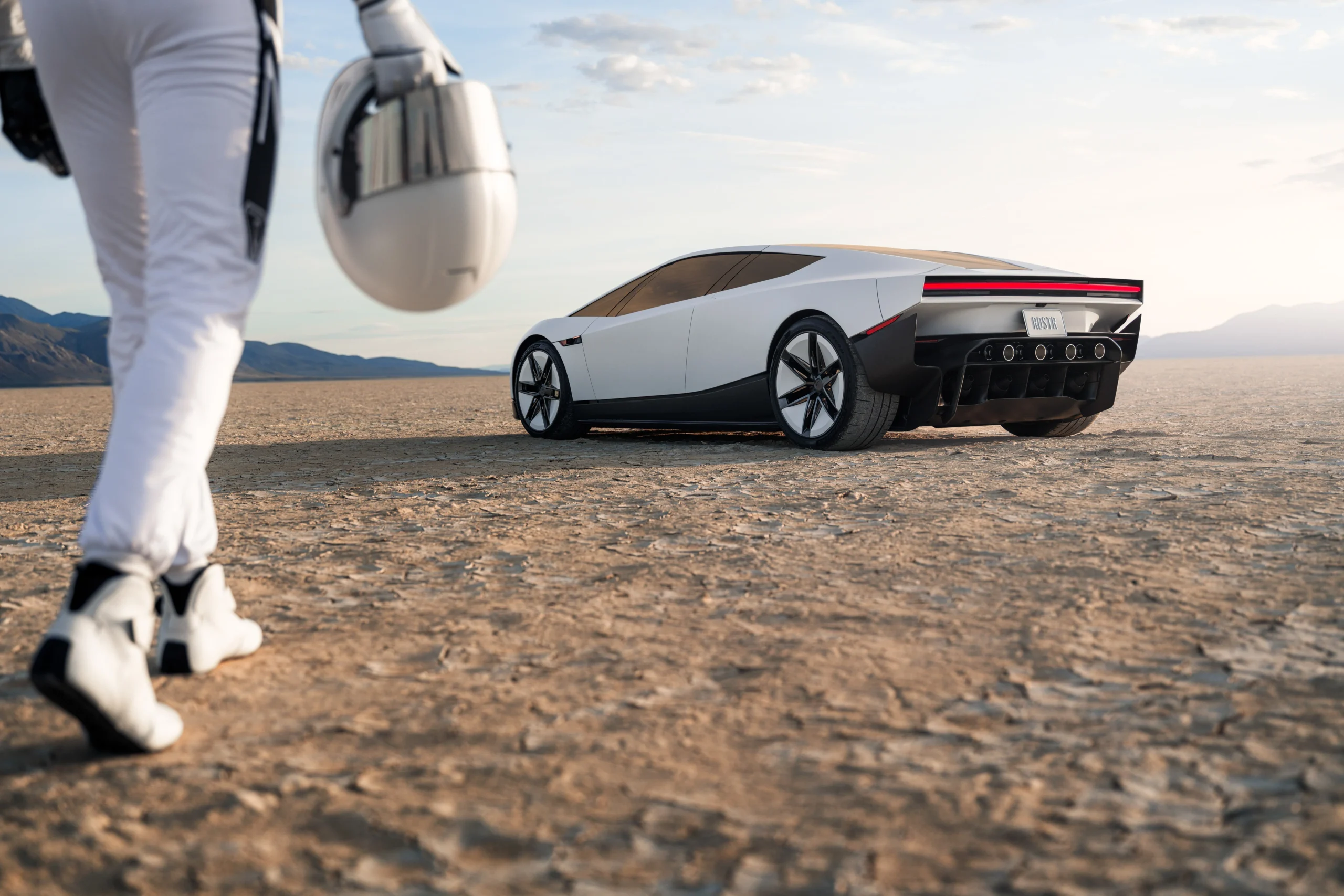
The post read: “Our design language has evolved since the last reveal: from S3XY to Cybertruck, Cybercab & Optimus. Roadster is inspired by the SR-71 & F-35.” But the aviation theme goes well past styling, and the top version of the car uses cold-gas thrusters developed with SpaceX to leave the ground for brief moments.
Musk wrote on X after the event, “Turns out the future does have flying cars.” Production is now planned for 2028, almost nine years after Tesla first displayed the Roadster concept in 2017.

Jet-inspired styling
Instead of adding wings or fins, Tesla brought the aircraft influence in through hidden and flush surfaces. The headlights are concealed and the body panels sit flush, and a single taillight runs the full width of the rear, giving the car the smooth skin people associate with stealth aircraft like the F-35.
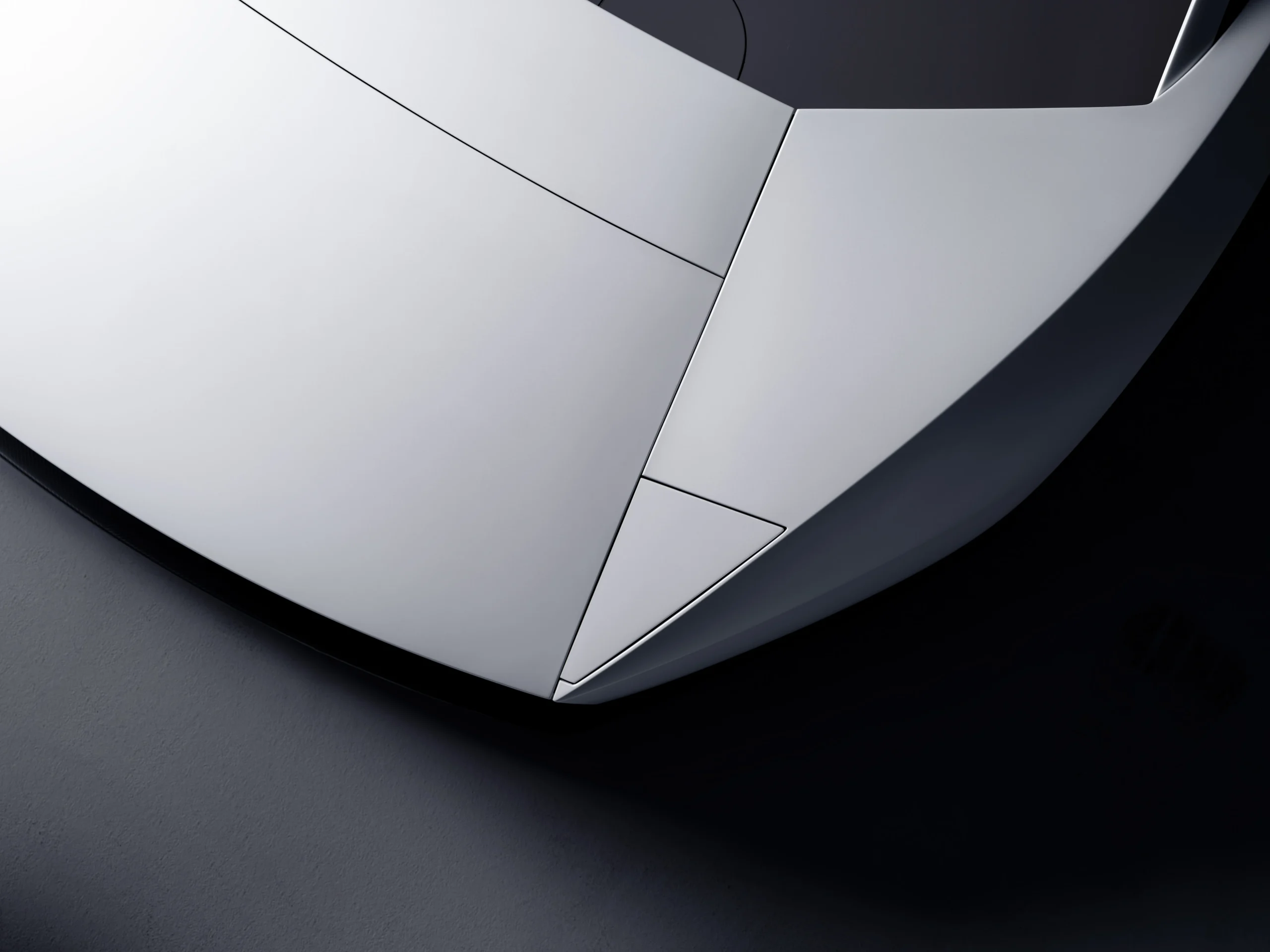
Tesla paired that body with a new paint called Ano White. The company says the finish comes from aerospace use and gives UV and cryogenic protection along with electrostatic dissipation and corrosion resistance. The glass carries a Gold Glazed tint modeled on the copper coating found on astronaut helmet visors, and the wheels use thin spokes meant to cut weight without giving up strength.
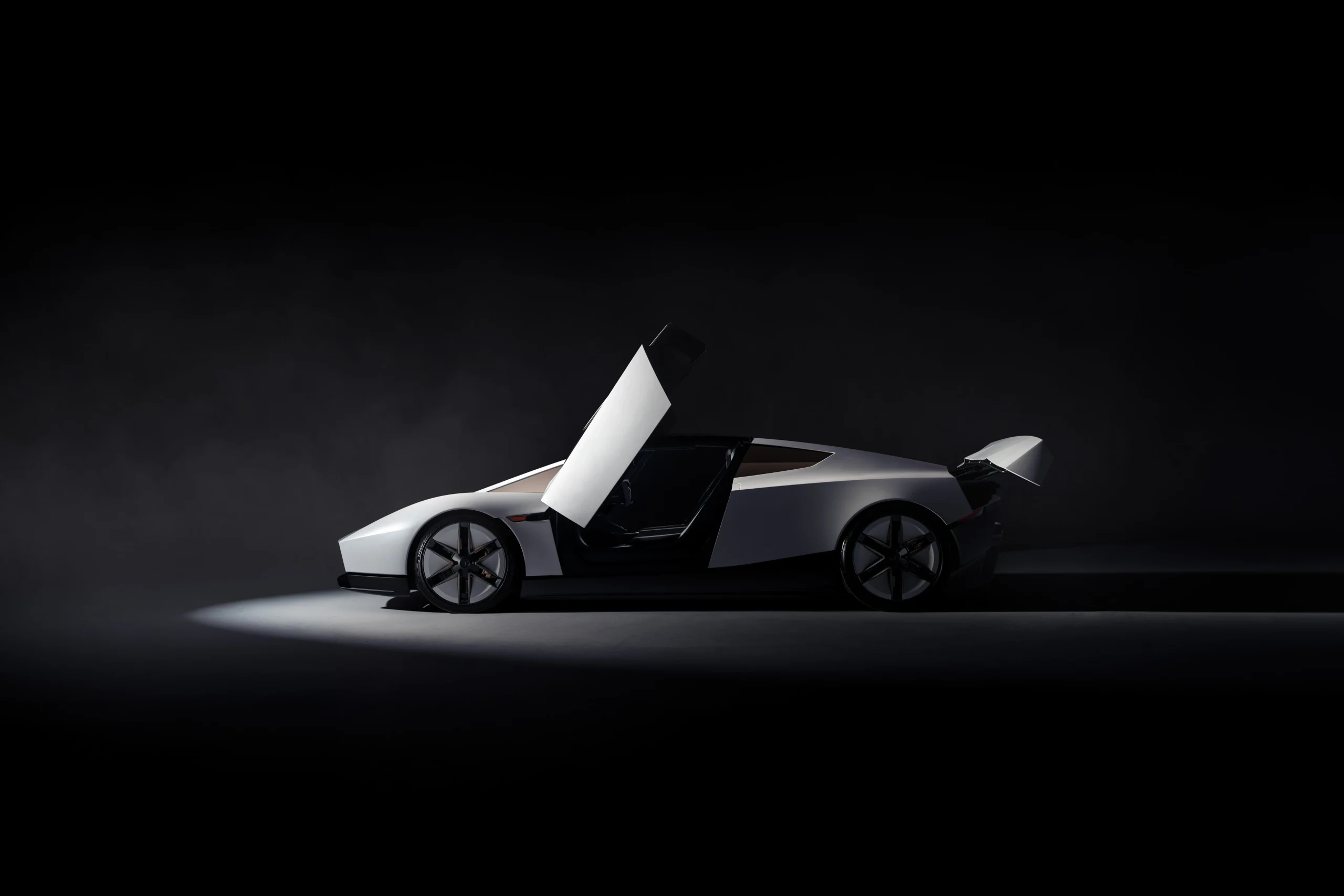
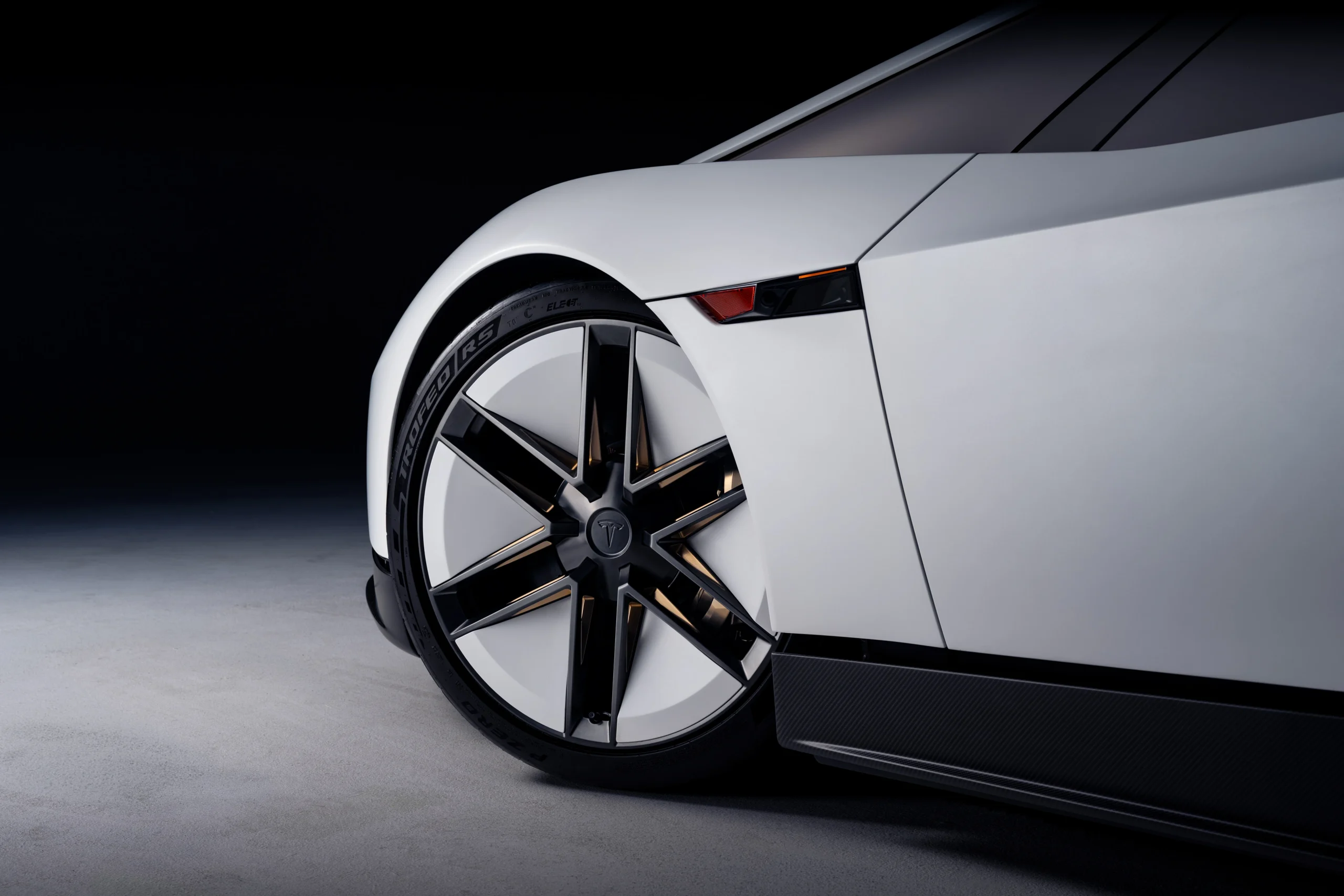
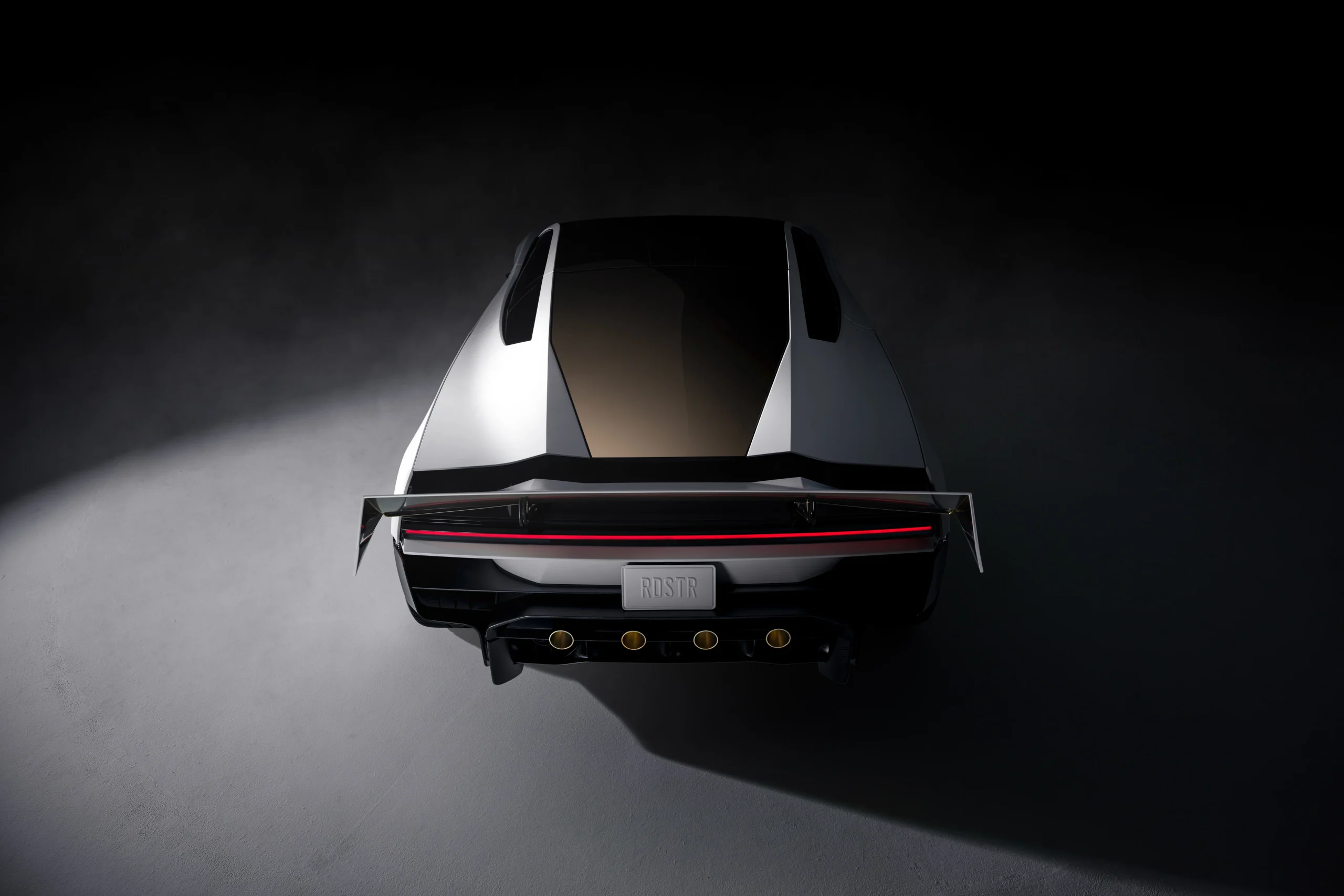
In its 76-second design film, Tesla places the Roadster at the end of a styling line that started with the S3XY lineup and continued through the Cybertruck, the Cybercab and the Optimus robot.
So why these two jets? The SR-71 was retired in 1999 and still holds the title of fastest crewed air-breathing jet ever flown. The F-35, by comparison, is a single-seat stealth fighter whose short-takeoff version uses directed thrust to hover and land, an idea with a clear parallel in the Roadster’s thrusters.
Three versions with rising capability
Tesla will sell the Roadster in three versions called Performance, Thrust and Rocket, with each one adding hardware on top of the last.
The Performance model is the road car of the group. It seats two and relies on active aerodynamics and a multi-mode suction system to hold the car to the pavement, and Tesla claims it reaches 60 mph in less than 1.6 seconds.
Next comes the Thrust, which keeps two seats but adds cold-gas thrusters at the rear for track use. With that hardware in place, Tesla says the car gets to 60 mph in under 0.9 seconds.
At the top sits the Rocket, a single-seat car with 10 thrusters placed around its edges and a dual-motor setup rated at more than 1,500 hp. Tesla puts its 0-60 mph time below 0.59 seconds, and it is the only version built to fly. Buyers can’t simply order one, though, since Tesla offers the Rocket by invitation only.
Across the lineup, Tesla quotes a top speed above 230 mph (370 km/h) and more than 300 miles (483 km) of range, but it hasn’t broken those figures out by version. During the event the company posted a live 0-60 mph run of 0.81 seconds and didn’t say which version made it.
How the thrusters work
The headline feature is cold-gas propulsion, which vents compressed air through nozzles to push the car. SpaceX has used the same principle for decades to position spacecraft, yet Tesla says moving it into a road car took new hardware and new control systems.
The air is stored in carbon-fiber overwrapped pressure vessels, or COPVs, and Tesla’s engineers said two tanks hold roughly 250 kilograms of air feeding 10 nozzles. According to Musk, the car refills those tanks on its own, so owners won’t need any special propellant.
Tesla claims the thrusters can produce four to five times the force that tires can deliver, which would let the car accelerate past the limit normally set by grip.
Then there’s the suction system. A set of fans pulls the car down against the surface beneath it, and during the demonstration it held the Roadster upside down before the thrusters flipped it through the air.
In Track Mode, active aerodynamic parts deploy to create downforce that Tesla says comes close to Formula 1 levels. The moving rear wing runs on actuators first built for the Optimus humanoid robot.
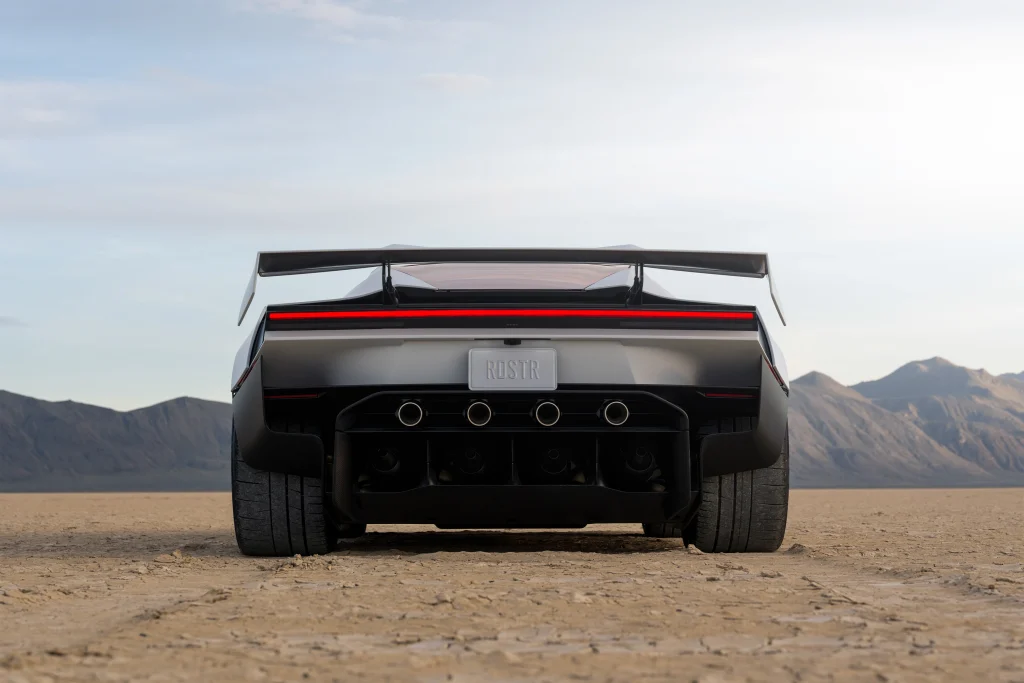
To save weight, Tesla used magnesium, titanium and carbon fiber, and it went with manual controls and a fixed seating position in place of heavier adjustable parts.
The live demonstration included an inverted drive, an airborne flip and a barrel roll, and at one stage the car jumped over a Cybercab, a Cybertruck, a Semi, a Model Y and a Model 3. Tesla calls the Roadster a “pilot’s car,” and Musk said it will be the only manually driven car the company makes over the long term.
Pricing and a long wait
Tesla has reopened reservations, but it still hasn’t set a sticker price for any version. Buyers start with a refundable $5,000 deposit, and within 10 days they must pay a second amount of $45,000 for the Performance or $245,000 for the Thrust, or Tesla cancels the order. Each customer can reserve only one Thrust, which the company puts down to limited supply.
For early buyers, the wait has been long. When Tesla first displayed the Roadster in November 2017, it promised a 1.9-second 0-60 mph time and a 620-mile range, with production slated for 2020. The production-intent car arrived in October 2026 instead, and Musk now targets 2028 for the start of production.
The acceleration numbers have improved a great deal since then. Range, however, has fallen by about half to more than 300 miles. Some reservation holders gave up along the way, among them OpenAI CEO Sam Altman and tech reviewer Marques Brownlee.
Safety and regulatory questions
Musk was frank about the risks. He said the Roadster is “not necessarily a safety-optimized car” and questioned if it would be legal in every jurisdiction, and only the invitation-only Rocket is built to fly.
Others in the industry have raised their own doubts. XPeng CEO He Xiaopeng called the car “very cool” but flagged flight certification as a hurdle, and any car that leaves the ground could draw attention from aviation regulators on top of road-safety agencies.
Tesla hasn’t yet proven that production cars can match the numbers from the demonstration. And with the Roadster already eight years past its first production target, skeptics have reason to wait for actual deliveries.
Meanwhile, investors took a mixed view. Tesla shares rose after the event, but the reveal split opinion between fans and doubters.
What the aircraft comparison says about Tesla
The SR-71 and F-35 references have less to do with the car’s looks than with the image Tesla wants to project, that of an aerospace-minded company that happens to build cars. SpaceX thrusters, Optimus actuators and the “pilot’s car” label all fit that picture.
In financial terms, though, the Roadster carries little weight. Musk acknowledged the car would have a limited effect on Tesla’s results, and analysts say it works best as an engineering demonstration rather than a volume product. Wedbush analyst Dan Ives, for example, ties Tesla’s 2027 outlook to robotaxis and Optimus robots, not sports cars.
The next real test comes sooner. Tesla reports third-quarter 2026 earnings on October 21, and investors are expected to focus on autonomy there, not on a flying Roadster.
We’ve launched an official Tesla Owners Online Forum. Join early and claim your "Founding Fuel" badge.