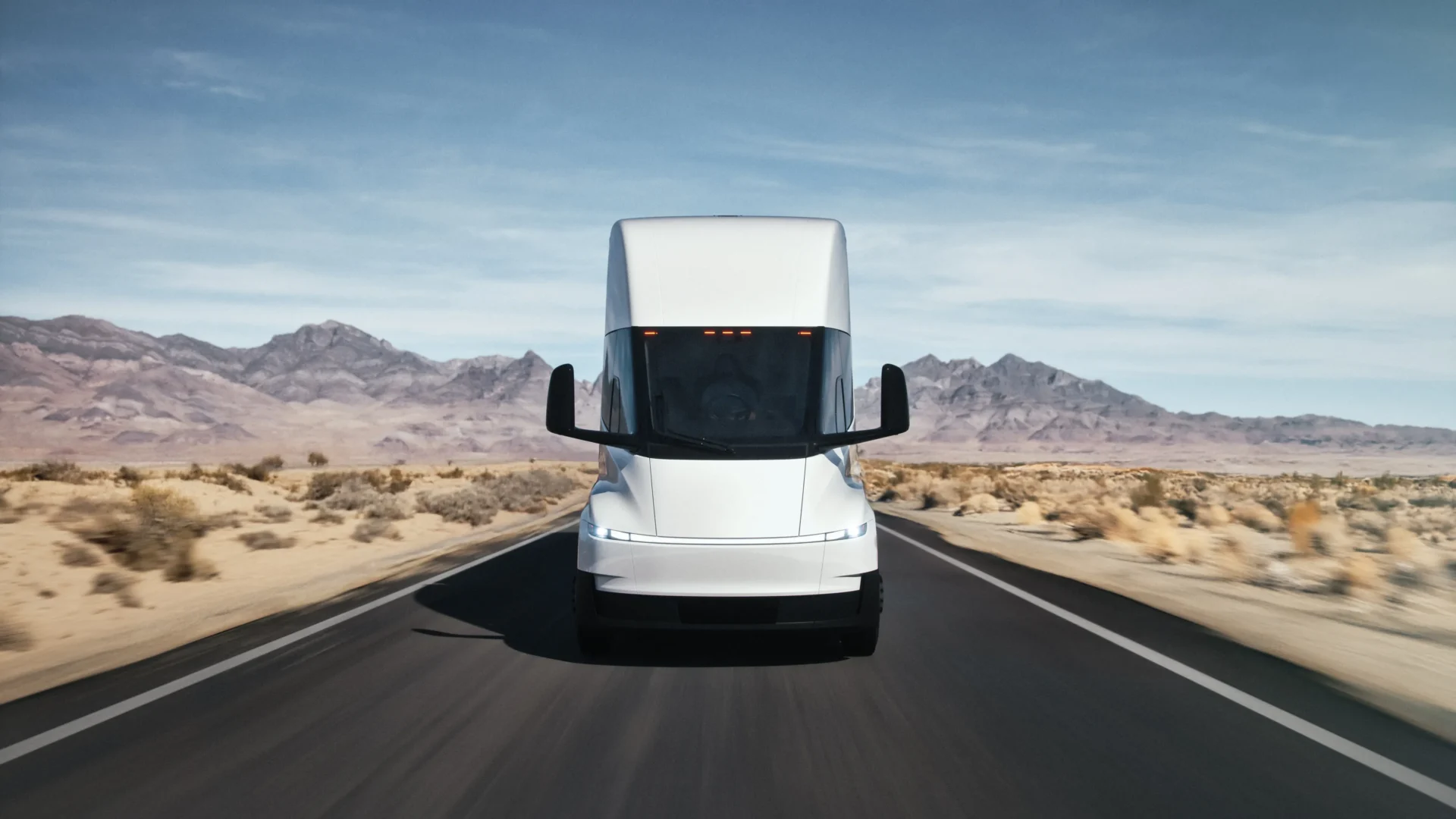

A new freight alliance has ordered 2,500 battery-electric Class 8 trucks in what organizers call the largest electric truck order in U.S. history. Tesla was named the primary manufacturer, and Kenworth, RIDE and Volvo will serve as secondary options for participating carriers.
The order comes through ZET SCALE, a shipper-carrier alliance created to speed up zero-emission truck deployment on major U.S. freight routes. Organizers say the planned purchase could nearly double the number of electric Class 8 trucks operating in the United States.
Tesla takes primary role
Tesla secured the primary OEM position after ZET SCALE ran an independent request for proposals that reviewed vehicle cost, driving range, charging plans and factory capacity.
Kenworth, RIDE and Volvo remain part of the program. Carriers can select trucks from those companies when another vehicle model is a better fit for a route, depot or freight operation.
The public announcement does not list how many units Tesla will supply. Reports calling the deal an order for 2,500 Tesla Semis go further than the alliance’s published information, which describes a combined 2,500-truck purchase involving four approved manufacturers.
Alliance formed by major shippers
ZET SCALE stands for Zero-Emission Truck Shipper-Carrier Alliance Leading Electrification. Catalyst Mobility, previously known as CALSTART, and Smart Freight Centre are leading the effort.
Microsoft and PepsiCo are among the alliance’s founding shippers. Their freight demand gives the group a large base of potential trucking routes and participating carriers.
The plan brings shippers, truck makers, lenders and fleets into one purchasing program. Then the alliance can place a larger order than an individual carrier may be ready to commit to on its own.
Leasing model cuts fleet risk
ZET Financial will purchase the trucks and lease them to carriers through a fair-market-value program called ZET Lease. That approach places the residual-value risk with the program rather than the carrier. For fleet operators, resale values for large electric trucks remain difficult to forecast since the market is still small and used-vehicle data is limited.
The alliance expects pooled purchasing to secure better commercial terms and give truck makers clearer volume plans. At the same time, fleets can bring electric trucks into service without committing all capital upfront.
Freight hubs named for deployment
The first trucks are expected to operate in 10 freight hubs across the country. The locations include Southern California, Northern California, Central California, Seattle-Tacoma, Houston, Dallas, San Antonio, Chicago, Atlanta and the Newark-New York City area.
These markets were selected for dense freight activity and the potential to build charging around repeated routes. For now, organizers have not published a full site-by-site charging plan or a delivery schedule for the first vehicles.
The initial order is part of a larger target for at least 10,000 battery-electric Class 8 trucks. ZET SCALE calls the current deal its first request-for-proposals round.
A large test for heavy trucking
Class 8 trucks handle long-distance freight, regional deliveries and heavy cargo. Electric versions can cut tailpipe emissions, yet their wider use has been held back by vehicle cost, charging access and concern over resale value.
This deal gives Tesla a major commercial win for the Semi program, but it does not make Tesla the exclusive supplier across all 2,500 trucks. The secondary OEM structure gives carriers room to select other approved models when their work calls for them. The first deployments will test how well large electric truck fleets perform across demanding freight corridors.
We’ve launched an official Tesla Owners Online Forum. Join early and claim your "Founding Fuel" badge.