
Tesla has published a new article on battery safety, cell manufacturing and long-term durability. The company said it found no evidence that a spontaneous battery failure caused a vehicle fire in the Model 3, Model Y, Cybertruck or Semi across more than 265 billion miles of operation through the end of 2025.
“From over 265 billion miles of operation as of the end of 2025, we have no evidence of even a single case of a spontaneous battery failure leading to a vehicle fire in a Model 3, Model Y, Cybertruck or Semi.”
The statement covers a narrow category of incidents. It concerns fires linked to a spontaneous internal battery failure, rather than every vehicle fire involving a Tesla. A vehicle fire can start after a severe crash, an external fire or other causes, and Tesla says its broader fleet fire rate remains lower than the U.S. average across all causes.
Containing a single-cell failure
Tesla calls its approach passive propagation resistance, or PPR. The system aims to contain a thermal reaction within one cell if that cell fails, preventing heat from triggering thermal runaway in nearby cells.
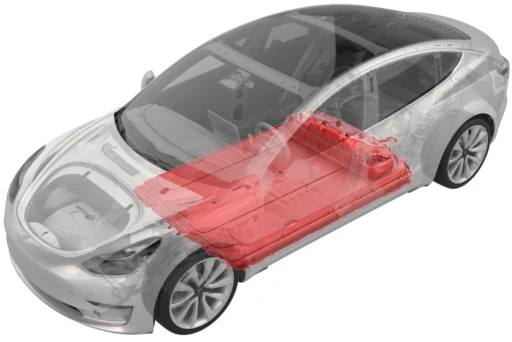
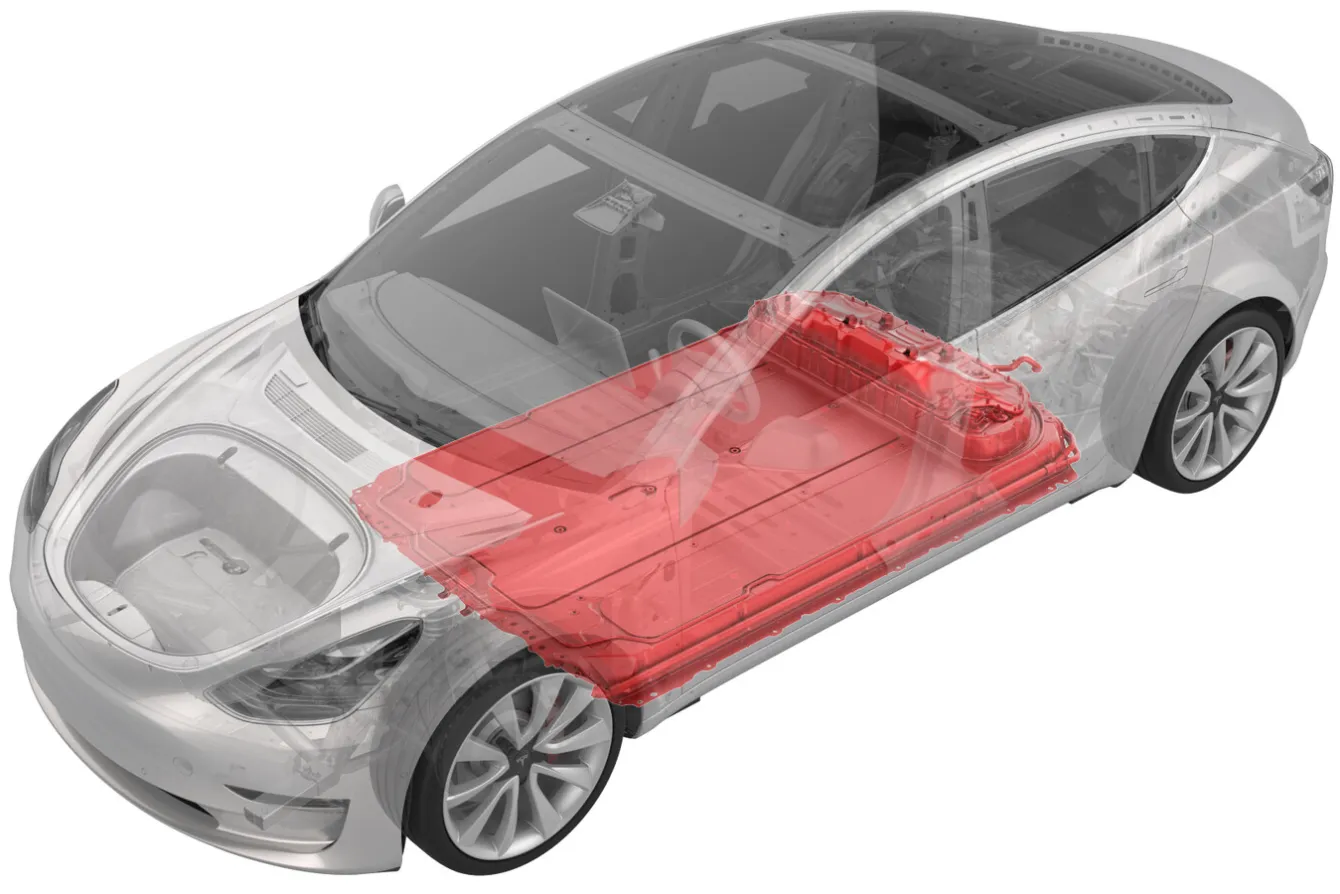
The pack uses thermal barriers, physical separation between cells and liquid cooling channels. Tesla says those components limit the heat and pressure from a failed cell before it spreads through a module or the rest of the battery pack.
Tesla says PPR is not usually required for car manufacturers. Yet the company says it tests this behavior voluntarily across a range of environmental and failure conditions before launching a product.
The company divides this testing into three layers:
- At the cell level, engineers study how a cell vents gas and energy during a failure. Tesla says it adjusts cell construction so a failure releases energy in a controlled way rather than through an unpredictable rupture.
- At the module level, engineers assess if surrounding cells can tolerate the heat and pressure from one cell in thermal runaway. Heat-resistant material, spacing and liquid cooling channels are used to keep the event contained.
- At the vehicle level, Tesla tests a cell failure under difficult conditions, including high heat, a fully charged pack and loss of coolant flow. The company says the vehicle must keep the event contained under those conditions.
This approach deals with a central battery-safety concern. Lithium-ion cells can enter thermal runaway after an internal short circuit, physical damage, overheating or a manufacturing defect. In rare cases, heat from one cell can reach nearby cells and create a larger pack fire.
Software and fleet data
Tesla says it combines pack hardware with active diagnostics and software updates. The company collects anonymized data on battery temperature, charge cycles, health and performance from its vehicle fleet, then uses that data to investigate uncommon faults.
When engineers identify a cell anomaly in the field, Tesla says they can compare vehicle data with manufacturing records and update factory checks or vehicle software. OTA updates can change diagnostic thresholds or battery-management behavior without requiring a service visit.
That distinction is relevant for owners. Passive systems use physical pack construction to limit a failure, and active systems monitor battery conditions before a failure develops. Tesla says its battery safety plan uses both.
Temperature control and battery life
The article puts equal focus on battery life. Tesla says cells perform best within a defined temperature range, since high temperatures can speed chemical degradation and low temperatures can reduce available capacity for a period of time.
Liquid cooling and heating channels run through the battery pack during driving, charging and parking. When a driver sets a Supercharger as a navigation destination, the vehicle can precondition the pack before arrival. That process prepares the cells for fast charging by bringing them closer to their preferred temperature range.
Tesla lists three expected benefits from temperature control. Lower exposure to heat and cold can slow degradation. Stable thermal conditions can reduce the chance that a cell enters an unstable state. And a more consistent temperature across the pack can help its cells age at a similar rate, rather than leaving one weak area to limit usable capacity.
Tesla’s own fleet reports have placed Tesla vehicle fires at roughly one event per 135 million to 210 million miles driven. Estimates for the overall U.S. vehicle fleet have ranged from one fire per 17 million to 19 million miles. Those figures are not a direct comparison of battery failures alone, since they include vehicle fires from all causes.
Tesla’s 4680 cell program
Tesla manufactures some of its own 4680 cells alongside cells it buys from outside suppliers. The company says its in-house cells are used in the Cybertruck and Berlin-built Model Y vehicles.
The 4680 name refers to the cell’s approximate dimensions: 46 millimeters wide and 80 millimeters tall. Tesla has linked the format to better manufacturing efficiency and pack-level energy density, though larger cells store more energy in a single unit during a failure.
Tesla says the format represents a balance between efficiency and safety. A larger cell can reduce the number of parts and connections in a pack, yet a smaller cell limits the energy released during a single-cell incident. Tesla says its protection systems can handle an event involving one 4680 cell.
Chemistry and long-term degradation
The company uses different cathode chemistries across its lineup. Tesla says its 4680 cells use high-nickel layered oxide cathodes, including nickel manganese cobalt, or NMC, chemistries for high energy density. Standard-range vehicles use lithium iron phosphate, or LFP, cells in non-4680 formats for lower cost and long life.
Tesla says its work also covers the anode and electrolyte. The anode accepts lithium ions during charging, so its material properties affect charge rate and cycle life. The electrolyte carries lithium ions between the cathode and anode, and Tesla says it develops its own electrolyte formulations using lithium salts, solvents and additives.
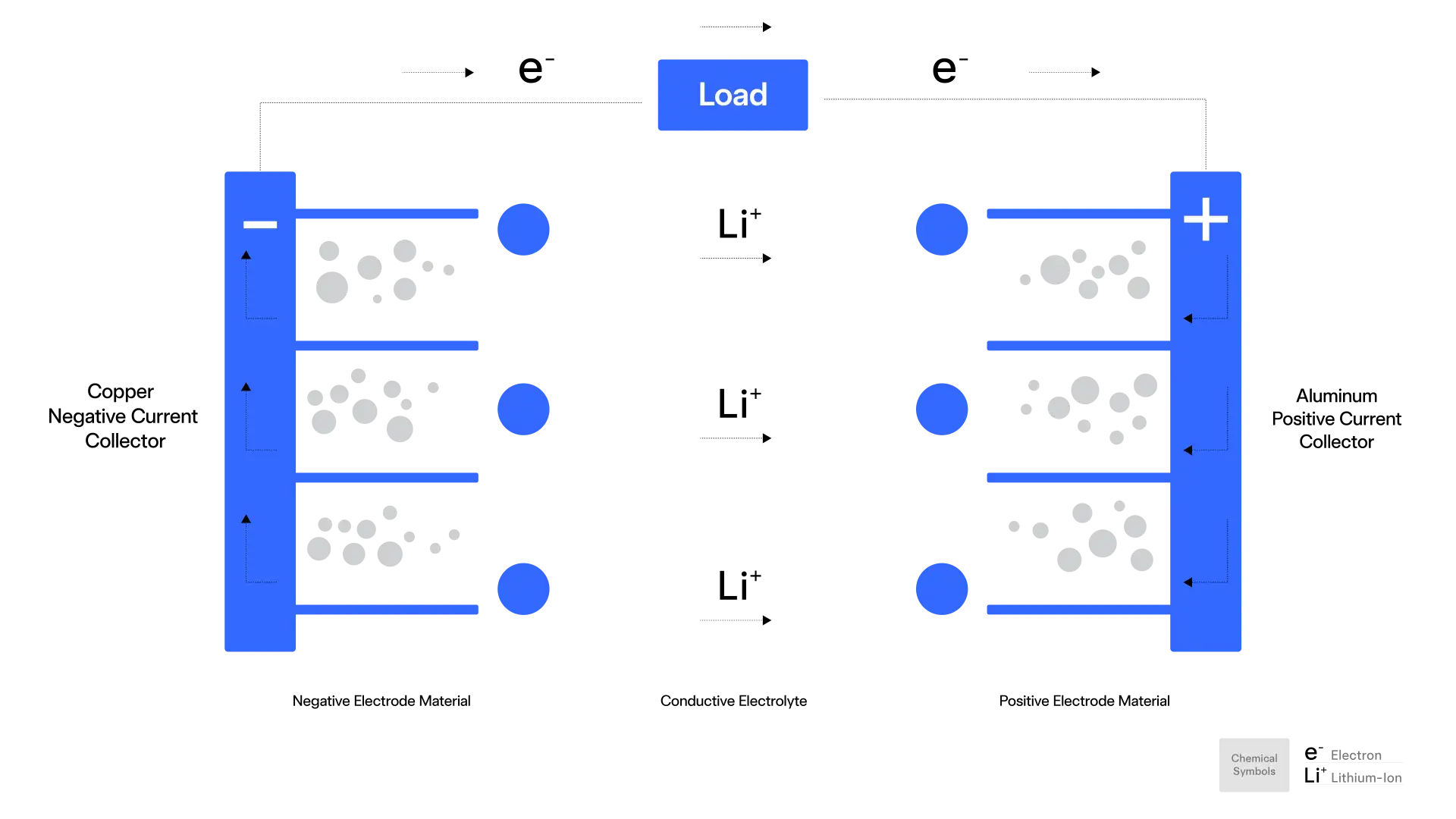
One key feature is the solid electrolyte interphase, or SEI. This thin layer forms on the anode during battery use, and its condition affects long-term cell health. Tesla says it develops anode and electrolyte combinations that form a stable SEI, helping the cell support fast charging with lower degradation.
The company says it performs thousands of cycle tests using different charge rates, temperatures and depths of discharge. Engineers then examine material-level causes of degradation, such as cathode cracking or excessive SEI growth, before approving changes for production.
Dry electrode production
Tesla also used the report to discuss dry electrode manufacturing. Conventional electrode production uses liquid solvents, then removes and captures those solvents in drying ovens. Tesla says dry electrode processing avoids that solvent-heavy stage.
The company calls itself the only battery manufacturer using dry electrode technology at scale. Tesla says the process reduces energy use in cell production and removes a major part of the conventional electrode manufacturing sequence.
That claim concerns manufacturing rather than vehicle operation. Tesla did not provide fresh production-volume data for dry electrodes in the post, so the scale and mix of dry-electrode cells in its current vehicle output remain unclear.
Cell inspection and factory controls
Tesla says defects can occur in cell production at large volume, so the company’s goal is to find defects before a cell leaves the factory and contain any failure that reaches a vehicle.
According to the post, every cell receives testing and an X-ray scan. Automated vision systems inspect outside surfaces, and computed tomography, or CT, scans cover a significant share of cells for defects that cannot be seen from outside.
Tesla says it is developing AI-based vision and anomaly detection tools that can review more inspection data than conventional systems or human inspectors. The post does not give a date for full deployment of those tools.
Fire risk and emergency response
Low frequency does not remove the risk from battery fires. When an EV battery enters thermal runaway, fire crews can face a long suppression process and a possibility of reignition after the fire appears out.
A battery fire can require thousands of gallons of water and may reignite hours or days later. That has led fire departments and safety organizations to develop separate procedures for high-voltage battery incidents.
Tesla’s latest post does not claim its vehicles cannot catch fire. It makes a narrower claim: across the Model 3, Model Y, Cybertruck and Semi, the company says its records contain no spontaneous battery failure that led to a vehicle fire through the end of 2025.
Warranty terms
Tesla ended the article by restating its Battery and Drive Unit Warranty. New vehicles receive coverage for eight years, with a minimum distance limit of 100,000 miles that varies by model and trim.
The warranty includes a minimum 70% battery-capacity retention guarantee during the coverage period. Higher-end versions of the Model 3 and Model Y can carry longer mileage limits, and the Model S, Model X and Cybertruck have been listed with limits up to 150,000 miles.
Tesla’s report combines a company claim about fire history with technical detail on pack construction, thermal management, cell chemistry, factory inspection and data collection. The 265-billion-mile figure is Tesla’s own operational total, and the company has not released a vehicle-by-vehicle breakdown of those miles or independent documentation for each fire review.
We’ve launched an official Tesla Owners Online Forum. Join early and claim your "Founding Fuel" badge.