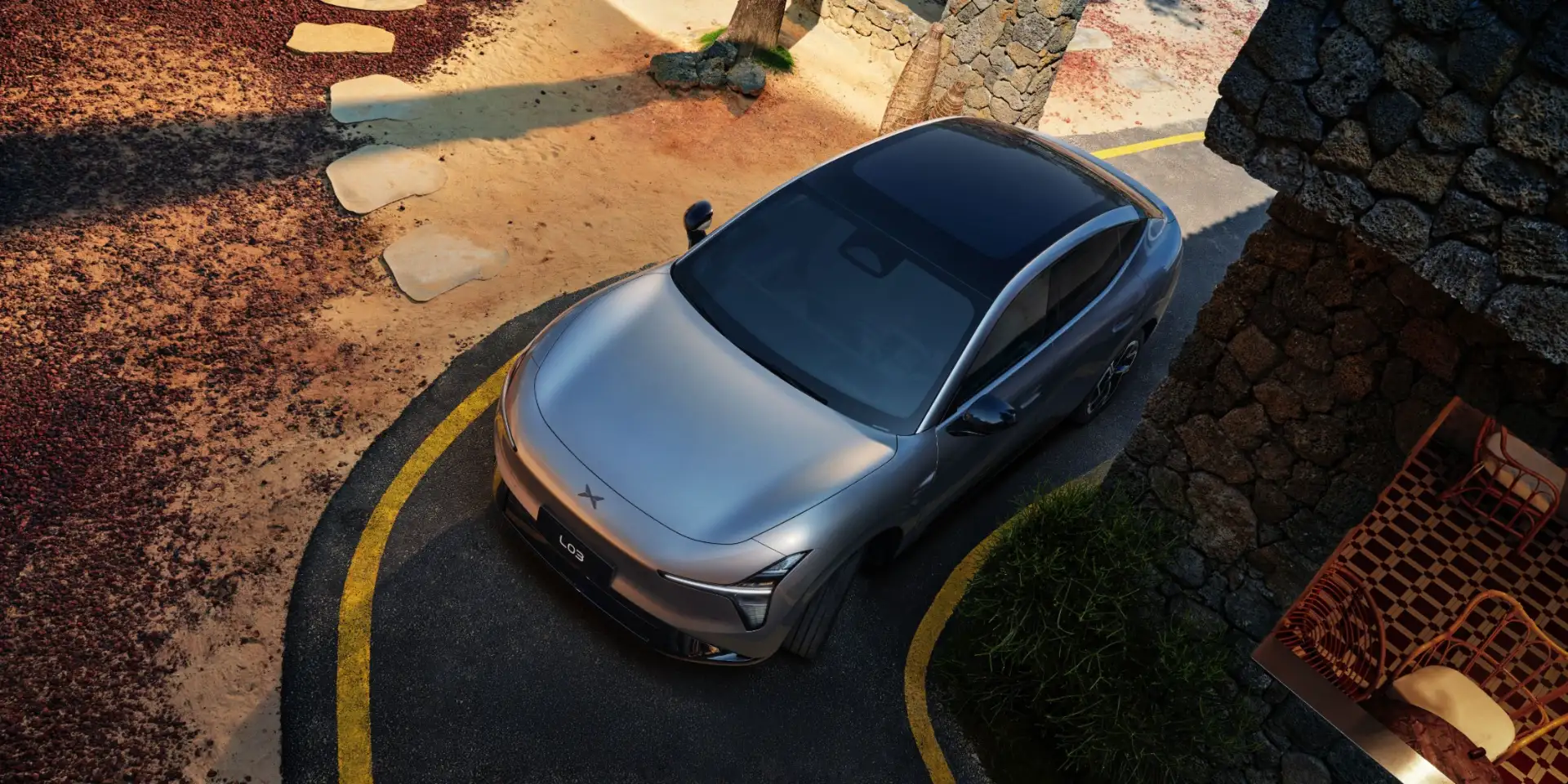

Xpeng has set out a clear challenge to Tesla in Europe with the launch of its new L03 SUV, a model the company says can go head to head with the Model Y on price, range, and software. The carmaker unveiled the vehicle in Munich and said it will begin selling it in Europe and China at the same time, a move that puts pressure on Tesla in one of its most watched markets.
He Xiaopeng, Xpeng’s co-founder, said at Xpeng’s Munich launch event, “I think we’re not far from beating Model Y,” and added, “I really believe in that.”
The L03 starts at €35,600 in Germany and €34,990 in some other European markets, putting it below Tesla’s Model Y in key countries. Xpeng says the car will be built with local support in Europe and will be sold in more than 60 overseas markets. The company has framed the L03 as its first global model to launch outside China, and that gives the rollout more weight than a normal export push.
“We are here not only to bring our products to Europe, but also to build them for Europe,” He Xiaopeng said
The car will reach buyers with both battery-electric and range-extended versions. In Germany, the range-extended trim starts at about €38,600. Xpeng is aiming for broad appeal, and the pricing puts the model in direct reach of buyers who might otherwise look at Tesla or German premium brands.
Size and hardware
The L03 sits close to the Model Y in size. It is about 4.65 metres long and uses a 2.85-metre wheelbase. Xpeng says the body has been tuned for low drag, with a coefficient of 0.228, and that should help with range and efficiency at highway speeds.
Battery-electric versions use lithium-iron-phosphate packs in the 58 kWh to 71 kWh range. European models are listed with WLTP range up to 520 km on the long-range rear-wheel-drive version. Dual-motor versions are part of the range too, with about 382 hp on higher trims. Fast charging is part of the pitch, and Xpeng says the car can recharge from 10 to 80 per cent in about 19 minutes under the right conditions.
Software and driving tech
Xpeng is putting a lot of weight on software. The L03 uses the company’s second-generation Vision-Language-Action system, or VLA 2.0, which is built around a direct path from camera input to driving action. The company says this setup is meant to handle city traffic and complex road situations with less dependence on map data.
The car also uses Xpeng’s self-made Turing AI chips. Max versions are said to use one chip rated at 750 TOPS, while higher-spec Ultra models use two or three chips with up to 2,250 TOPS of compute. Xpeng says this gives the car more room for advanced assisted-driving features and future software updates.
Xpeng is not treating Europe as a side market. It has moved part of L03 production to Magna Steyr in Austria and set up an R&D base in Munich. The company has said it will build out more than 1,000 fast-charging points across 13 European countries, which would help it compete with Tesla’s charging network.
The model is running on XOS 6 for international markets, and that system includes a more natural voice assistant and multilingual support. Xpeng has said the L03 will use Google Maps’ Auto SDK in its driver-assist stack, giving it a route-planning layer that can work across markets more easily. The company plans to keep adding features through over-the-air updates.
Tesla and FSD in Europe
Tesla is moving on its own driver-assist plans in Europe. In April 2026, the Dutch RDW granted type approval for Tesla’s FSD Supervised system under UN Regulation 171, making the Netherlands the first European country to allow it on public roads. The approval is still limited to that market, and wider use needs more regulatory steps.
Tesla is seeking broader approval across Europe, but the process has moved slowly. A qualified majority of EU member states is needed for a wider green light, and that has taken time. Tesla still describes FSD Supervised as a system that requires the driver to stay responsible and ready to take over.
The L03 is part of a bigger push by Chinese EV makers into Europe’s premium and near-premium segment. Xpeng is trying to move past the image of a lower-cost outsider and place itself against Tesla, BMW, Mercedes-Benz, and Audi. Volvo Cars chief executive Håkan Samuelsson has warned that Chinese brands should not be dismissed in the premium market.
Xpeng is also looking beyond cars. The company has said it wants to bring flying cars and humanoid robots to Europe in the future. It is in talks with Volkswagen and other carmakers about a second European plant, and it has said that facility would likely be in Germany.
Xpeng plans to roll out its second-generation VLA software in Europe from 2027, pending regulatory approval. That would put its driver-assist system in direct competition with Tesla’s FSD Supervised push in the region. The company is also open to licensing its smart-driving software to other carmakers, which could widen its role beyond selling vehicles under its own badge.
We’ve launched an official Tesla Owners Online Forum. Join early and claim your "Founding Fuel" badge.