
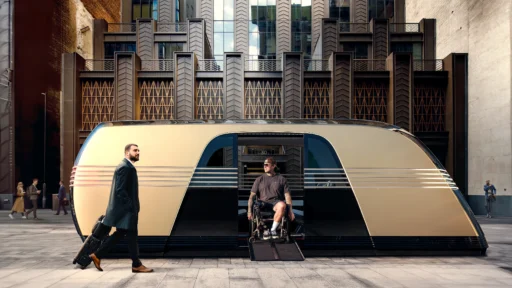
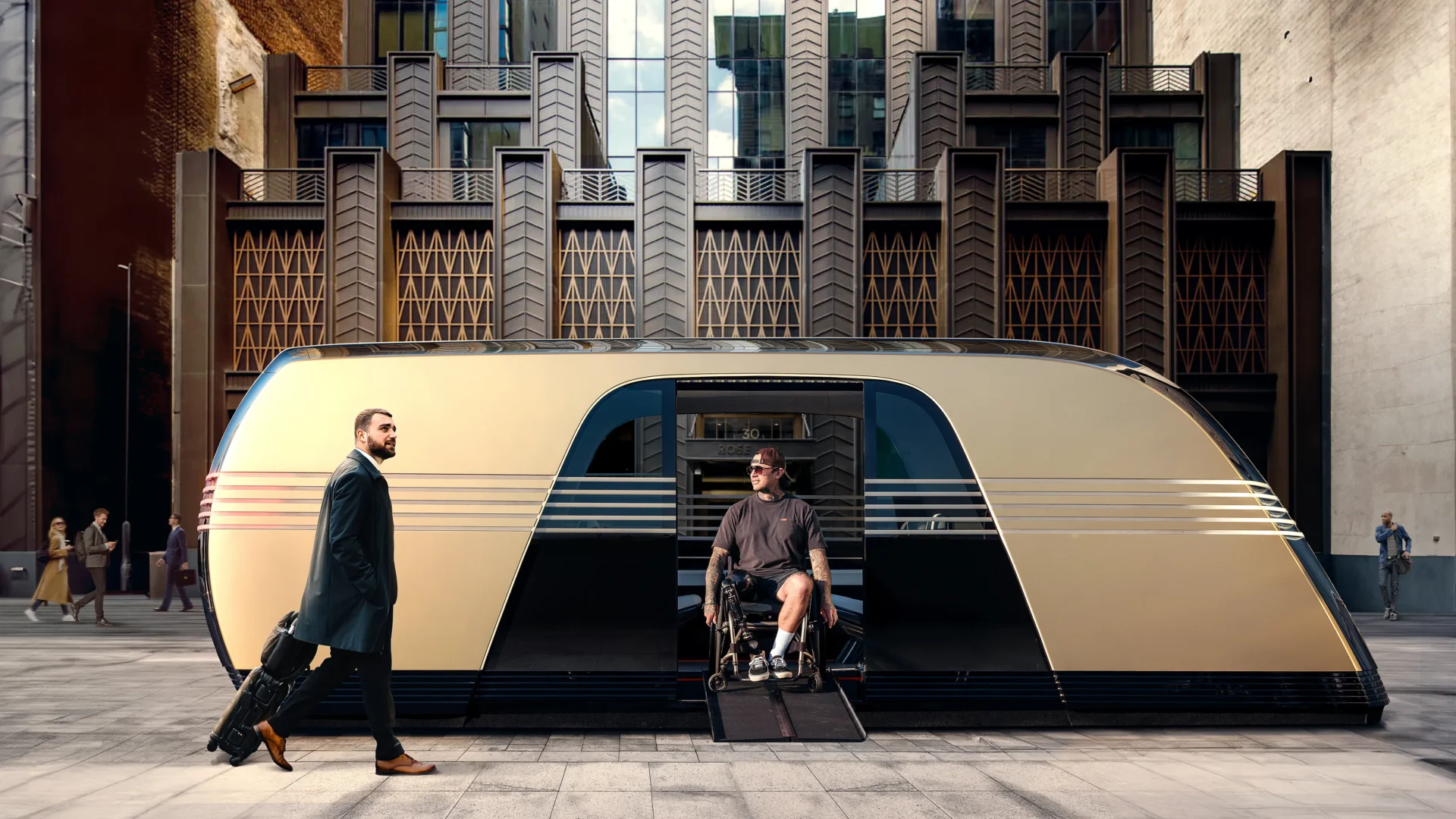

Tesla just locked in the exterior look for its upcoming high-capacity autonomous vehicle, and the United States Patent and Trademark Office issued design patent US D1,138,869 S on August 4, 2026. And this paperwork legally protects the capsule-shaped body originally introduced as the Robovan concept in late 2024. The filing formalizes the styling that chief designer Franz von Holzhausen and his team have developed over the past few years.
The document focuses entirely on the ornamental exterior of the vehicle body, assigning ownership to Tesla based in Austin, Texas. It credits von Holzhausen alongside Julien Bilodeau, Ian Kettle, and Joseph Robinson as the main inventors. These are the exact same designers who shaped several recent models for the automaker, and they filed the application on October 9, 2024, under the number 29/967,277. Then the agency placed it under the D12/16 classification for bus and van body styles. This gives the company a standard 15-year term of protection for the exterior appearance rather than any internal mechanical systems.
Visual cues from the artwork
The patent includes 28 illustrations that present a long and rounded capsule with nearly vertical front and rear ends. Meanwhile, the flat lower skirt completely hides the wheels and undercarriage. A continuous band of dark glass wraps around the upper passenger compartment to break up the large side profile, and multiple horizontal strakes run along the waistline and lower sill. Analysts say these bands provide obvious locations for production lighting strips or aerodynamic trim pieces.

When you look at the top and bottom perspectives, the wheels sit deeply tucked inside the lower body panels. This choice creates a hovercraft effect where the vehicle appears to float above the pavement instead of sitting on exposed tires.

The design lacks a traditional grille, hood, side mirrors, and driver cockpit. Yet the front and rear look almost identical, and the symmetrical profile visually communicates that this machine is built purely for self-driving operations.
Moving from Robovan to Robus
The vehicle styling pulls heavily from 1920s Art Deco streamliner trains. The design relies entirely on soft curves and rounded edges, presenting a massive departure from the sharp stainless-steel angles seen on the Cybertruck. The electric van can carry up to 20 passengers or handle cargo for autonomous logistics. For example, seating for 14 people with standing room for six more. Industry watchers anticipate a dual-motor setup and a battery pack around 200 kWh to handle heavy urban driving. And Elon Musk previously mentioned operating costs could drop as low as 5 to 10 cents per mile for shuttles in this class.
The name of the vehicle is changing right along with the legal filings. In fact, von Holzhausen called the concept the “Robus” during a September 2025 interview on the Bloomberg Hot Pursuit podcast. The new name solves a branding problem since Estonian delivery firm Starship Technologies already trademarked the word Robovan. So Tesla reacted by submitting new applications for the Robus name to cover electric buses and ridesharing services, and the company submitted paperwork for “Tesla Robotaxi” around the same time after earlier attempts faced resistance from regulators.
Long term production timeline
The new shuttle remains a long-term project for the automaker. Internal company leaks indicate the Robus sits behind the Cybercab, the AI5 autonomous driving chip, and the Semi truck in terms of immediate priority. The company simply wants to secure the exterior intellectual property right now. But a real production version will take much more time to finish. The vehicle needs highly advanced software to handle busy city streets without a steering wheel, and local regulations will determine when and where it can legally operate. At the same time, most observers do not expect the Robus to hit the road before 2028.
Beyond that, Tesla continues defending its underlying self-driving technology in federal court. A federal review board agreed to reexamine two artificial intelligence patents held by rival Autonomous Devices LLC in early 2025. Later, the board ruled that some of the competitor’s claims were unpatentable over prior art. This legal victory pairs nicely with the new design patent and recent trademark applications. Now Tesla wants tight control over the branding and the algorithms for its future ride-hailing network. The new patent drawings turn a concept silhouette into a legally defined shape, and the company is actively laying the groundwork for a completely new type of mass transit.
Patent

We’ve launched an official Tesla Owners Online Forum. Join early and claim your "Founding Fuel" badge.
Will it navigate the Boring tunnels in Vegas?