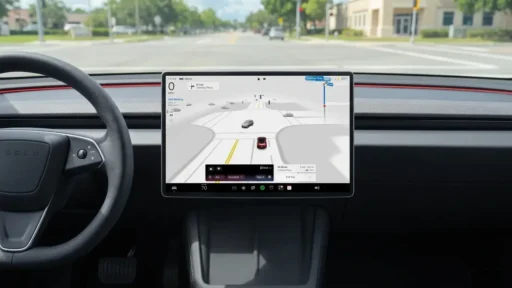
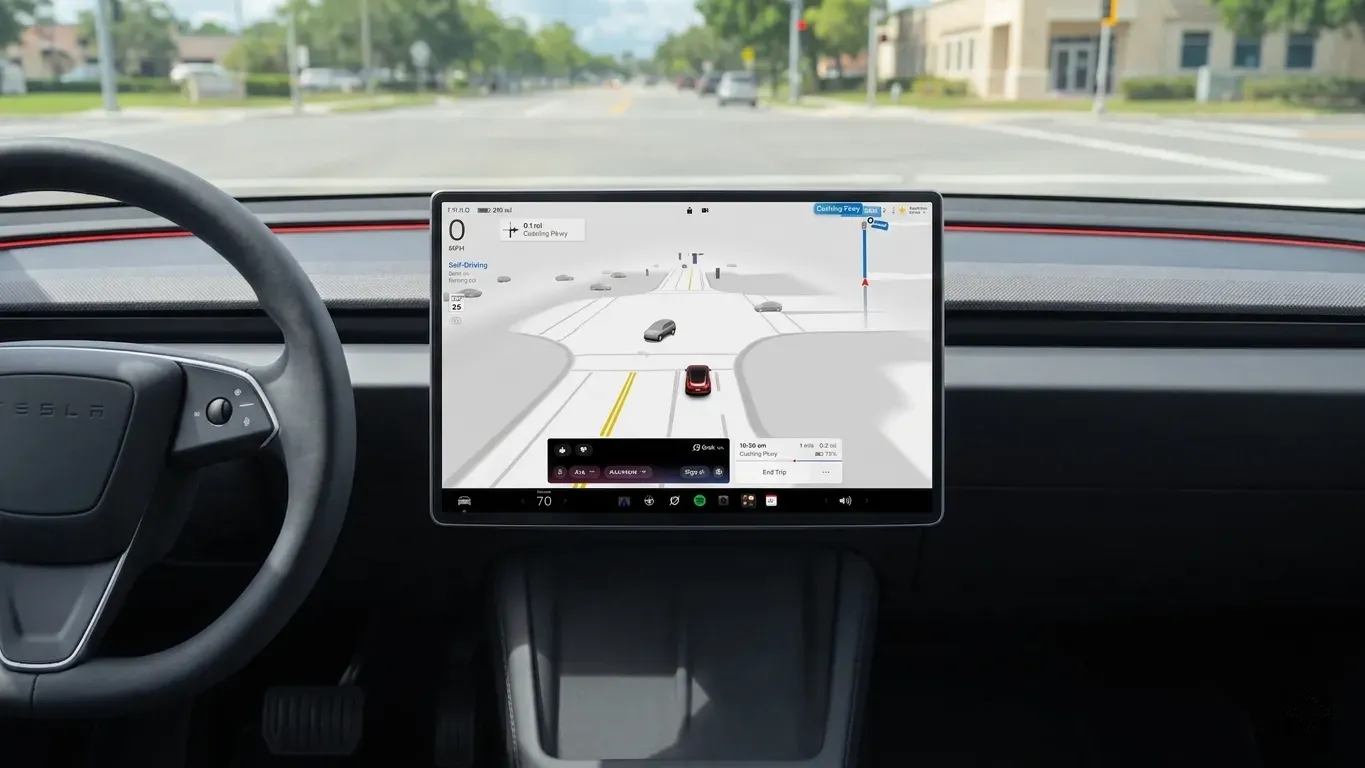

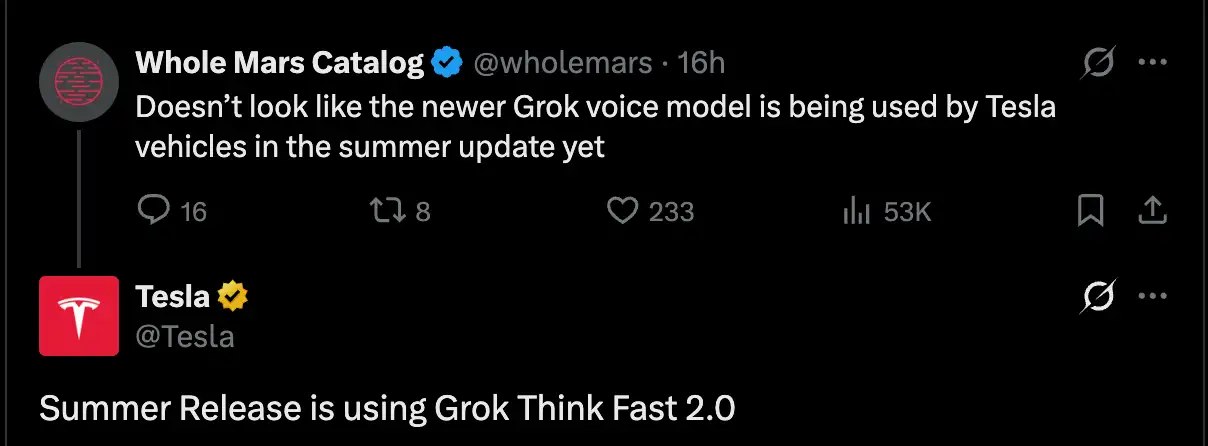
Tesla has confirmed that its 2026 Summer Release runs on Grok Voice Think Fast 2.0, integrating xAI’s speech-to-speech voice model into customer cars under software build 2026.26.6.5. The automaker clarified the underlying architecture following online questions about vehicle assistant performance, confirming that cars receiving the summer package are running the newly benchmarked audio system.
Speech reasoning model takes top benchmark ranking
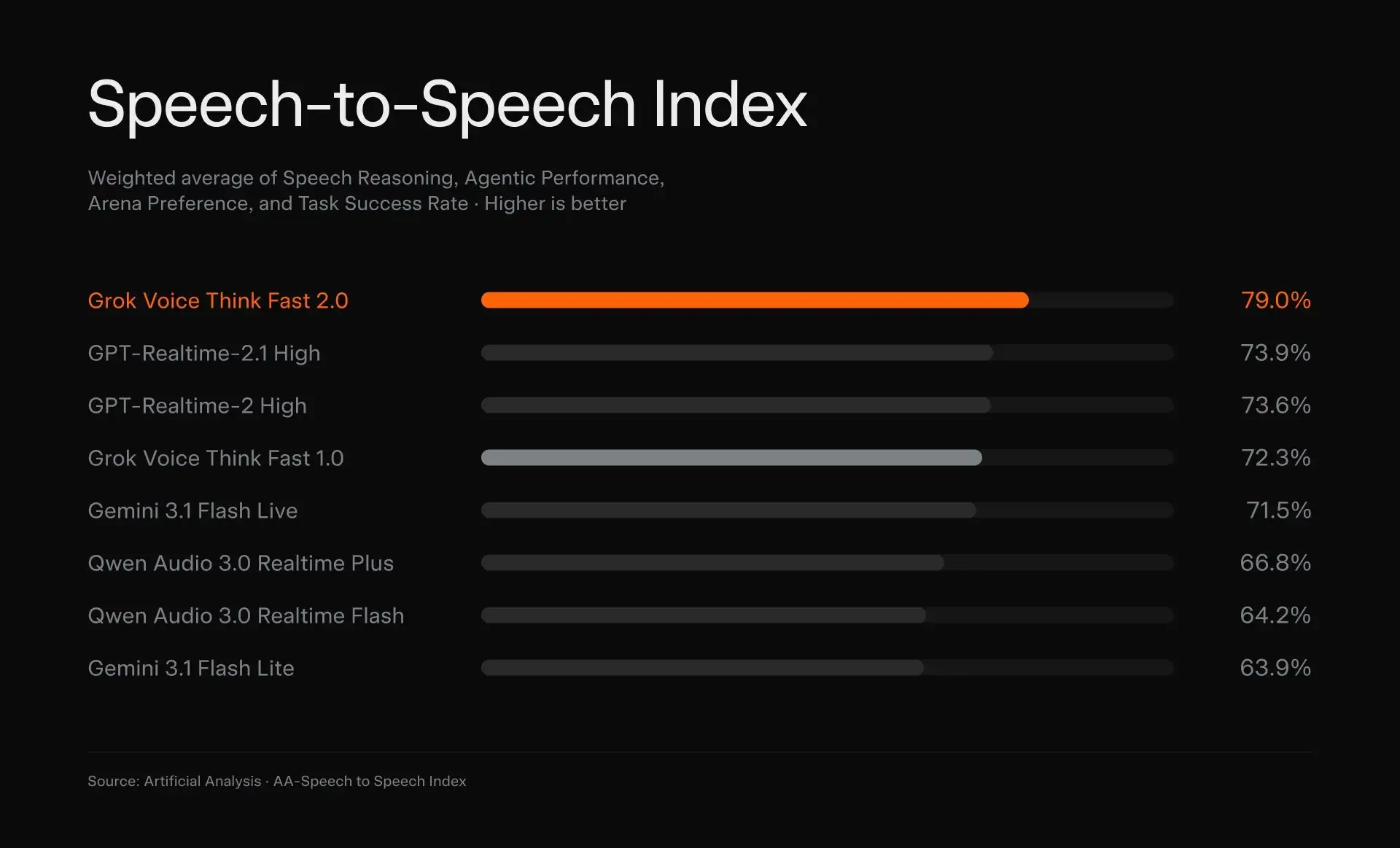
Independent tracking on the Artificial Analysis Speech-to-Speech Index ranks Grok Voice Think Fast 2.0 in the top position with a score of 79.0 percent. The test evaluates how voice agents reason over spoken audio, resolve customer requests, and complete multi-step tasks. The score places the model ahead of GPT-Realtime-2.1 High at 73.9 percent, GPT-Realtime-2 High at 73.6 percent, and the original Grok Voice Think Fast 1.0 at 72.3 percent.
Multi-step voice actions arrive inside the cabin
Grok can execute several distinct cabin adjustments simultaneously from a single spoken phrase without making drivers pause between steps. A driver can request the system to fold mirrors, turn windshield wipers to their fastest speed, adjust cabin temperature to 65 degrees, launch the self-driving application, and open the glovebox all at once.
Video: Grok 2.0 in action (Comes with Tesla’s 2026 Summer Update)
This is cool, you can now give Grok a ton of commands at once in your Tesla and it’ll do them all together.
— Sawyer Merritt (@SawyerMerritt) August 26, 2026
The commands I gave:
• Fold mirrors
• Turn on wipers to fastest setting
• Change temp to 65°
• Open self-driving app
• Open glovebox
Comes with Tesla’s 2026 Summer… pic.twitter.com/drZxoHrknv
The assistant processes these spoken items together through the primary vehicle control framework. The system can place hands-free phone calls, queue songs across streaming services, search settings menus, and operate seat heating or ventilation. Cabin ambient light strips pulse in synchronization with Grok whenever the assistant responds to occupants.
Video: Grok command feature in action from Tesla’s 2026 Summer Update
Here is the new Grok command feature in action from @Tesla's 2026 Summer Update
— Sawyer Merritt (@SawyerMerritt) August 26, 2026
It allows you to make phone calls, adjust climate, open the glovebox, search the control panel, turn on/off the heated or cooled seats, etc. The ambient lights also pulse when Grok is talking. pic.twitter.com/D7DK95AmpN
Hardware requirements and global availability
The expanded voice features run on vehicles equipped with AMD Ryzen infotainment processors, which Tesla began installing in late 2021 across the Model 3, Model Y, Model S, Model X, and Cybertruck. Cars built with older Intel Atom processors cannot run the updated voice controls because of computational limits.
Drivers must maintain an active Premium Connectivity plan or connect to a local Wi-Fi network to use the assistant. Tesla states that voice interactions remain anonymous and do not connect to individual customer vehicle profiles. The feature is rolling out across North America and select international territories, but vehicles delivered in China do not receive this integration.
Navigation upgrades and mobile app tools
The summer release includes predictive navigation updates that study recurring travel patterns to recommend destinations automatically. The system prioritizes familiar routes and suggests frequent stops like school drop-offs or fitness centers alongside calendar destinations.
Tesla added new options to the official smartphone app, letting owners manage vehicle wraps and inspect self-driving statistics directly from their phones. Drivers can establish desired battery charge levels for arrival points before starting a trip. The in-cabin browser gained access to the cabin camera and microphone on supported models, permitting video meetings on web platforms when the car remains in park.
Full Self-Driving v14.3.8 software changes
Build 2026.26.6.5 carries Full Self-Driving version 14.3.8 for Hardware 4 vehicles and 14.1 Lite for Hardware 3, combining fleet-wide software improvements with self-driving model upgrades. Tesla rebuilt the underlying AI compiler using MLIR architecture, cutting reaction latency by 20% and allowing faster software iterations.
Upgrades to the neural network vision encoder improve vehicle detection in low-visibility environments, while revised reinforcement learning reduces unwanted lane bias and tailgating. The software improves stopping behavior at yellow lights, maneuvers around emergency vehicles and small animals cleanly, and displays an on-screen intervention-free mileage counter to track uninterrupted autonomous travel.
We’ve launched an official Tesla Owners Online Forum. Join early and claim your "Founding Fuel" badge.