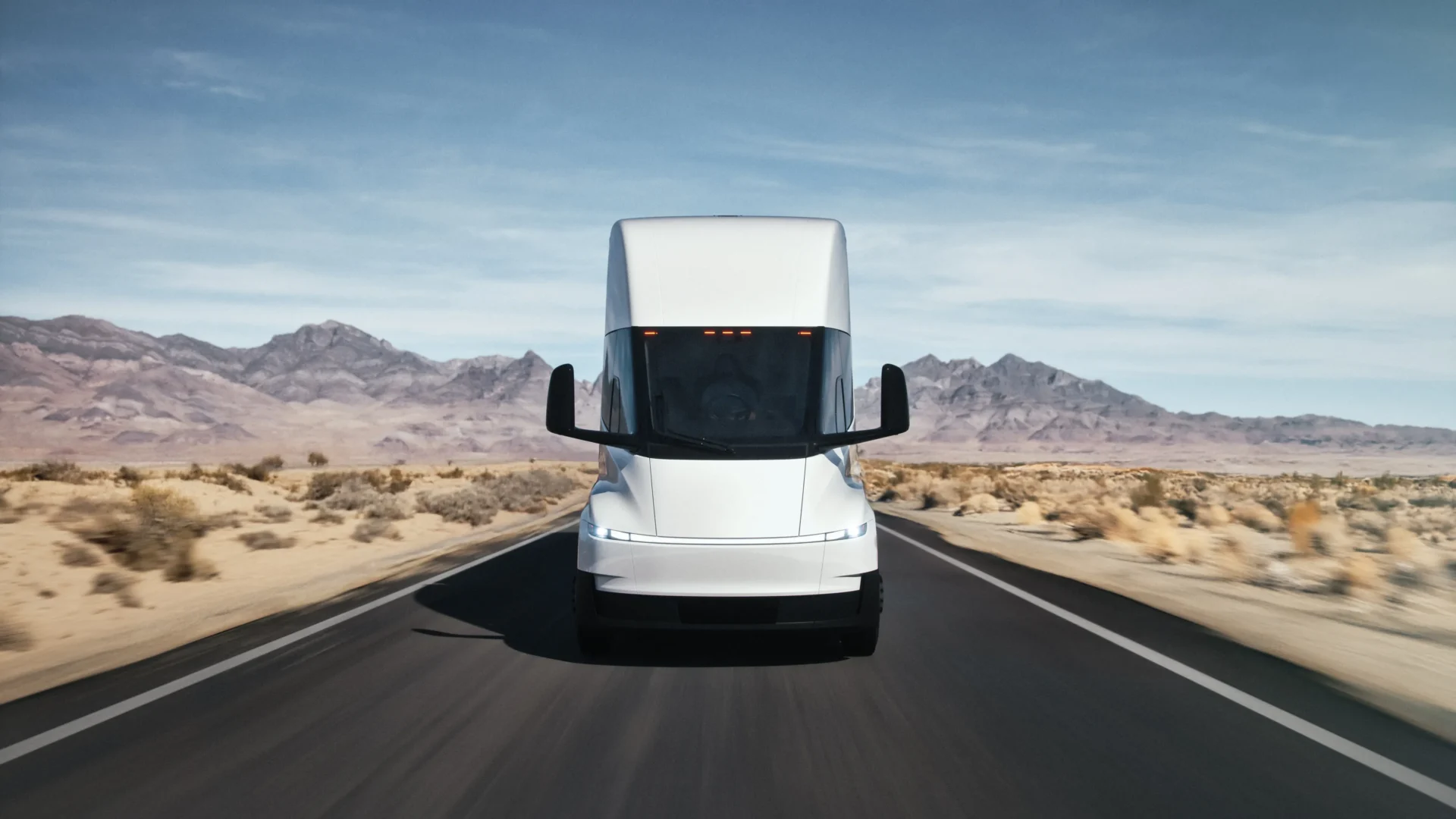

Tesla wants to bring its self-driving system to the Semi by late 2026 or early 2027. CEO Elon Musk laid out the plan on Tesla’s second-quarter earnings call on July 22. An analyst asked when the company would turn its attention to autonomy for the heavy-duty truck, and Musk gave a concrete date for the first time.
“We expect to get self-driving working on the Tesla Semi probably around the end of this year or early next year,” Musk told investors. He was clear the Semi sits below the passenger fleet on the priority list. “I just don’t want it to be a distraction on the march of nines of safety for self-driving on the Model 3/Y and Cybercab,” he added. “It will definitely be working next year.”
Passenger cars still come first
Tesla’s engineering team is putting its energy into the Model 3, Model Y and the upcoming Cybercab before it turns to the Semi. The plan is to get unsupervised self-driving working on high-volume passenger vehicles first, then carry that software over to the truck once it has proven itself on everyday cars.
The software may still be waiting its turn, but the hardware side of the Semi program is already running. Tesla began high-volume production in March 2026 at a dedicated 1.7-million-square-foot factory in Sparks, Nevada. Built right next to Gigafactory Nevada, the plant lets battery packs made on site go straight into the trucks without added transit time.
At full output the plant is set up to turn out a new Semi roughly every seven to eight minutes, giving it an annual capacity near 50,000 units. Tesla’s Semi program director, Dan Priestley, has walked journalists through the facility and described an overhead monorail carrier system that moves battery packs and cab assemblies weighing more than 10,000 pounds with tight precision. The plant runs on what Tesla calls a “parallel unboxed” assembly process, building the cabin, chassis and battery at the same time instead of one after another.
Fleet data backs up the truck’s numbers
Tesla’s pilot Semi trucks, running routes with customers such as PepsiCo, have logged more than 13 million real-world test miles, and the company says regenerative braking now handles around 80 percent of braking events on those routes. DHL reported energy use of about 1.72 kWh per mile at a 75,000-pound load in its own testing.
Tesla first unveiled the Semi back in 2017, and the path to mass production has taken a long time to play out. Plans slipped again and again over the years, from an original 2019 target that came and went, to later promises of a 2024 start, then 2025, before the program finally landed on the March 2026 date that stuck. Musk once told investors he wanted to build 50,000 Semis a year by 2024, and he missed that goal by roughly two years.
Given that track record, industry watchers are not treating Musk’s new self-driving timeline as a sure thing. Tesla’s broader full self-driving promises have followed a similar rhythm of ambitious dates followed by quiet extensions. Unsupervised FSD for consumer cars has already been pushed back to the fourth quarter of 2026 at the earliest, according to Musk’s comments on an earlier call, and he said complex intersections, faded lane markings and bad weather remain unresolved problems at this point.
What autonomy could do for trucking
A serious shortage of qualified truck drivers has been building across the United States for years, and Musk cited that shortage directly as one reason an autonomous Semi carries value for the company. Beyond closing the labor gap, he argued that taking the burden of long-haul driving off drivers could cut down on fatigue-related accidents and make the job easier for the drivers who remain on the road.
Tesla may or may not hit its new target, but the Semi’s move from pilot fleets into full-scale manufacturing has already changed how the freight industry treats the vehicle. Regulators, competing truck makers and logistics companies are watching the Nevada ramp closely over the coming months, waiting to see if Tesla’s self-driving ambitions can keep pace with its factory output this time around.
We’ve launched an official Tesla Owners Online Forum. Join early and claim your "Founding Fuel" badge.