
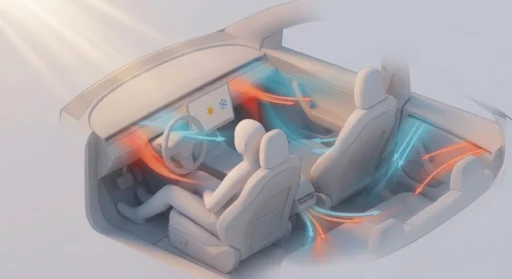
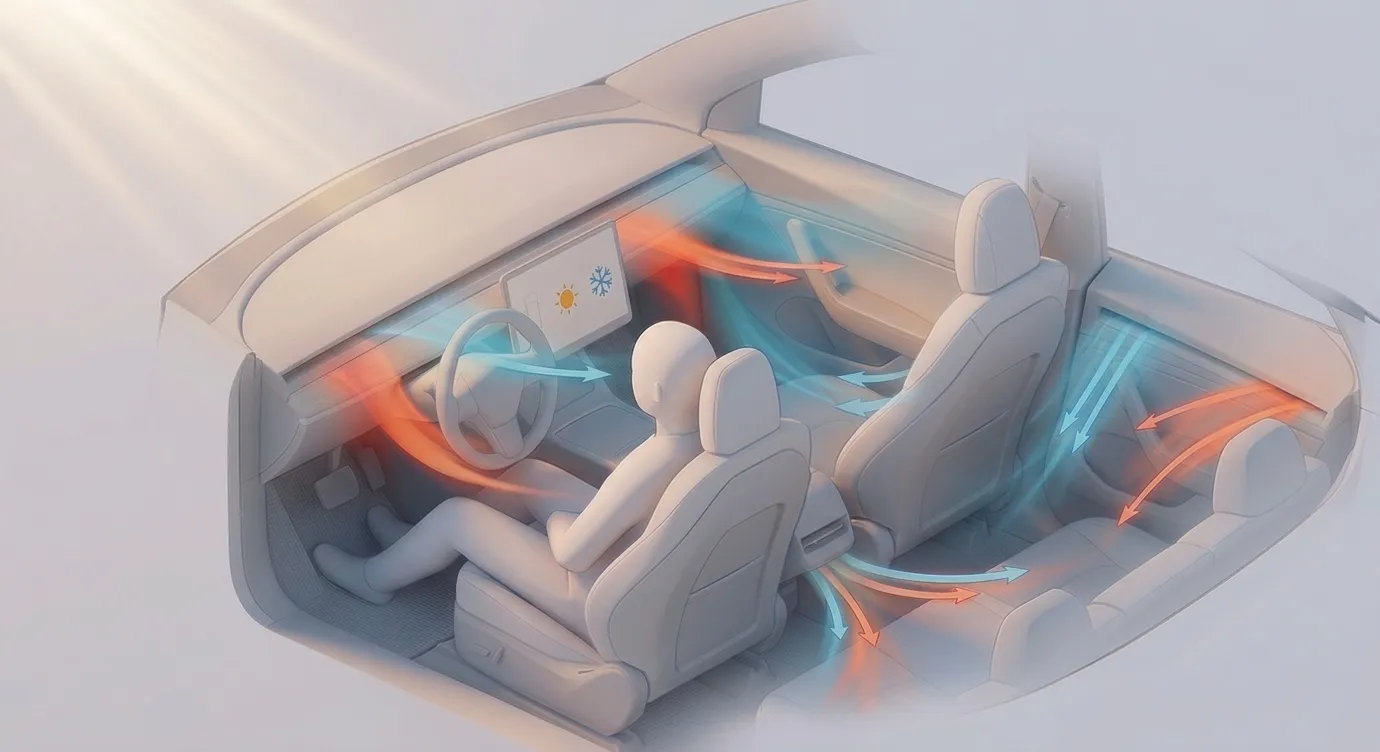

Company filings indicate Tesla found a new way to build car climate control systems. Today standard air vents rely on rigid plastic pieces pivoting on tiny mechanical bearings. That older layout creates noisy airflow and friction wear. Instead the automaker submitted international patent WO 2025/006594 A1 and European patent EP 4735281 A1 for an air steering assembly that uses flexible rubber vanes to direct cabin wind. Although the application remains in the pending phase as of mid-2026, the documents provide a clear roadmap for future interior manufacturing.
Engineers decided to steer the breeze by bending motorized elastomeric pieces physically. These flexible components use a specific mix of industrial materials to function properly.
Advanced materials replace mechanical hinges
These flexible components rely on a mix of industrial materials to work properly. For example the company chose liquid silicone rubber and thermoplastic vulcanizates to survive extreme dashboard heat. Then they mixed in ethylene propylene diene monomer to act as a permanent sunscreen against UV damage.
Engineers added thermoplastic copolyester and silicone vulcanizates to provide tear strength and stop the vents from feeling sticky over time. Analysts note engineers calculated the exact thickness of these vanes to sit between 1.0 and 10.0 millimeters. Some pieces even feature non-uniform tapers to balance flexibility with the structural strength needed to survive high-pressure blower fans.
Controlling the wind with precision
A motorized arm bends the trailing edge of the rubber vane and the front leading edge stays securely locked in place where the air hits first. This setup acts like a swimming fish tailfin and it stops the rubber from fluttering when the fans blow at top speed. The material naturally bends into smooth curves rather than sharp angles. In fact this completely eliminates the turbulent collisions that cause loud hissing wind noise inside a quiet electric vehicle cabin. When the vanes bend they maintain a constant uniform gap between each piece. This exact cross section prevents pressure drops and the annoying buffeting sound passengers normally hear when air changes direction.
Software defined cabin airflow
The frictionless layout experiences zero internal wear by removing sliding rotational bearings entirely. Sometimes the assembly uses molded living hinges instead of normal joints, so the setup can survive over 50,000 mechanical cycles without breaking.
A dedicated microcontroller acts as the brain for the entire assembly to manage the exact shape and direction of the airflow using software. The computer relies on custom firmware and specialized chips like application specific integrated circuits to calculate exact motor speeds. Engineers can even use field programmable gate arrays to digitally rewire the logic later.
The software can rapidly focus a concentrated blast of cold air or sweep a diffused gentle breeze across the entire cabin. The system uses multiple linkage components to shape the air in three dimensions. For instance adjacent vanes can bend in opposite directions to spread the air widely like a floodlight. One configuration pairs ten horizontal vanes with a single larger vertical vane. Then a single motor can drive multiple components to achieve these complex diffusing motions.
Beyond passenger comfort this invention speeds up how fast Tesla can build cars. The factory builds the entire assembly using a process called two-shot injection molding. This technique permanently melts the flexible rubber vanes directly into the rigid plastic housing right on the assembly line. The rigid housing uses a clamshell design that folds and locks together to enclose the internal parts. Naturally this cuts assembly time and lowers the total number of screws and clips required to build the dashboard.
Eventually this unbreakable layout works for more than just luxury sedans. The durable hardware solves problems for upcoming robotaxi fleets where constant passenger turnover normally ruins fragile plastic louvers. It can survive the heavy abuse of commercial Semi trucks. The zero friction setup even eliminates the hazard of floating plastic dust. That specific trait provides a mandatory safety feature for zero gravity SpaceX capsules.
You can view the full patent below:
You may also like to read:
- Tesla gets patent for 2D-to-3D labeling system to speed up Full Self-Driving »
- Tesla files new patent to remove cabin heat and save battery life »
- Tesla files patent for new interior clip to stop cabin rattles »
We’ve launched an official Tesla Owners Online Forum. Join early and claim your "Founding Fuel" badge.