
Tesla CEO Elon Musk is making a new long-term promise on self-driving cars. He says Tesla will hold the biggest autonomous vehicle fleet for a very long time, and he is again tying that vision to the company’s Cybercab robotaxi and its early robotaxi rollout in Austin.
Over the weekend, Musk wrote on X that “Tesla will have the largest fleet of autonomous vehicles as far into the future as I can imagine.” The comment adds to years of public targets on self‑driving technology and robotaxis.
His statement came as Tesla prepares for its first dedicated robotaxi to move from concept to production.
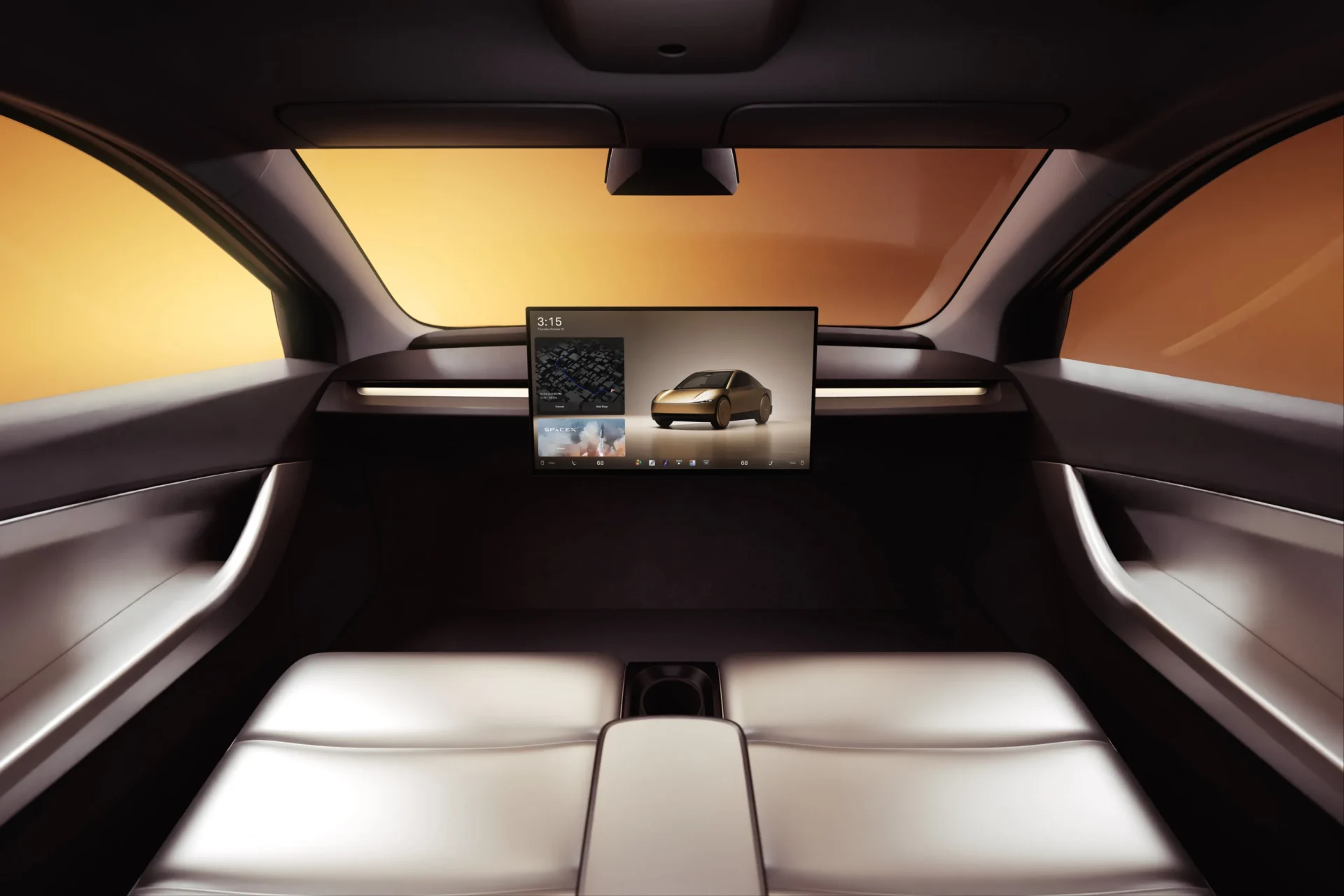
Tesla is working toward an April 2026 production start for the Cybercab, a small two‑seat robotaxi built without a steering wheel or pedals. The vehicle is intended only for autonomous operation, and owners will not be able to drive it in a conventional way. Company commentary indicate an expected starting price around 25,000 dollars, with the car aimed at fleet and ride‑hailing use instead of traditional retail buyers.
Musk has warned that output at the beginning will be slow. He has said nearly every part of the Cybercab is new, from the body structure to the electronics, and that this will hold back early volumes. Still, Tesla is trying to introduce a new manufacturing approach that he says can lift long‑term throughput by around a factor of five compared with current lines. Over time, management has floated a goal of building as many as 2 million robotaxis per year once the system stabilizes, although that would likely take several years of ramp‑up and heavy capital spending.
Robotaxi rollout in Austin
Tesla has already started to test its autonomous ride service in Austin, Texas. The company began offering robotaxi rides in the city in 2025, and in January 2026 Musk said some trips were running without a human safety monitor in the vehicle. In a post on X, he wrote that Tesla had “just started Tesla Robotaxi drives in Austin with no safety monitor in the car” and congratulated the company’s AI team.
Engineers have said the rollout is gradual. Tesla’s AI leader Ashok Elluswamy has explained that the fleet in Austin still includes many cars with safety monitors, and that unsupervised vehicles are being added step by step.
Musk’s claim that Tesla will run the biggest autonomous fleet puts the company in direct comparison with Alphabet’s Waymo. Waymo today operates large robotaxi services in cities such as Phoenix, San Francisco, Los Angeles and Austin, and it reported millions of fully driverless rides completed in 2025.
The two companies take different technical paths. Tesla relies on cameras and a vision‑only system trained with AI, with the goal of working on ordinary roads without pre‑mapped routes. Waymo uses a mix of cameras, radar and LiDAR combined with high‑definition maps.
Shift from traditional cars to autonomy and robotics
Musk has said in recent calls that Tesla’s future product mix will lean heavily toward autonomous vehicles. He has told investors that, over time, the company plans to build only autonomous models, with the next‑generation Roadster as a rare exception for driving enthusiasts.
Tesla is also phasing out some of its legacy vehicles. The Model S and Model X are expected to leave production around mid‑2026, with capacity reallocated partly to the Optimus humanoid robot program.
If Tesla can move from small‑scale trials to broad deployment in multiple cities, his comment about the largest autonomous fleet will gain more weight with investors and regulators.
However, Tesla is entering a test phase where expectations and reality will be measured against each other in public. Musk’s new pledge sets a clear benchmark that markets, regulators and rivals can track as 2026 unfolds.
You may also like to read:
- Tesla FSD helps get Georgia man to ER during 4 a.m. heart attack »
- Tesla FSD v14.2.2.5 rollout begins with focus on refinement »
- Tesla steps up hiring to rebuild maps and navigation stack »
We’ve launched an official Tesla Owners Online Forum. Join early and claim your "Founding Fuel" badge.