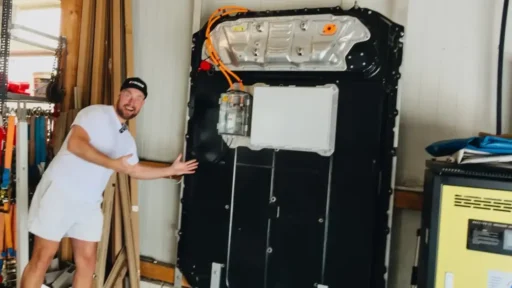
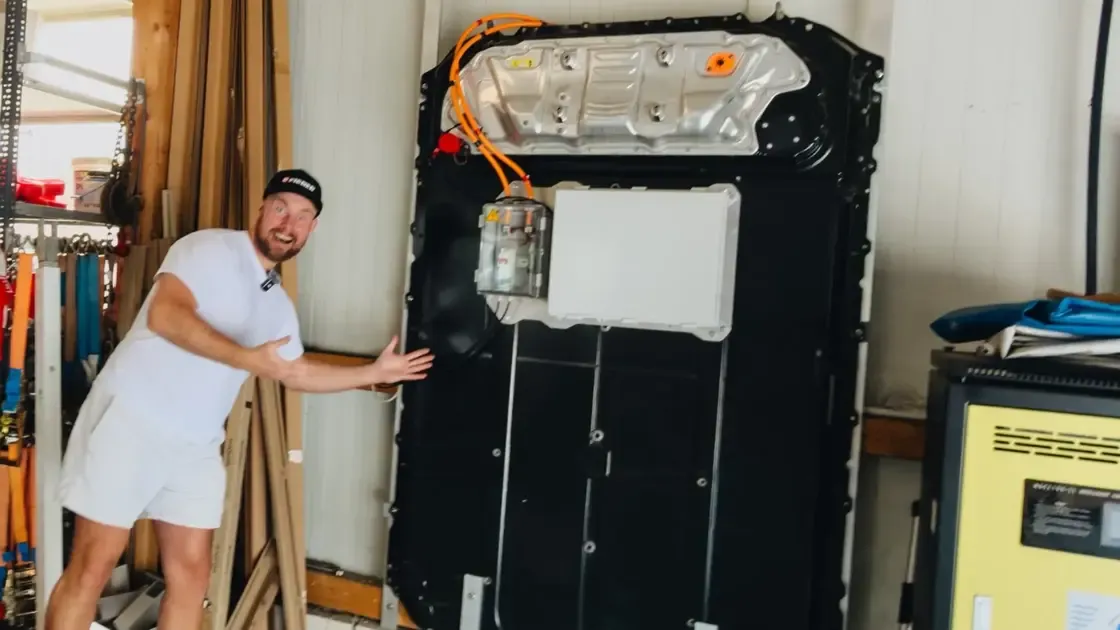

A damaged Tesla Model 3 has become the source of a large home battery system, with about 79 kWh of usable storage and charging from an 11 kW rooftop solar setup. And the project gives a clear example of how EV batteries can keep working after a car is taken off the road.
Battery pack moved from car to house
The system was reportedly built by a German Tesla owner and content creator who posts as Efiber on X. He used a Tesla Model 3 Long Range battery pack, the same type found in long-range and Performance versions of the car.
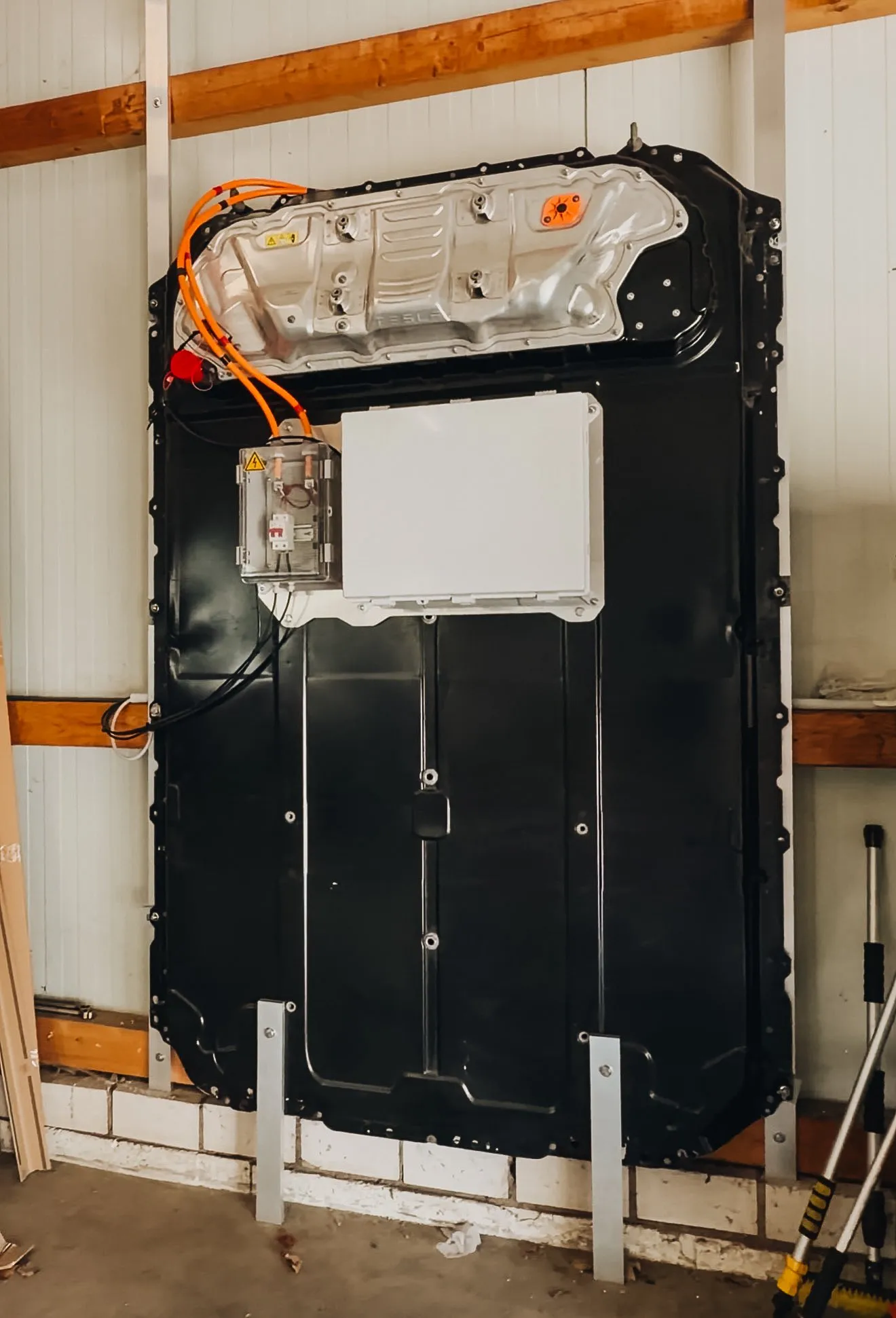
Registration data on those specific packs puts the total size near 82 kWh gross, with about 79 kWh available for use, which lines up perfectly with the figure tied to this project.
The pack came out of a wrecked vehicle and was repurposed for stationary storage instead of going straight to recycling.
How the system works
This setup required far more than moving a battery from one place to another. The Model 3 pack runs at high voltage and was built to work with Tesla vehicle controls and its original battery management system.
This type of setup requires pairing the battery with a hybrid inverter and custom control hardware that can communicate with the pack. Builders generally use small controller boards running open-source firmware to read Tesla CAN bus data, such as voltage, temperature, and state of charge. Then, the controller passes that data to the inverter. And that communication link lets the inverter charge and discharge the pack in a controlled way for home use.
The scale of the battery is the main point here. Tesla’s Powerwall 3 stores 13.5 kWh per unit, with about 11 to 11.5 kW of continuous output based on published specifications.
A repurposed Model 3 pack at 79 kWh holds close to six times the energy of one Powerwall 3. And even four Powerwall 3 units total about 54 kWh, which is still below the capacity of this single EV pack.
That extra storage can cover overnight household demand with room left over, and it can keep key loads running much longer during a grid outage.
Solar system charges the pack
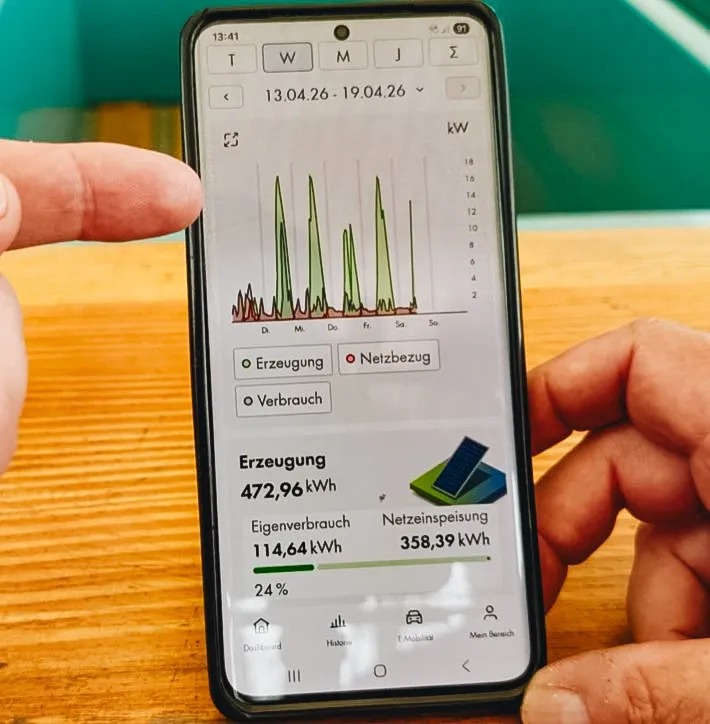
The battery is paired with an 11 kW solar array on the roof. Home systems in that size range can produce about 35 to 60 kWh per day, based on location, season, and weather.
That output can run daytime use and still send a large share of energy into the battery for use after sunset. Yet the exact daily charge level still depends on household demand and solar conditions.
Why second-life batteries are getting attention
Used EV batteries have drawn interest from researchers and energy companies for one basic reason. Many still hold substantial capacity when vehicle service ends. Studies on second-life systems say EV packs are often removed from road use at about 70 percent to 80 percent of original capacity, which can still work well in stationary storage.
Tesla packs have held up well in field data over long mileage. And many retain about 80 percent to 90 percent of original range after more than 150,000 miles.
Research on solar-plus-storage systems using second-life batteries found lower storage costs than similar setups using new batteries, with one study putting the reduction near 40 percent. The same body of research links battery reuse with lower waste and more value from the original materials before final recycling.
Limits of a DIY battery build
This kind of build still comes with major safety and legal issues. A Model 3 pack operates at several hundred volts DC, and any home setup needs proper isolation, fusing, thermal monitoring, shutdown controls, and suitable housing.
Grid rules can be another barrier, since many areas require certified equipment and licensed installers for connected battery systems. Still, commercial firms in Europe have already sold stationary storage units built from repurposed EV modules, which points to a larger market for this type of reuse.
Tesla Akku aus einem Model 3 als Hausspeicher? Geht!
— EFIEBER (@EFIEBER_ANDRE) April 18, 2026
Insgesamt 79kWh!
Geladen mit 11kW Solarstrom.
Ein richtig schönes Beispiel dafür, dass Batterien aus Elektroautos nach dem Einsatz im Fahrzeug nicht einfach ausgedient haben, sondern als Speicher ein zweites Leben bekommen… pic.twitter.com/RworArTgit
This 79 kWh Model 3 project is a clear case of what can be done with a salvaged EV battery, solar generation, and the right control hardware. And for the wider energy sector, it gives one more sign that a battery’s life does not end when the car does.
You may also like to read:
- How to extend your Tesla battery life past 200,000 miles (proven habits) »
- Is Tesla’s new battery extended warranty worth it? »
- New Tesla manual spells out how to protect Model Y battery health »
We’ve launched an official Tesla Owners Online Forum. Join early and claim your "Founding Fuel" badge.