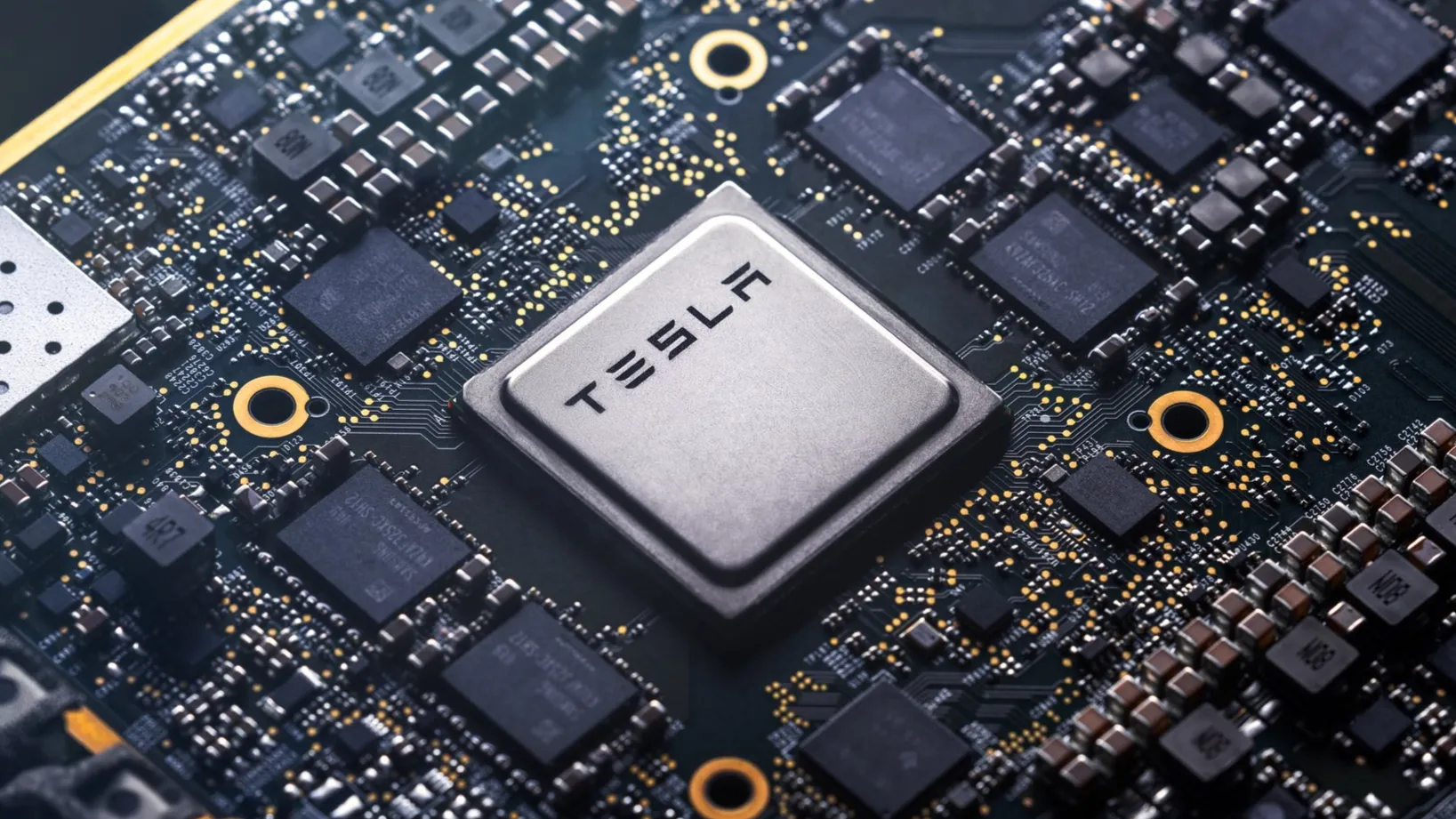

Tesla is putting fresh attention on its AI4 chip, a custom processor that runs both Full Self-Driving (FSD) in its vehicles and the Optimus humanoid robot. The company now stresses that this chip is built with full fail-over redundancy so that key functions keep running even if part of the system has a fault.
At the core of AI4 is a dual-SoC layout, where two independent computers operate in parallel. Each side runs the same tasks and keeps checking the other’s results in real time. If one side encounters an error, the other can immediately take control so that guidance and control are not interrupted.
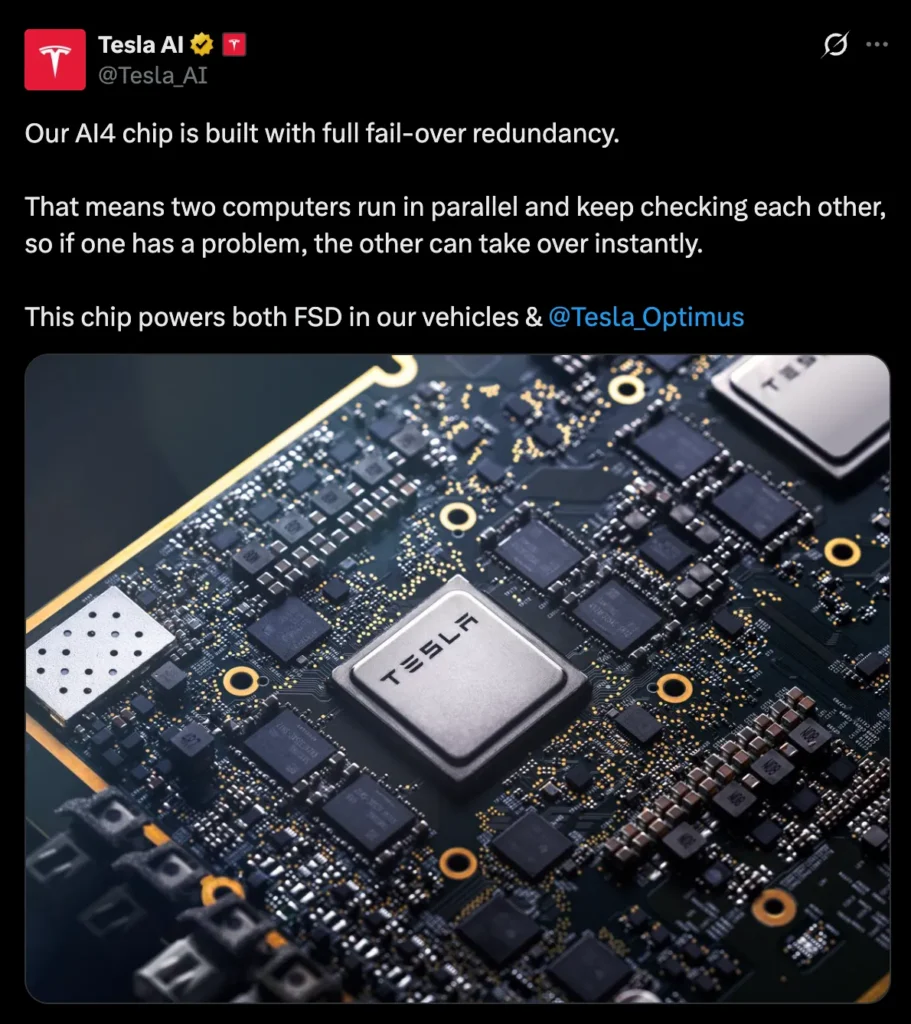
This approach follows earlier Tesla hardware, as previous FSD computers also used two chips on a single board to reduce single points of failure. The new hardware, however, raises the bar on raw processing, with reports pointing to 20 ARM Cortex-A72 CPU cores, clock speeds up to 2.35 GHz, and AI performance in the range of 100–150 TOPS. Those gains give Tesla more room to run its vision-based neural networks at higher resolution and with lower latency.
Role in full self-driving
For vehicles, AI4 sits at the center of Tesla’s push toward higher levels of automated driving. The computer ingests high-bandwidth video feeds from the car’s camera array and relies on GDDR6 memory that is said to reach around 384 GB/s of bandwidth. This bandwidth is vital, since Tesla bases its approach on vision rather than lidar or radar.
The same AI4 technology also serves as the brain for Tesla’s Optimus humanoid robot, which the company pitches as a future factory worker and general-purpose assistant.
Executives have spoken about an AI5 chip planned for limited rollout around late 2026, with wider use expected in 2027. Early statements claim three to five times the performance of AI4 and much higher memory bandwidth.
AI5 is expected to sit inside Tesla’s planned Cybercab robotaxi platform and later versions of Optimus. Company leaders say both cars and robots will draw on the same chip family, battery technology and a shared pool of training data from millions of vehicles already on the road. That scale, could be one of Tesla’s main advantages in refining its driving and robotics models over time.
Longer term, Tesla has spoken publicly about an AI6 generation, targeting roughly double AI5’s performance and moving to a faster development schedule of around nine months for each chip cycle. If those plans hold, the company will be iterating its in-house silicon far more often than traditional automotive upgrade timelines.
Tesla’s choice to rely on its own processors sets it apart from brands that use off-the-shelf platforms like NVIDIA Thor and Tesla continues to bet on tight integration between its chip design, software stack and vehicle fleet data.
You may also like to read:
- Tesla unveils AI5 chip, 40 times faster than AI4 »
- Tesla to restart Dojo3 after progress on AI5 chip »
- Tesla readies fresh side repeater cameras as AI5 hardware nears »
- Tesla teases AI5 chip to challenge Blackwell, costs cut by 90% »
We’ve launched an official Tesla Owners Online Forum. Join early and claim your "Founding Fuel" badge.