
Tesla is deploying an updated machine learning model to its Supercharger network designed to more accurately predict wait times.
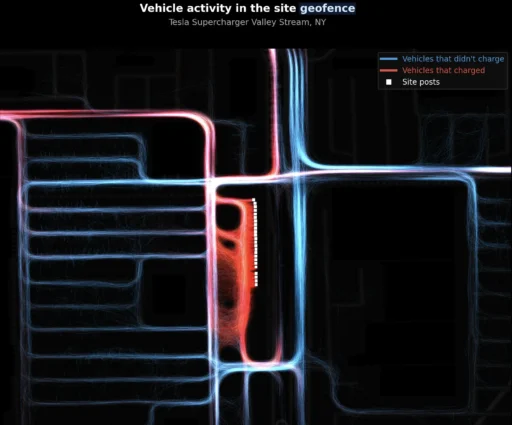
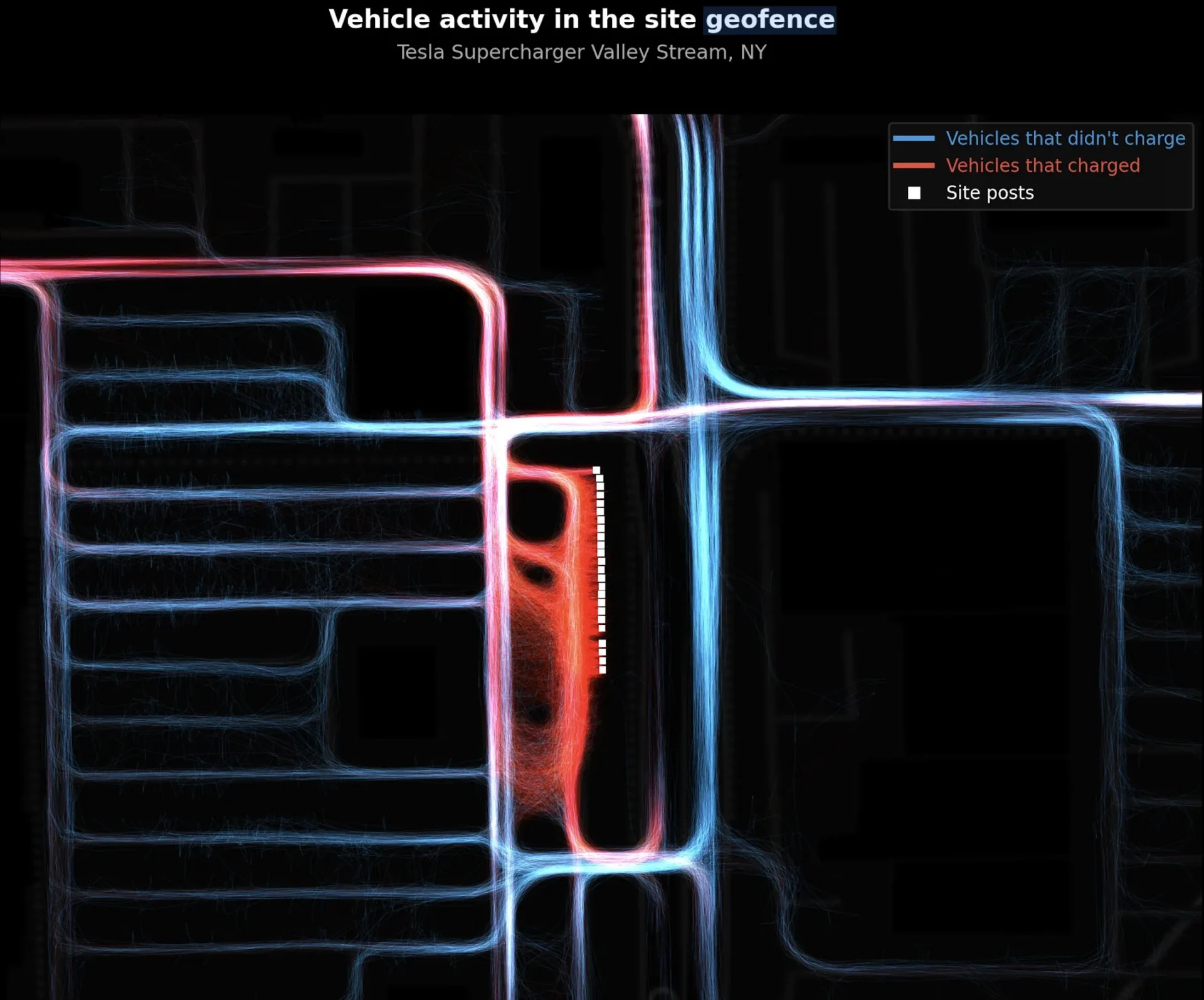
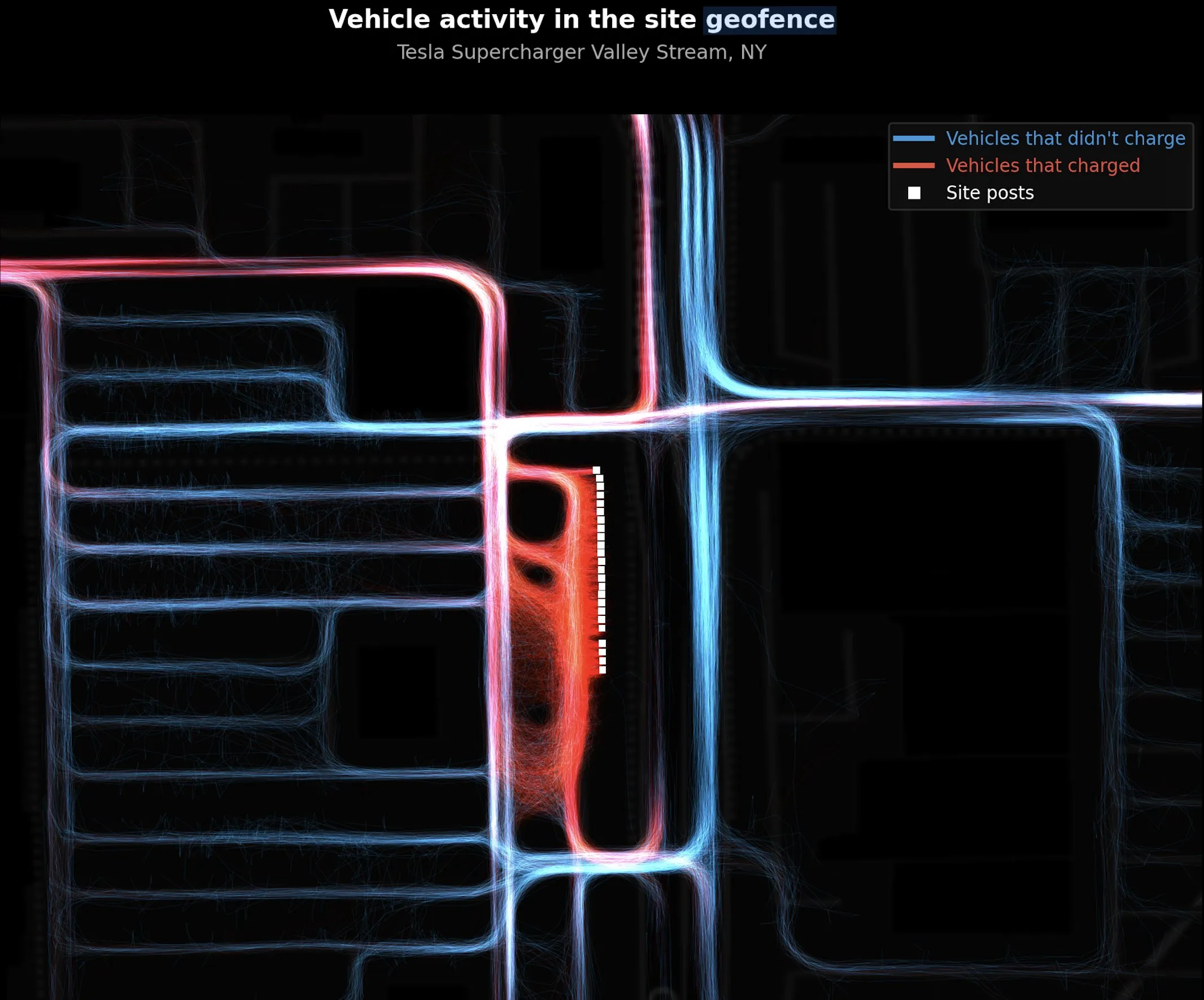
One of the biggest problems with earlier forecasting systems was location overlap. Many Supercharger stations sit next to shopping centers, restaurants and retail parks, so a Tesla pulling into the parking lot could be heading to a coffee shop or heading to a stall. The previous model had no reliable way to tell the difference, and that gap consistently threw off queue estimates.
How the new model works
Tesla trained the updated model on 9 million miles of aggregated and anonymized vehicle trajectory data collected within Supercharger geofences across the globe. By studying how vehicles move through those zones at a fine-grained level, the system can now read charging intent before a car even reaches a stall.
The accuracy gains are significant. Queue length estimation error drops to 20%, and in the rare situation where more than 10 vehicles are waiting at a single site, the model predicts the line with an error of just one to two vehicles. For drivers planning a long trip, that kind of precision makes a real difference when routing decisions are made miles in advance.
Data advantage no competitor can easily match
Tesla’s ability to build this kind of model comes down to data access. Its Trip Planner pulls live routing and location information from every Tesla on the road, creating a feedback loop that third-party charging networks simply do not have. No other operator runs the vehicle software, the navigation system and the charging hardware under one roof, and that integration is what makes a 9-million-mile training dataset possible.
Tesla put it plainly, “We are uniquely positioned to deliver this level of charging intelligence through our vertical integration. There is still more work needed to nail these forecasts and we’re already working on the next release.”
Tesla has previously rolled out stall-upon-arrival predictions, live occupancy data inside the Tesla app and a virtual queuing pilot at high-traffic Supercharger locations. The company has acknowledged that queues and waits affect roughly 1% of all Supercharger sessions, a small number on paper, but a high-friction experience for anyone caught in one.
The new model is already in active rollout, and Tesla says a follow-up release is in development. The company is not treating this as a finished product.
You may also like to read:
- Tesla introduces “Folding Unit” Superchargers »
- Tesla plans 400-stall V4 Supercharger hub in California »
- Tesla quietly brings 3D Supercharger Site Maps to Europe with 2026.2 »
We’ve launched an official Tesla Owners Online Forum. Join early and claim your "Founding Fuel" badge.