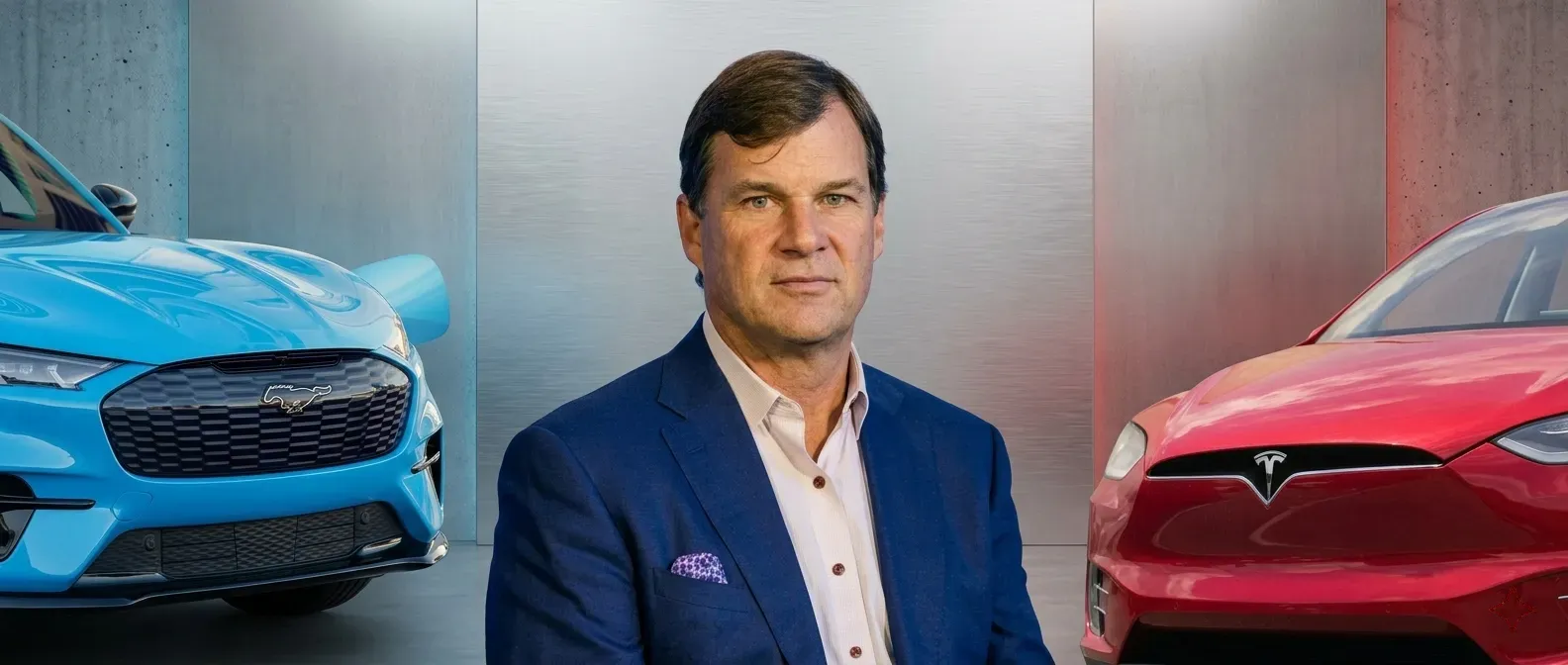

Ford Motor Company is taking a new direction with its electric vehicle lineup. CEO Jim Farley confirmed the company is stepping away from premium EVs and putting its focus on low-cost, commuter-friendly models, a decision shaped by years of losses and real-world sales data.
The admission is blunt. “We were No. 2 to Tesla for three or four years in EVs. We moved really fast, but these were designed the wrong way, let’s put it that way. So they lost a lot of money,” Farley said in a recent interview.
Ford’s early EV push was costly
Ford entered the EV race aggressively, and for a time it held the second spot behind Tesla in U.S. electric vehicle sales. But the financials told a different story. The company’s Model e division racked up heavy losses, and Farley has been transparent about the fact that the initial vehicles did not meet market expectations. The strategy was fast, but it was not the right fit for where buyers actually stood.
That honesty is now driving a recalibration. Ford exited its high-end EV segment and redirected investment toward lower-cost platforms, and the early results of that pivot are starting to take shape in product planning.
A new platform built for lower prices
A dedicated team in California is developing a new Universal EV platform with one clear goal to bring the price down. The first vehicle expected on this architecture is a mid-size electric pickup, targeted for a 2027 launch at around $30,000. Ford plans to use smaller LFP battery packs and a simplified manufacturing process to hit that number, putting it in direct competition with affordable models from Chinese automakers and Tesla’s lower-priced offerings.
Farley’s read on the global market backs this up. “You look at Australia, you look at China, you look at Europe. All those markets are moving to a pure EV being more of a commuter-type, low-cost vehicle. That’s really where the market has already gone,” he said. Escalating fuel prices in many of those regions have only added to the demand for cheaper, efficient EVs.
The hybrid bet that paid off
Ford did not wait for the EV market to sort itself out before making other moves. The company brought a hybrid version of the F-150 to market before any of its major truck competitors, and Ram still does not have one. That timing turned out to be valuable. It gave Ford a direct look at how American truck buyers respond to electrification, what they want and what they are not ready to give up.
The F-150 PowerBoost Hybrid recorded close to 85,000 units sold in 2025, making it America’s best-selling full-size hybrid pickup. With competitors now scrambling to catch up in the hybrid truck segment, Ford has a head start that took years to build.
Affordable EVs are growing faster than premium ones in most major markets. China’s domestic brands have made low-cost electric vehicles their standard, and European buyers are responding to smaller, cheaper EVs at a higher rate than luxury electric models. Ford’s decision to exit the high-end segment and concentrate on volume at lower price points tracks with where the numbers are pointing.
Rising fuel costs have accelerated that trend. As Farley noted, the higher fuel prices go, the stronger the case becomes for a simple, affordable EV that handles daily commutes without a big upfront cost.
Ford’s 2027 mid-size electric pickup will be an early test of whether the new platform can deliver on its price promise. The company is betting that a $30,000 entry point, backed by a simplified supply chain and LFP battery technology, is what it takes to compete at scale in the current EV market.
We’ve launched an official Tesla Owners Online Forum. Join early and claim your "Founding Fuel" badge.