


Tesla’s 2026.2 software branch appears to carry a meaningful change for vehicles with Matrix LED headlights. Code analysts have spotted a new internal flag named “matrix_two_stage_reflection_dip” in recent firmware builds, hinting at more advanced light control logic for high beams.
The new feature name points to two ideas working together. First, the car now seems to treat highly reflective objects, such as bright road signs and similar surfaces, as a separate case instead of handling them like regular obstacles. Second, the system appears to move from a simple on–off control per LED pixel to a two-level dimming approach that can step light output down more gently.
Tesla owners have raised concerns for some time about glare from reflective highway signs when using adaptive high beams. Many drivers praised the way Matrix headlights cut light around oncoming traffic, yet they still complained that large signs could bounce a lot of light back into the cabin on dark stretches.
Some drivers said exit or overhead signs looked harshly bright when the adaptive system was active. They noted that the car handled other vehicles well but did not seem to treat reflective surfaces with the same care. Those comments have stayed fairly consistent since Tesla first rolled out adaptive high beam functions in Europe.
This new “two stage reflection dip” logic appears aimed directly at that gap. If the code behaves as its name implies, the car can now soften the beam on sign surfaces in stages, so the driver keeps strong overall illumination on the road but sees less bounce-back from reflective panels.
How the two-stage dimming likely works
Tesla’s Matrix headlights rely on an array of individually controlled LED segments. The software decides, many times per second, which pixels to dim or keep bright based on camera input and other data. Until now, each pixel has effectively been treated as either lit or dark when the car tries to protect others from glare.
With a two-stage reflection dip, each pixel appears to gain at least two reduced-brightness levels for certain objects. That gives the system more room to fine-tune light output. For instance, a segment shining on a reflective sign might not turn off entirely but drop to a lower level, while other parts of the beam stay at full strength.
High beams can stay active more often, yet the lighting feels smoother and less harsh in tricky situations. In practice, that can help on rural roads, long highway runs, and any route with frequent reflective markers.
Early feedback on the 2026.2 rollout
Owners running the 2026.2.3 update have already reported that headlight behavior feels more refined, even though release notes do not spell out every change. Some drivers say the car now reacts more precisely to light sources and reflections ahead. That feedback lines up with the hidden headlight flag that code watchers have documented.
Tesla has a history of enabling dormant hardware features through software over time. Matrix-capable headlights shipped on many Model 3 and Model Y vehicles before the full adaptive logic was turned on. This new step looks like another quiet round of tuning delivered the same way, over the air and without a service visit.
For drivers, nothing new needs to be activated manually; updates install in the usual way, and the car handles the rest. Owners who often drive at night may notice fewer sharp flashes from road signs and a more consistent beam pattern in high-beam mode.
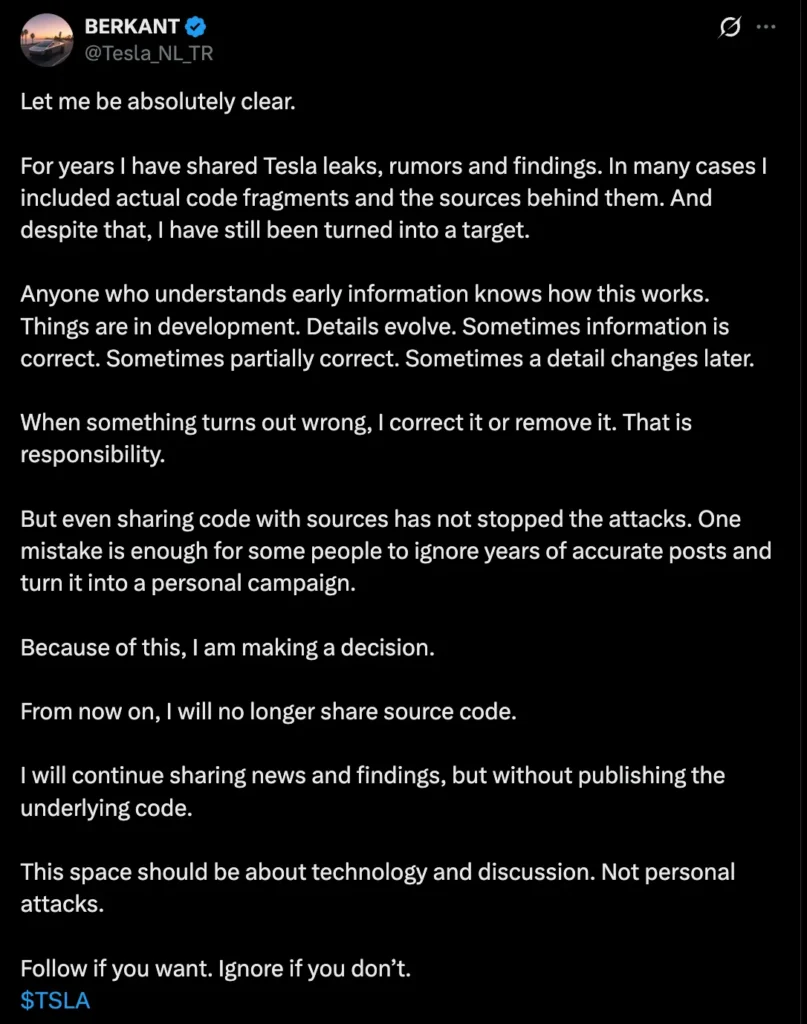
Note: For transparency and accountability, we want to add an important note about the source of this discovery. The original code findings were first shared on X by user “Berkant,” who has since removed his post after other users accused him of spreading misinformation. However, he maintains that the code fragments he published were genuine and that his interpretation of the feature is accurate, but chose to delete the post due to the volume of criticism directed at him. Because that original thread is no longer public, readers should treat these details as unconfirmed and understand that Tesla has not officially documented this behavior in its release notes at the time of writing. For readers who want his full explanation, you can read Berkant’s final update on why he removed the original post here.
You may also like to read:
- Elon Musk spotlights Tesla FSD’s new hand signal recognition »
- Tesla eyes voice control for FSD, with Grok at the center »
- Tesla FSD v14.2.2.5 rollout begins with focus on refinement »
We’ve launched an official Tesla Owners Online Forum. Join early and claim your "Founding Fuel" badge.