


Tesla is working on a new version of its automatic wiper system that runs on a vision model called “wiper_vision_v5_shadow_mode” in the 2026.2.xxx software line, as reported by a Tesla code researcher Berkant on X. The code is active in the background and does not control the wipers yet, but it is already analyzing real drives to learn from driver behavior.
Owners have long complained that Tesla’s current auto wipers struggle in drizzle and light spray, so this test is drawing attention from drivers and analysts.
Earlier versions of Tesla’s auto wipers relied mainly on the forward-facing cameras behind the windshield. That setup had a narrow view and often failed to react quickly when light rain started or stopped. As a result, some drivers said they were forced to override the system and use manual controls in mixed conditions.
The new wiper_vision_v5 system taps into the full camera suite around the car, using a 360-degree view to understand moisture and visibility. Elon Musk had hinted years ago that the company wanted to move auto wipers from a “single camera, single frame” approach to a surround video neural network, and this upgrade appears to align with that direction. With more visual input, the model can compare what is happening at the windshield, on the hood and around nearby vehicles before deciding what it would have done.
Focus on drizzle, road spray and mist
The main goal this time is not heavy downpours. Tesla is targeting the harder edge cases: light drizzle, road spray from cars ahead and mist that forms on or near the hood. These are the moments where many owners say the current system falls short.
The new model analyzes spray thrown up by vehicles in front, which can reduce visibility even when rain is light. It also looks at reflections and fine mist over the hood area. That extra detail can help the system respond in highway traffic, where passing trucks and cars throw dirty water onto the windshield in bursts. For drivers, those short bursts are often when they need the wipers most, yet previous versions did not always respond in time.
How Tesla’s fleet utilizes shadow mode
Right now, wiper_vision_v5 is running in shadow mode. That means it makes its own internal prediction about how it would control the wipers, but the car still follows the existing production logic. The system then compares its hypothetical actions with what drivers actually did. When there is a disagreement, the event can be logged as data for engineers.
This is the same basic method Tesla uses for Full Self-Driving testing. Because the model runs quietly on many cars, the company can gather a wide set of conditions: city drizzle, highway spray, night rain, tunnel exits and more. And since the model does not yet operate the wipers, Tesla can refine it without risking a bad decision in real time.
The timing of this upgrade fits a broader move inside the company. Tesla launched a robotaxi service in Austin in 2025 and has been expanding to more U.S. cities since then. In a driverless car, there is no one to tap the stalk or adjust the wiper speed when vision gets poor. Reliable, automatic wiper behavior becomes part of basic safety.
A robotaxi stuck with a dirty windshield or slow wipers could be forced to pull over, cut trips short or leave riders frustrated. For Tesla, that creates a strong incentive to make the system work well across all typical weather.
Long history of vision-based wipers at Tesla
Tesla removed traditional rain sensors years ago and instead trained a neural network called “Deep Rain” using images of droplets on the windshield. That shift to pure vision cut out extra hardware, but it also triggered criticism from some owners who felt the system lagged behind conventional sensor-based setups.
Over time, Tesla has pushed new versions, including earlier upgrades referred to as v4, and Musk has apologized publicly for poor performance in the past. Some reviewers noted that by mid‑2025 the system had improved to the point where it was roughly on par with typical rain-sensing wipers in many situations. Still, drizzle and road spray remained weak spots, which helps explain the focus of the v5 model.
A few owners running early 2026.2.x builds have reported that their auto wipers feel more consistent in rain, though Tesla has not announced any formal switch to the v5 model yet.
Early owner feedback on the 2026.2.3 update already shows noticeable wiper improvements. One Model 3 owner reported that auto wipers “performed flawlessly” during an hour-long drive in the rain across various road types.
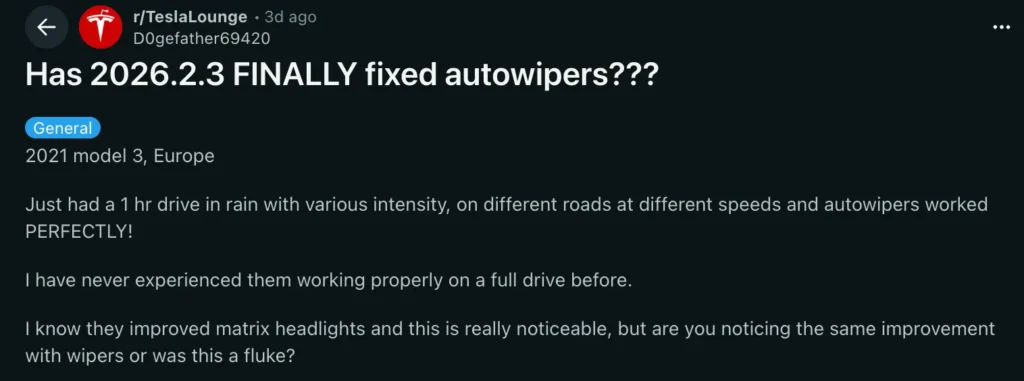
That is anecdotal, but it hints that incremental tuning may already be reaching some cars.
However, Tesla has not provided a public release date for when wiper_vision_v5 will control the wipers directly. Given the company’s record on timelines, many owners are taking a wait‑and‑see approach. Still, the presence of the shadow mode network in the latest code signals that Tesla is preparing a deeper change to one of its most criticized everyday features.
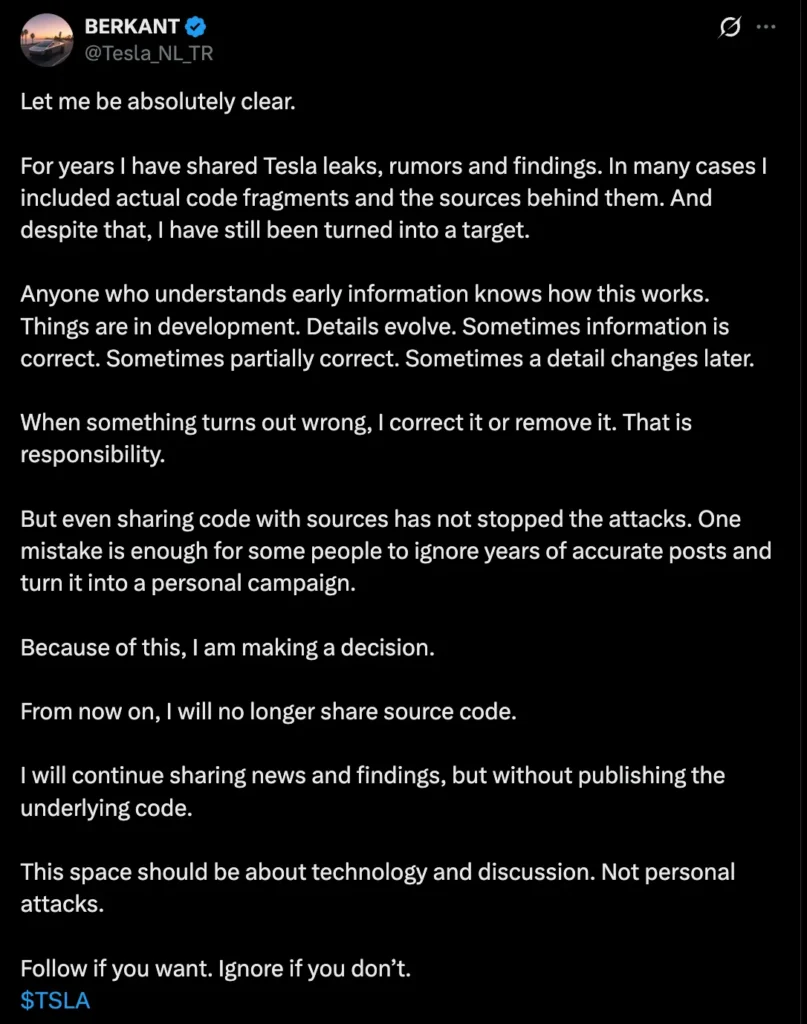
Note: For transparency and accountability, we want to add an important note about the source of this discovery. The original code findings were first shared on X by user “Berkant,” who has since removed his post after other users accused him of spreading misinformation. However, he maintains that the code fragments he published were genuine and that his interpretation of the feature is accurate, but chose to delete the post due to the volume of criticism directed at him. Because that original thread is no longer public, readers should treat these details as unconfirmed and understand that Tesla has not officially documented this behavior in its release notes at the time of writing. For readers who want his full explanation, you can read Berkant’s final update on why he removed the original post here.
You may also like to read:
- Tesla’s 2026.2 update targets Matrix headlight glare from road signs »
- Grok with Navigation Commands rolls out in Tesla 2026.2.6 »
- Tesla 2026.2.3 adds charge cable release, Autopilot tools »
We’ve launched an official Tesla Owners Online Forum. Join early and claim your "Founding Fuel" badge.