Tesla is moving its long-delayed Semi program into true volume territory, pairing a dedicated Nevada factory with a new, lower-cost charging product aimed squarely at fleet depots and overnight stops.
The company has formally launched “Semi Charging for Business,” a program that lets fleets buy and operate their own Tesla Megachargers and a brand-new 125 kW DC fast charger called the Basecharger. The platform targets everything from small private yards to major logistics hubs, with Tesla handling design support, software, and network-level monitoring.
According to Tesla’s online configurator, the Basecharger is a fully integrated DC unit that resembles a V4 Supercharger post but houses its own power electronics, so it does not need a separate cabinet. It uses the MCS connector, operates from roughly 180–1,000 V DC, and is tuned to the Semi’s high-voltage architecture.
Basecharger
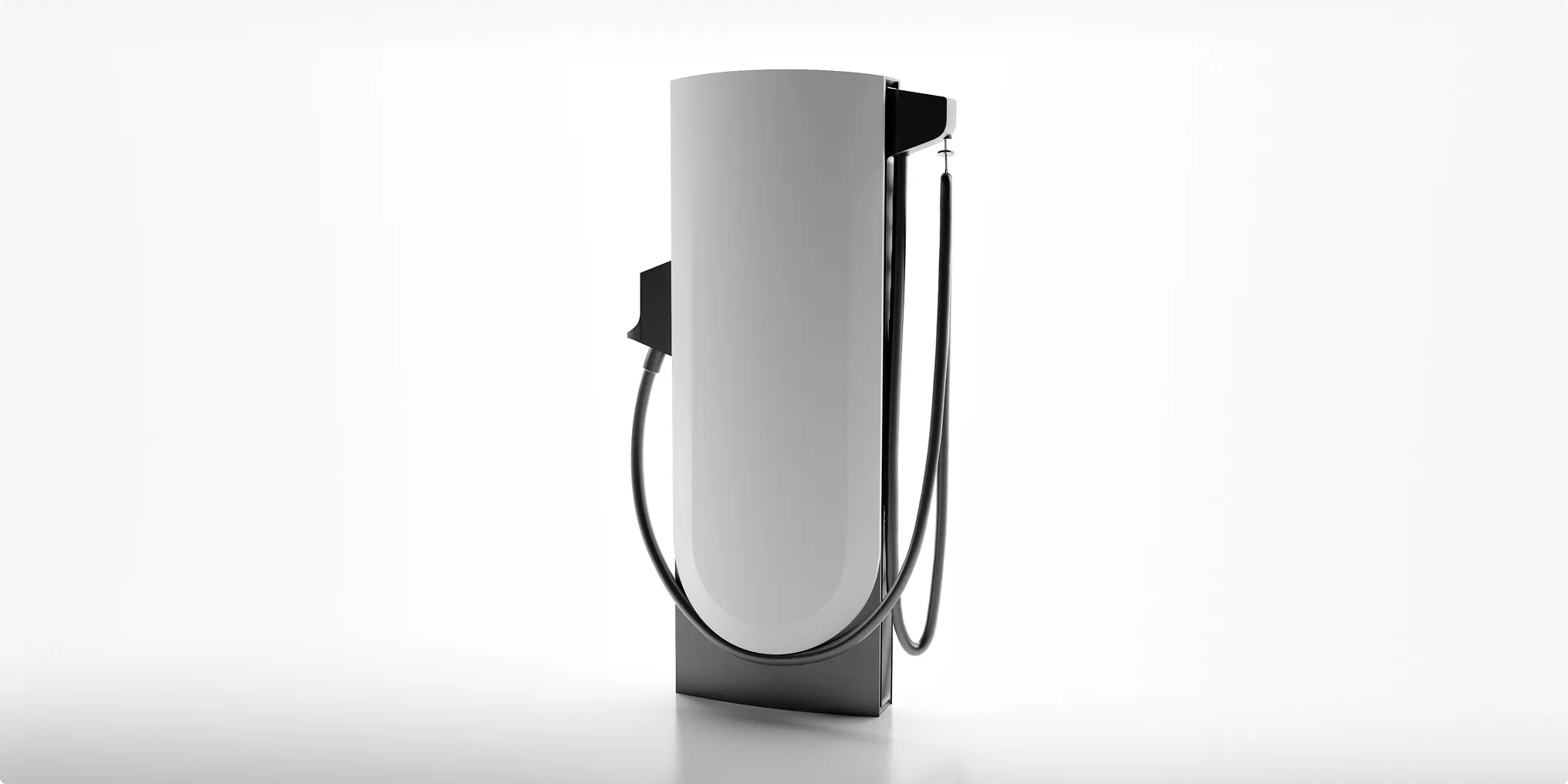
The Basecharger is built for longer dwell times rather than pit-stop sprints. At 125 kW, Tesla says it can restore up to 60 percent of a Semi’s range in about four hours, ideal for mandated driver rest breaks or night-time depot operations. That effectively makes it the “home charger” for heavy-duty fleets: slower than a Megacharger, but far easier and cheaper to deploy on standard commercial electrical service.
Physically, the charger uses a slim pedestal design with a roughly six-meter cable, giving installers flexibility to work around loading docks, trailers and yard layouts. By integrating one of the power modules derived from Tesla’s V4 Supercharger hardware directly into the post, the company cuts out the bulky AC‑to‑DC cabinets that typically dominate heavy truck fast-charging installs.
A key cost lever is daisy-chaining. Up to three Basechargers can share a single 125 kVA breaker, reducing switchgear and utility-side infrastructure compared with three independent high‑power cabinets. For fleets looking to electrify dozens of trucks, that translates into meaningful savings on both capex and grid upgrades.
Pricing undercuts megawatt-class hardware
Tesla’s new configurator finally puts hard numbers on Semi charging. A two‑stall Megacharger system, one 1.2 MW cabinet feeding two posts, starts around 188,000 dollars before taxes and installation. For sites that bill third‑party vehicles, Tesla also advertises a bundled energy and software fee of about 0.08 dollars per kilowatt-hour, notably below the 0.10 dollars used in its Supercharger for Business program.
The Basecharger, by contrast, starts at roughly 40,000 dollars for a minimum order of two units, effectively putting each 125 kW post at around 20,000 dollars before installation. That cost delta makes it realistic for smaller depots to add multiple Semi charging positions without megawatt‑class service upgrades.
Customer deliveries of the Basecharger are currently slated for early 2027, while Megachargers are already being deployed along key freight corridors and at flagship customer sites.
On the vehicle side, Tesla’s dedicated Semi factory near Gigafactory Nevada has moved from construction site to active production line, with Semi frames now flowing through assembly. The plant is designed for an annual capacity of around 50,000 units at full ramp, with mass production beginning in 2026 after years of limited pilot builds.
You may also like:
- Tesla Semi’s “cube” 4680 pack delivers 500-mile range in cold weather »
- Tesla opens first public Semi Megacharger site near Los Angeles »
- Tesla sets final Semi trims as deliveries move closer »
We’ve launched an official Tesla Owners Online Forum. Join early and claim your "Founding Fuel" badge.