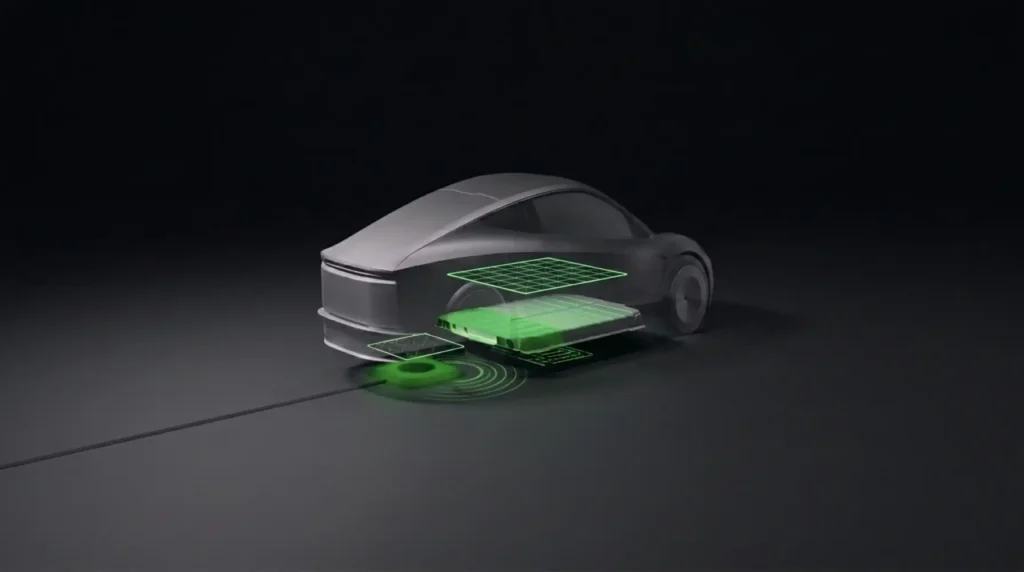
Tesla is preparing to install 80 wireless vehicle chargers as part of Phase 2 of a dedicated Robotaxi charging hub in Austin, Texas, according to a new permit filing that signals the company is scaling infrastructure ahead of broader Cybercab deployment.
The filing explicitly calls for 80 wireless vehicle chargers tied to a Robotaxi fleet charging hub rather than a public Supercharger site. The project is labeled as Phase 2, which implies Tesla has already completed or started an initial phase of work at the same location.
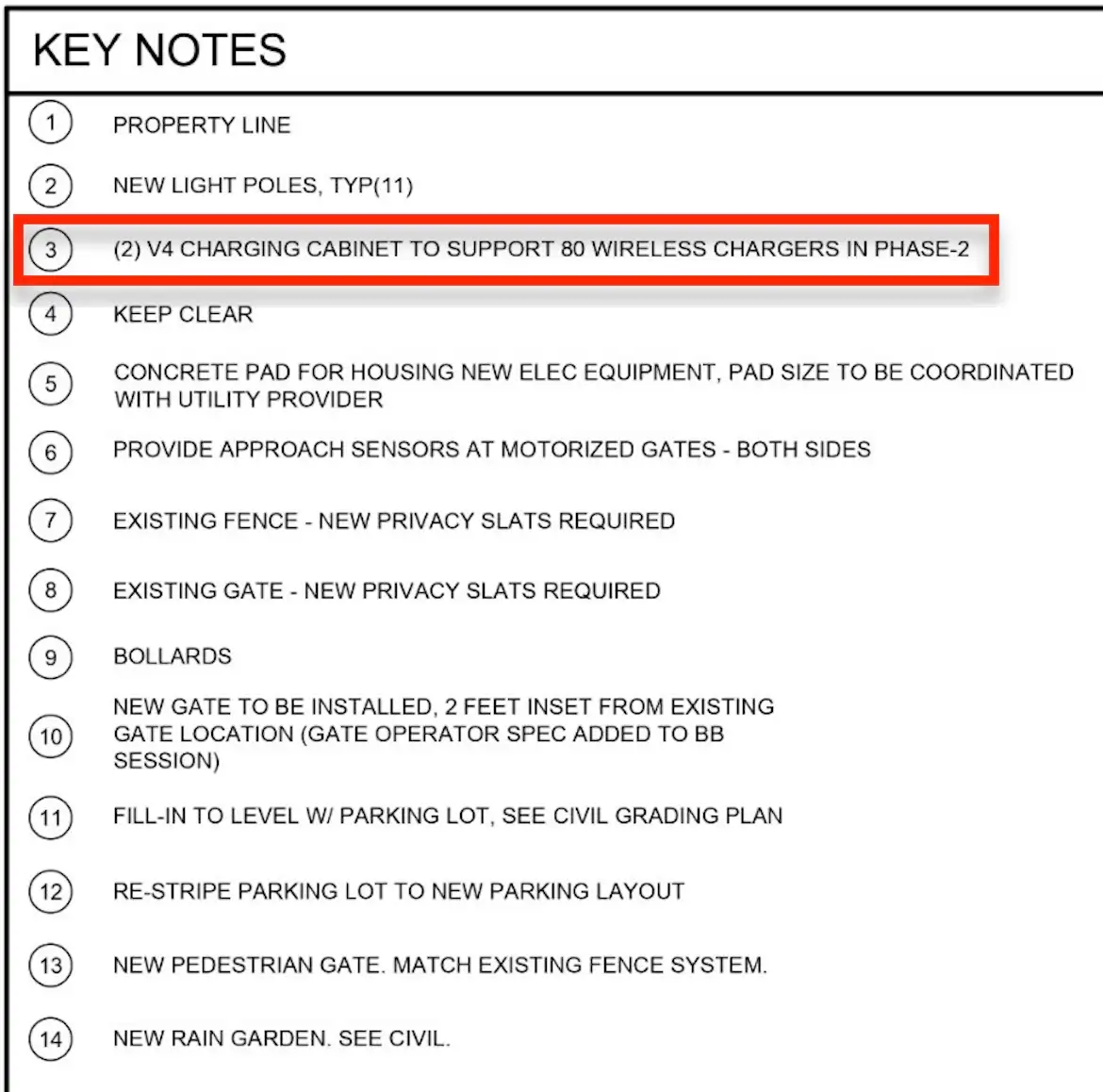
V4 CHARGING CABINET TO SUPPORT 80 WIRELESS CHARGERS IN PHASE-2

Separate Texas permitting documents confirm that Tesla has been building out a Robotaxi hub in Austin that includes both charging and automated servicing systems. A state building permit, TABS2025022006, describes a facility where Tesla installed Supercharger cabinets, an equipment inspection system, and a dedicated cleaning robot designed to automatically clean Cybercabs between rides.
The same filings place the hub at 5900 E Ben White Blvd, where vehicles return between trips to charge, be cleaned, and be inspected before being dispatched again. Construction on that earlier phase was completed and the permit closed in March 2026, so the site is already operational as Tesla moves into its wireless-charging expansion.
Wireless charging cleared by FCC for Cybercab
Tesla has been laying regulatory groundwork for inductive, or wireless, charging of its upcoming Cybercab for some time.
In early 2026, Tesla secured a key waiver from the U.S. Federal Communications Commission to use ultra-wideband radio technology in its inductive charging system, clearing a major regulatory hurdle for wireless, fully automated charging in the United States.
The introduction of the new Austin permit for 80 wireless chargers strongly indicates that Tesla is transitioning from obtaining regulatory approvals to the practical deployment of its wireless charging infrastructure, particularly for fleet use.
Given that the Cybercab is a purpose-built, fully autonomous two-passenger vehicle that Tesla executives say is operationally ready to join the Austin Robotaxi fleet soon.
Austin remains Tesla’s launch city for unsupervised Robotaxi service
Austin is Tesla’s launch city for unsupervised Robotaxi service, and the company has rapidly expanded its operations there in 2025–2026. By June 2026, Tesla had expanded its unsupervised Robotaxi coverage to the entire Austin metropolitan area, opening driverless rides over roughly 245 square miles, including suburbs, major highway segments, Gigafactory Texas, and Austin-Bergstrom International Airport.
Tesla operates as a Transportation Network Company across Texas under authorizations that explicitly permit the use of automated motor vehicles without a human safety driver, with the license currently running through August 2026.
Against that backdrop, a fleet-only charging hub with 80 wireless chargers in Austin looks like the next step in scaling operations from limited pilot to high-utilization fleet, especially as Cybercabs are integrated into the live service.
A build-out of 80 wireless charging positions at a single hub indicates Tesla is planning for a relatively dense, high-turnover Robotaxi fleet at that location, not just a small pilot.
Wireless charging pads allow vehicles to autonomously park over a pad, recharge without human intervention or plug-in hardware, and then leave once charged, which is critical for a business model that aims to minimize human labor in the loop.
Combined with the already permitted cleaning robot and inspection systems at the Austin hub, Tesla is clearly moving toward an end-to-end automated workflow where vehicles return from service, park over a wireless pad to charge, undergo automated cleaning and inspection, and then re-enter the dispatch pool with minimal human touch.
If Tesla can make that system robust in Austin, it provides a template the company can replicate in other cities where it is planning dedicated Robotaxi-only charging hubs, such as private Robotaxi Supercharger sites in Arizona.
Outlook for Cybercab deployment in Austin
Tesla’s VP of AI Ashok Elluswamy has already signaled that the Cybercab will soon join the active Robotaxi fleet in Austin, marking the first deployment of the vehicle in a live commercial environment.
With the Robotaxi service already operating unsupervised across Austin and the infrastructure stepping up from Superchargers plus cleaning robots to a second phase of 80 wireless chargers, the latest permit suggests Tesla is now in the final infrastructure-prep stage before broader Cybercab rollout.
In practical terms, this means that in the coming months, Austin could become the first city where Tesla runs a largely automated Robotaxi fleet using purpose-built Cybercabs, serviced at a hub designed for autonomous charging, cleaning, and inspection.
If successful, this Austin hub, with its newly permitted 80 wireless vehicle chargers, would serve as Tesla’s reference architecture for scaling Robotaxi and Cybercab operations to other major U.S. markets.
You can view the permits listed below:
We’ve launched an official Tesla Owners Online Forum. Join early and claim your "Founding Fuel" badge.