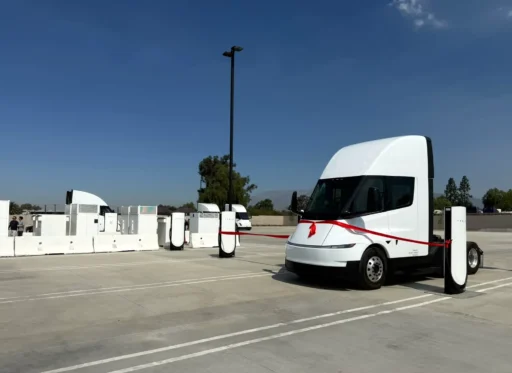

Tesla opened a new commercial charging station in Ontario, California, early this March. This location stands as the first public Megacharger built for external Semi fleet customers, and it gives them a reliable place to recharge. The facility sits on East Guasti Road in the Inland Empire, and this area handles heavy freight traffic moving from the Los Angeles ports to inland distribution centers. Now fleet operators have a dedicated spot to plug in their trucks outside of Tesla’s closed factory locations.
Site layout and charging hardware
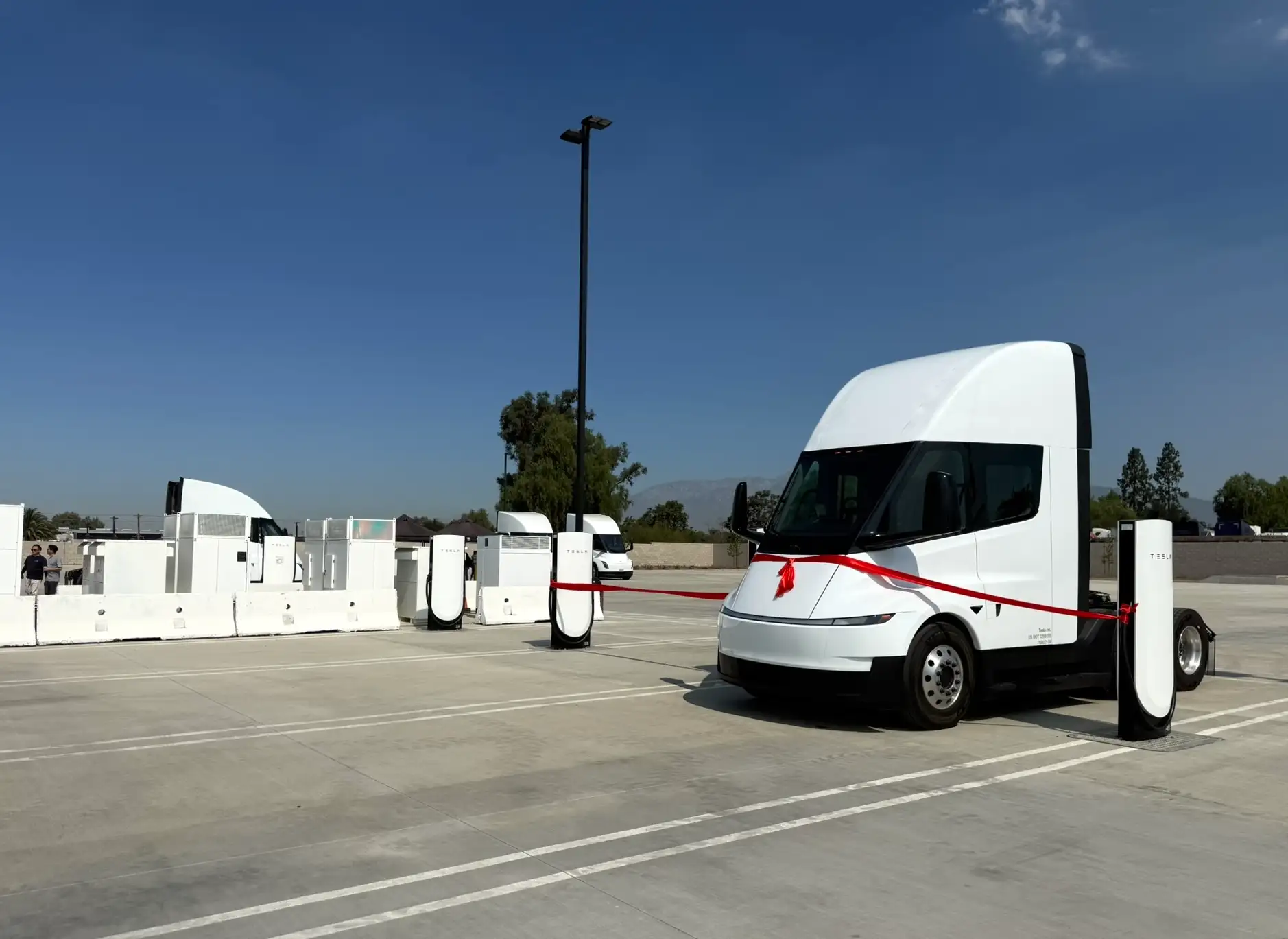
The Ontario charging hub features six total bays for heavy electric trucks. Two of these are pull-through stalls equipped with the unique Megawatt Charging System connector for the Tesla Semi, and they offer plenty of space for long trailers. The other four bays provide CCS connections for different electric truck brands at up to 400 kilowatts. Currently, the dedicated Megacharger stalls only work with Tesla’s trucks. The station operates as part of a larger commercial charging depot, and this setup supports various regional transport routes.
Energy output and battery speeds
Tesla engineered the Megacharger hardware to deliver up to 1.2 megawatts of electricity under optimal conditions. A Semi can regain about 300 miles of range in roughly 30 minutes at that maximum rate, when the battery is ready to accept it. But the Ontario site currently limits peak output to 750 kilowatts, so the trucks charge slightly slower than the theoretical maximum. That speed still easily beats the 250-kilowatt limit found at standard passenger Superchargers. And a 750-kilowatt charge provides enough energy during a mandatory driver break to keep local freight moving on schedule.
Network growth plans
This new California station starts a much larger infrastructure rollout for the company. Company filings indicate Tesla mapped about 66 future Megacharger locations across 15 states, and construction will happen in phases. The automaker plans to open at least 37 of these sites by the end of 2026, and then the rest should finish construction by 2027 to connect major transport corridors. Tesla is partnering with travel center operators like Pilot and Flying J to install these chargers at existing truck stops in states like Texas and Nevada.
Tesla previously built Megachargers at its Nevada factory and a Carson facility. Those earlier sites supported internal testing and early pilot programs for companies like PepsiCo, when the truck program was just getting started. The Ontario hub lets more customers run normal daily operations on busy California highways. Tesla is pushing hard to scale its commercial vehicle business. Soon more trucking companies can test the Semi on real regional routes without worrying about range limits.
We’ve launched an official Tesla Owners Online Forum. Join early and claim your "Founding Fuel" badge.