
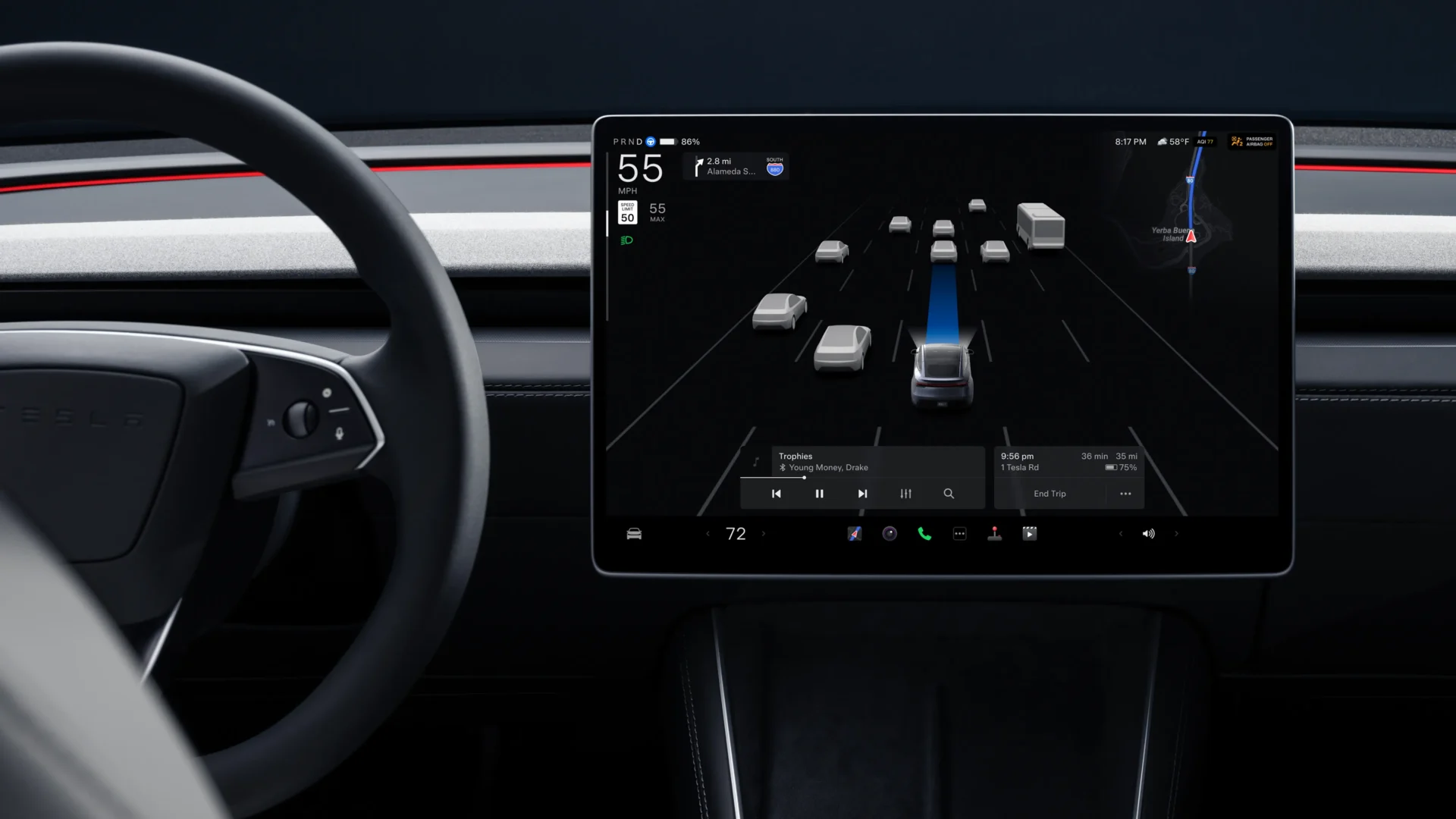

Tesla has started pushing software version 2026.2.3 to the first batch of vehicles, as an early test wave. The update builds on the broader 2026.2 release that began reaching cars earlier in January.
Owners in multiple regions report receiving the new version on January 26 and 27, including drivers in the United States, Canada and parts of Europe.
New charge cable release via rear door handle
The headline addition is a new way to stop charging and release the charge cable using the rear left door handle on the driver’s side. When the vehicle is unlocked, or a recognized key or phone key is nearby, a driver can pull and hold that handle for about three seconds to end the charging session and unlatch the connector. This can help when the button on a Tesla cable fails, an adapter sticks in the port, or a third‑party cable does not have a release button at all.
Owners can still stop charging from the touchscreen or the Tesla app, so the new shortcut works as another option rather than a replacement. And the three‑second hold is intended to reduce accidental triggers when someone simply opens the rear door.
Feature already familiar in Europe
Drivers in Europe have lived with this function since the 2025.20 update, which first enabled door‑handle charge release for certain Model 3 and Model Y vehicles. And the 2026.2.3 update now brings the same behavior to North America for vehicles with compatible hardware.
Owners who tried the feature say the handle pull can open the door and release the port at the same time, but the unlatch still works even if the door does not fully swing out. The method reduces the need to reach into the trunk area to use mechanical releases in rare fault cases. And it gives a quick way to clear an adapter that feels stuck without applying extra force.
New Trip Weights and AP Weights in Service Mode
Beyond the documented changelog, Tesla enthusiasts discovered two new data categories hidden within the vehicle’s Service Mode under the Autopilot section: “Trip Weights” and “AP Weights”. Tesla has not issued a public technical note on these terms yet.
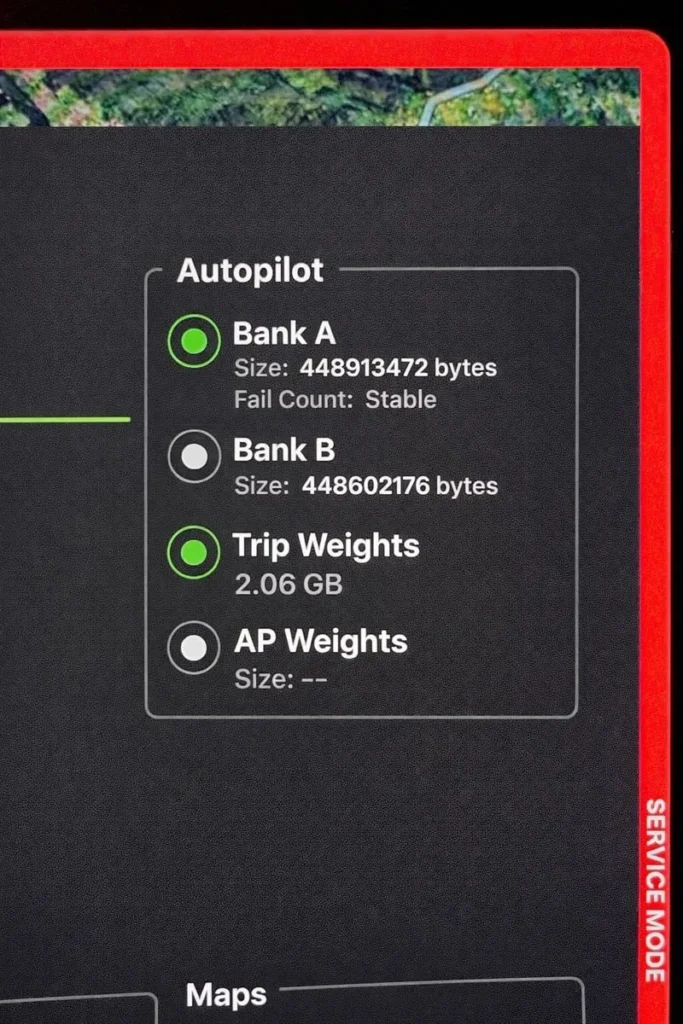
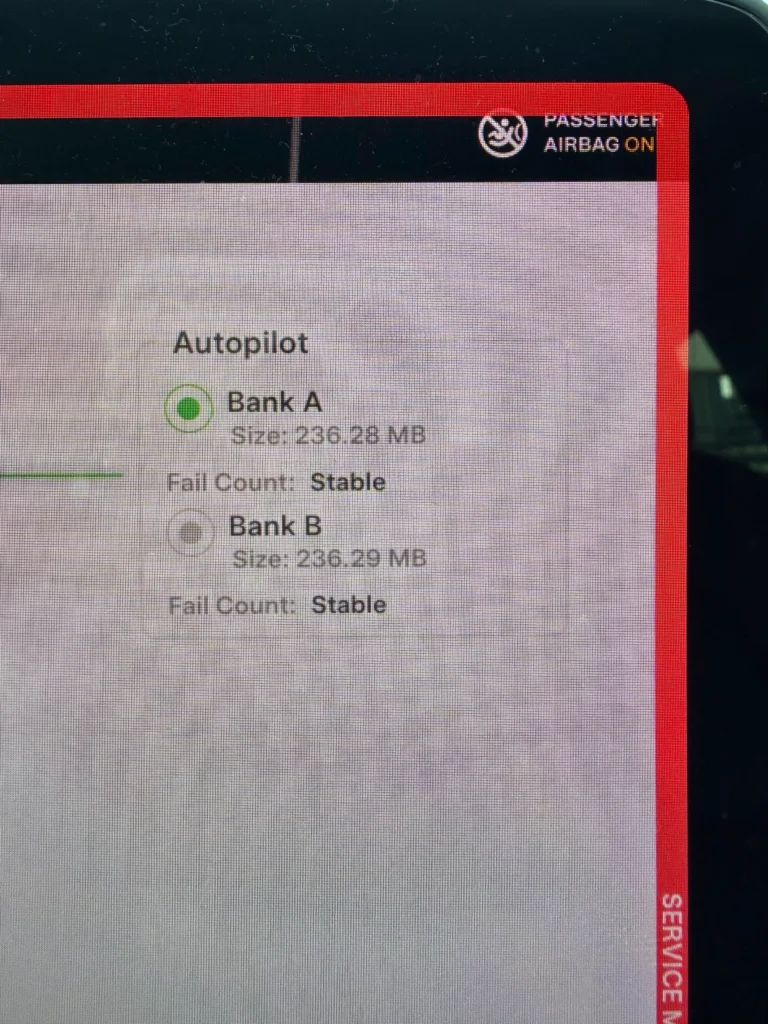
Autopilot and Full Self‑Driving rely on large neural networks that process camera data and output driving decisions. Those networks hold parameters known as weights, which encode what the system has learned from training on vast driving datasets. Trip Weights likely refer to the active set of neural network weights loaded for the current drive, while AP Weights may refer to the more static model weights stored on the car between trips.
The FSD computer contains dual neural network accelerators, and the company has described weight files measured in gigabytes. Exposing Trip Weights and AP Weights in Service Mode could help technicians or engineers monitor which model packages are in use, or diagnose issues after an update.
Regular drivers will not need to interact with these entries, and the menu remains part of the diagnostic interface rather than everyday settings.
How 2026.2.3 fits into the 2026.2 branch
Version 2026.2.3 sits on top of the main 2026.2 branch that started rolling out earlier in the month to a larger portion of the fleet. That baseline release included a mix of small improvements. Owners have reported updates such as tweaks to charging statistics in the app, refinements to navigation behavior and minor interface changes in vehicle menus.
2025.44 builds still dominate the fleet, with 2026.2 and 2026.2.3 slowly gaining share as the company widens distribution. This staged rollout lets engineers watch for bugs or regressions before moving to a full push. And for a feature that touches charging behavior across many types of home and public hardware, a careful ramp‑up is important for safety and reliability.
For owners who receive 2026.2.3, the new charge release shortcut works without extra configuration. You can park, plug in as usual, and when it is time to leave, approach the left rear door with the key or phone key, pull and hold the handle for about three seconds, then remove the cable once it unlatches. Owners who prefer the touchscreen or the mobile app can keep using those paths.
Service Mode, including the new Trip Weights and AP Weights entries, remains a specialist tool. Access typically requires a long press on the model name in the software screen and entering a code, which is intended for technicians.
The presence of these new labels is another sign that Tesla’s driver‑assist stack continues to revolve around large neural networks and model weight packages, even as the user‑facing changes in this update are modest.
For now, 2026.2.3 looks like a small but practical step at the start of Tesla’s 2026 software cycle and a controlled rollout that will likely expand in the coming days and weeks.
You may also like to read:
- Tesla quietly brings 3D Supercharger Site Maps to Europe with 2026.2 »
- Tesla’s new “Hardware 4.5” quietly appears in 2026 Fremont Model Y »
- Musk: V14 Lite and free HW4 swap put HW3 Teslas back in focus »
We’ve launched an official Tesla Owners Online Forum. Join early and claim your "Founding Fuel" badge.