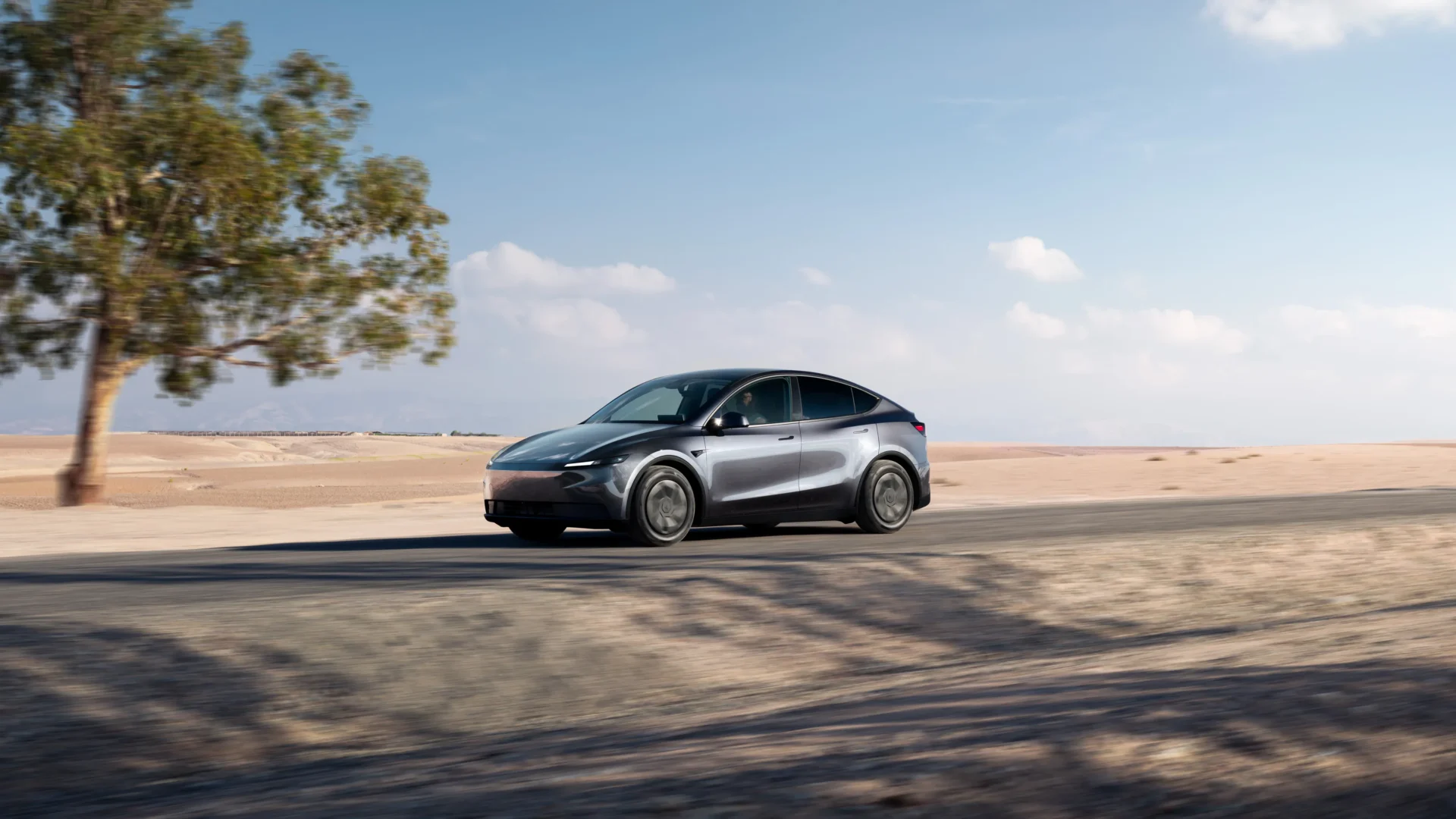

A rural district in Germany is testing a new kind of public transport, and the service is already helping students and senior citizens get around. In the Eifel region, Tesla vehicles equipped with Full Self-Driving Supervised are being used in a local pilot program that offers free rides for daily trips. The service is based in the Arzfeld municipality in the Eifelkreis Bitburg-Prüm district, where regular transport links can be limited for people living in smaller villages.
The project is built around everyday travel, not special demo routes. Senior citizens are using the cars for trips to doctor appointments, pharmacies, and grocery stores. Students are riding them to vocational schools. And that practical focus has helped the service gain attention beyond the district itself.
Many rural areas face a simple transport problem. Villages are spread out, fixed bus schedules leave gaps, and private cars carry much of the burden. But that system does not work well for seniors who no longer drive or for younger passengers who depend on family help or school routes. The Tesla shuttle service is trying to close that gap with vehicles that can serve real passenger needs on public roads.
How the shuttle service runs
According to local reports, this is the first public shuttle project in Europe using Tesla Full Self-Driving Supervised. Yet the service is not operating as a fully driverless system. A safety driver stays in the vehicle on every trip and can take control at any time, since German rules do not permit unsupervised public use of Tesla’s FSD system in this setting.
That point is central to the program. Tesla markets FSD Supervised as an advanced driver-assistance system, and the name itself makes clear that human oversight is still required. In the Eifel pilot, that oversight remains part of every ride. But the program still gives local officials and residents a real look at how the software performs in day-to-day traffic.
The shuttles are running as a public service, and that sets this trial apart from closed-course tests or private demonstrations. Riders are using the vehicles for errands, school travel, and medical visits. So the project is tied directly to local mobility needs, rather than to a one-time publicity event.
Early record and local response
The service began in December 2025, and local officials say the first months have gone smoothly. So far, there have been no reported accidents. Manual takeovers have been rare, and reports say they were mainly needed in difficult spots such as tight dead ends or unusual street layouts.
That early record has helped build trust in the pilot. Residents are not being asked to picture some distant future. They are seeing the service operate in their own towns and on familiar roads. And for seniors in particular, a ride to a doctor, a pharmacy, or a store can be arranged without relying on a relative or a limited bus connection.
Students have become another clear user group. The vehicles are being used for trips to vocational schools, which gives the project a broader role than a senior shuttle alone. That mix of riders has helped turn the pilot into a wider transport test across age groups.
Local partners and growth plans
The project is being carried out through cooperation between local authorities and Tesla Automation in Prüm. That local industry link has given the district a rare chance to test advanced vehicle software in a public setting close to home.
District Administrator Andreas Kruppert has said the service could grow beyond its current format. Instead of running only two days each week, the shuttles are expected to move to an on-demand schedule across five days. And local leaders want the network to reach a wider area that could serve about 500,000 people.
That planned rollout is a major next step. A limited pilot can answer basic questions about safety and rider interest.
Tesla’s FSD Supervised system has been available to many drivers in the United States, where the company continues to push its autonomy plans. Europe has tighter rules, and that makes the Eifel project unusual. Rather than launching a full robotaxi service, the district is using a controlled format with a safety operator in the seat and clear public oversight.
That setup gives the pilot a more grounded role. It is not a claim that fully autonomous transport has arrived in Germany. It is a supervised public shuttle service that is being tested step by step. Still, the project offers a useful case for other rural districts that struggle with limited routes, long distances, and an aging population.
Source: haller-kreisblatt
You may also like to read:
- Tesla achieves 93,000 driverless miles inside the Giga Berlin gates »
- Tesla FSD v14.3.2 finishes 2,833-mile drive without human help »
- Tesla confirms international FSD V14 Lite rollout for HW3 cars »
We’ve launched an official Tesla Owners Online Forum. Join early and claim your "Founding Fuel" badge.