

Tesla filed a new trademark application on June 18 for a product called MEGAPOD. Company filings describe a self-contained modular hardware system built to process artificial intelligence data. The paperwork lists integrated computer servers alongside advanced cooling and electrical distribution systems. This equipment arrives fully assembled and operates as a single enclosed unit. This registration gives us a clear look at how the automaker plans to grow its physical infrastructure footprint.
This new hardware connects directly to a joint project between Tesla and xAI. Elon Musk announced the initiative in March under the names Digital Optimus and Macrohard. The software acts as an automated digital desk worker that watches computer screens to imitate human actions in real time. The program stems from a massive two billion dollar investment agreement between the two companies. The artificial intelligence operates through two distinct layers to handle complex tasks. Digital Optimus functions as the fast and instinctive portion of the mind. It processes the most recent five seconds of keyboard inputs and screen video right away. Then Grok handles the deep reasoning logic to guide the digital worker through multi-step assignments.
Using parked cars for computing
But drivers will soon have this software running right inside their personal vehicles. Musk confirmed the program works on any car equipped with the AI4 computer hardware. The system runs background office work when the vehicle sits parked in a driveway or garage. For example the local car computer costs about 650 dollars and processes the basic data locally before sending anything to the cloud. It relies on expensive Nvidia chips only for the heaviest calculations to keep costs down. The network capacity relies on these vehicles to act as active nodes for distributed computing tasks across the entire continent. And owners might eventually see new features or financial benefits from letting the company use their idle computers.
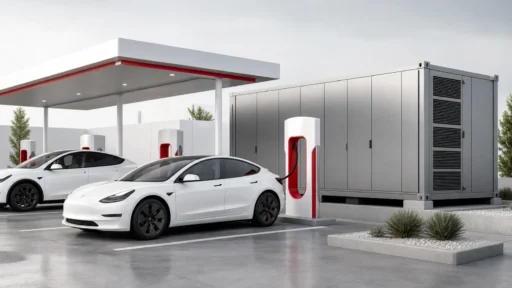
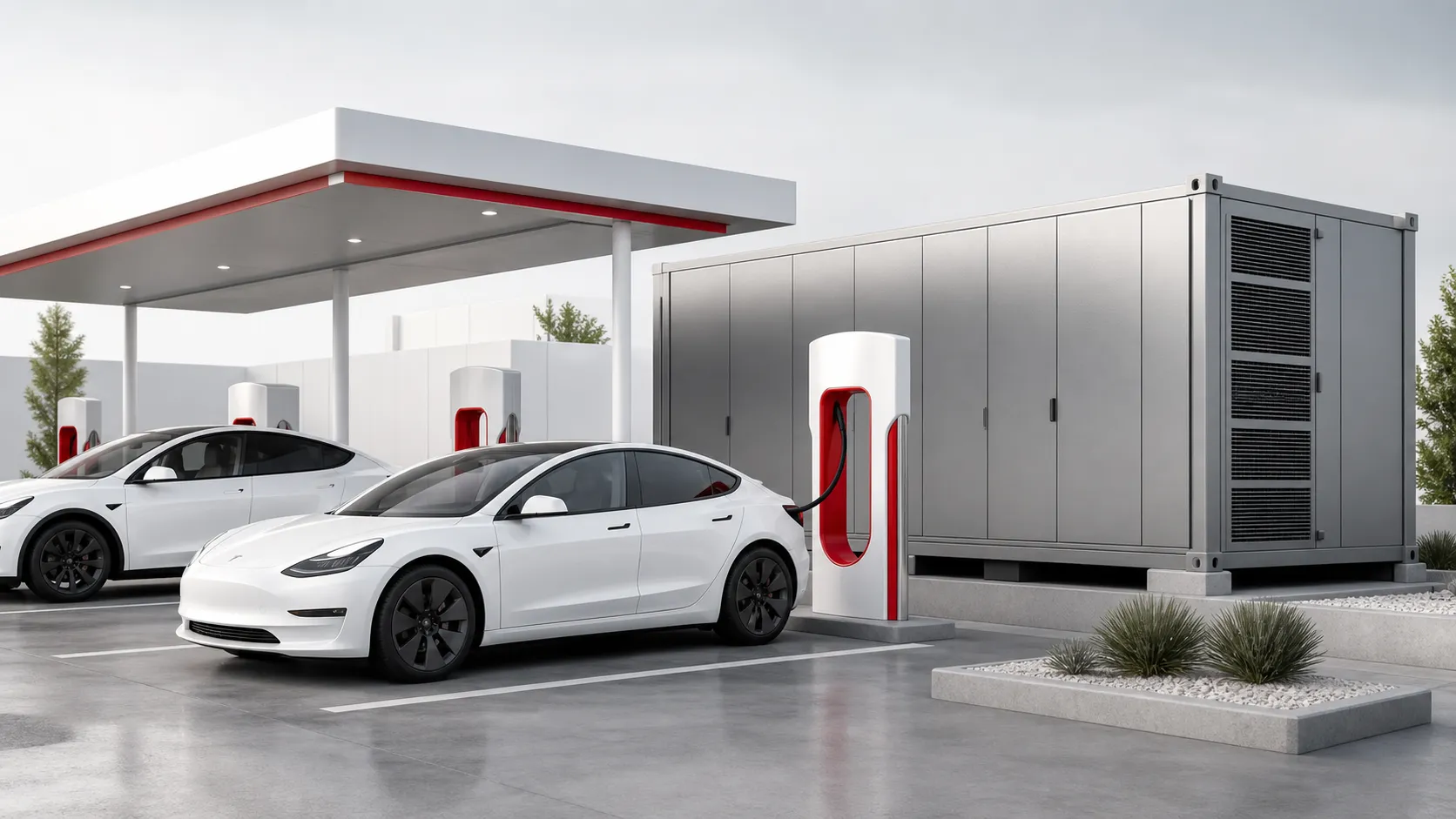
Meanwhile the most aggressive part of the plan involves the global charging network. The automaker plans to place millions of dedicated Digital Optimus hardware units directly at Supercharger stations. These locations currently hold about seven gigawatts of available energy capacity. Seven gigawatts is a massive amount of electricity that can support thousands of high density server racks. They provide the exact electricity resources needed to run heavy computing tasks right next to the highway. The newly trademarked MEGAPOD units provide the physical shell for these outdoor computers. Pushing millions of processors into outdoor parking lots requires heavy protection from the weather and advanced thermal management.
The company already builds similar containerized enclosures for battery storage products like the Megablock. Each new Megablock delivers around 20 megawatt-hours of storage and combines four Megapack units into a single modular design. As a result the new MEGAPOD trademark adapts that same manufacturing approach for data servers and network switches. Placing modular data centers at existing charging stalls gives the company a massive time advantage over competitors.
Bypassing construction delays
Today traditional server buildings often take years to permit and finish. The xAI team recently proved the speed of modular design when they built the Colossus cluster in Memphis. Instead of building new sites the MEGAPOD strategy skips the building process completely and drops the computers right where the electricity already flows. The company estimates a two-hour system costs about 50 billion dollars per gigawatt over twenty years. And this approach maximizes the financial return on every charging location.
This expansion happens as the artificial intelligence industry faces heavy scrutiny worldwide. European Union regulators continue to challenge Grok over data privacy and image creation features. But the physical hardware rollout in North America faces fewer roadblocks and seems ready to move forward. The trademark remains pending right now and the company has not released official photos of the equipment yet. The integration of vehicles and charging stations creates a massive decentralized computing empire.
You can find the original trademark filing below:

We’ve launched an official Tesla Owners Online Forum. Join early and claim your "Founding Fuel" badge.
It would be great if this funded charger upgrades to 500kWhr or even megawatts.
upgrading every existing charger would be a huge win!