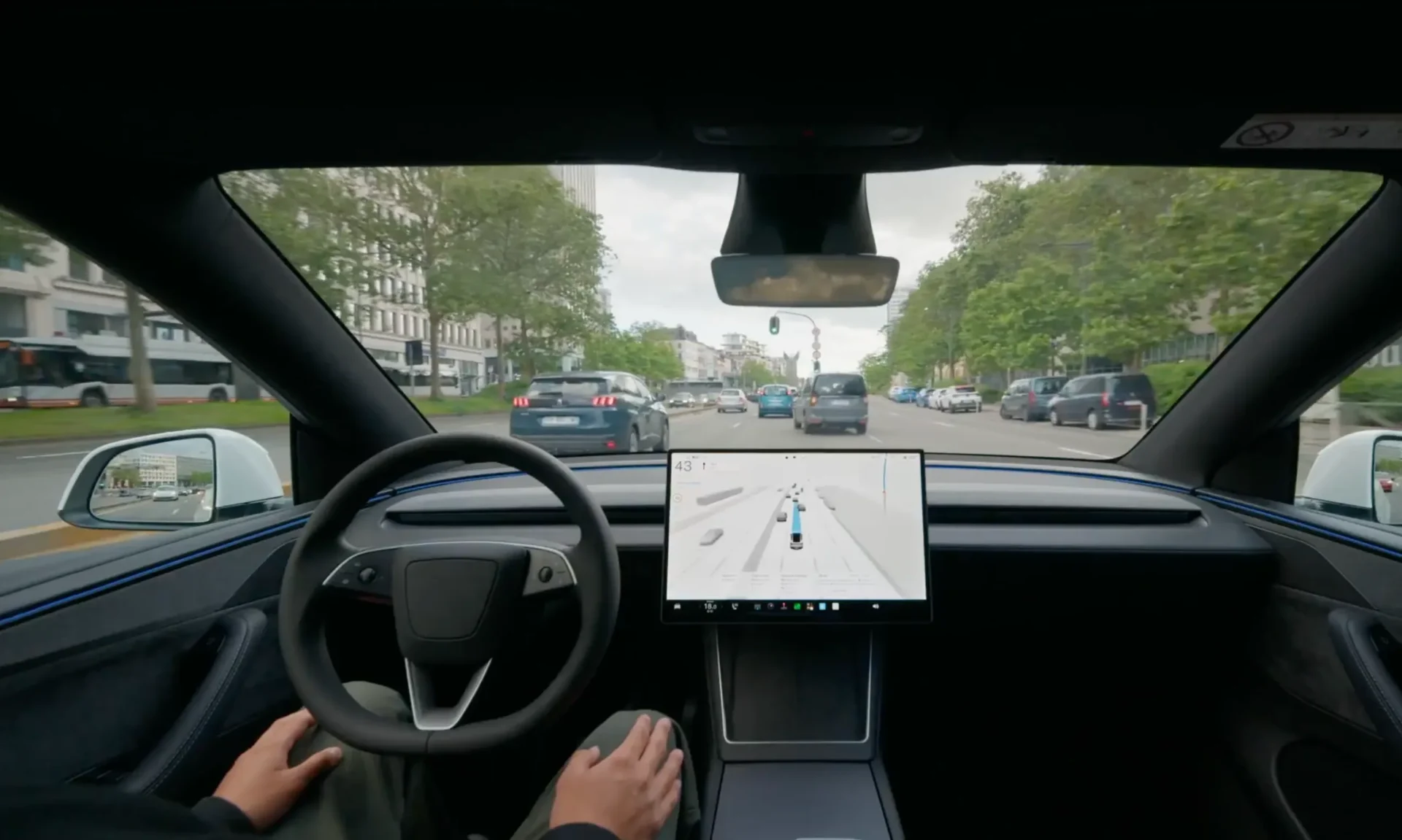

Belgium just gave Tesla the green light to roll out its supervised self-driving software across the country, and this brings the technology to a fifth European Union market. The American automaker continues to clear regulatory hurdles across the continent. Analysts say this momentum could push other countries to follow suit soon.
Flemish Mobility Minister Annick De Ridder signed the official documents this week. Then she posted a photo of the paperwork on X on June 10, calling the decision “the scoop” for local owners.

The approval came after a local test program where a Tesla vehicle drove 5,000 kilometers on public roads in the Flanders region. This testing allowed officials to verify the system’s performance against local traffic rules and road layouts.
Nationwide access from a regional decision
Belgium operates under a federal structure, so an approval from one regional government applies everywhere inside the country. Tesla can now switch on the software for eligible buyers nationwide once the final administrative paperwork clears. Then, the regional homologation office will notify the Dutch vehicle authority RDW about the decision. This step confirms that Belgium recognizes the European type approval already in place.
FSD Supervised now approved in Belgium
— Tesla Europe, Middle East & Africa (@teslaeurope) June 11, 2026
Rollout will begin soon pic.twitter.com/AsU8deyNrE
The current rollout features software version 14.2.2.6. And this is the exact same build already reaching cars in the Netherlands. Belgium joins the Netherlands, Lithuania, Estonia, and Denmark on the list of nations permitting the system. Earlier, the Dutch RDW set the foundation in April when it granted provisional European type approval under UN Regulation 171. That initial move gave other member states a clear path to adopt the technology without running full independent assessments from scratch.
Driver responsibility remains
The system can steer through intersections and change lanes, but drivers must still pay attention at all times. Regulators classify the technology as a Level 2 driver-assistance system. A human must keep their hands on the steering wheel and stay ready to take control instantly. Tesla clearly states that the software “does not make your vehicle autonomous” and requires active driver supervision. Eventually, the quick string of approvals across Europe might lead to wider adoption, yet local governments still hold drivers legally responsible for everything that happens on the road.
We’ve launched an official Tesla Owners Online Forum. Join early and claim your "Founding Fuel" badge.