Elon Musk regularly turns to tech history to explain his vision for Tesla cars. He recently replied to an X user about the gap between Basic Autopilot and Full Self-Driving, and he said the upgrade is “like getting an iPhone after only using flip phones” when asked about the software. And that comment lines up with a major change in how the company sells its vehicles today. Tesla killed off standard Autosteer on new Model 3 and Model Y orders early this year, so now buyers only get standard cruise control for free.
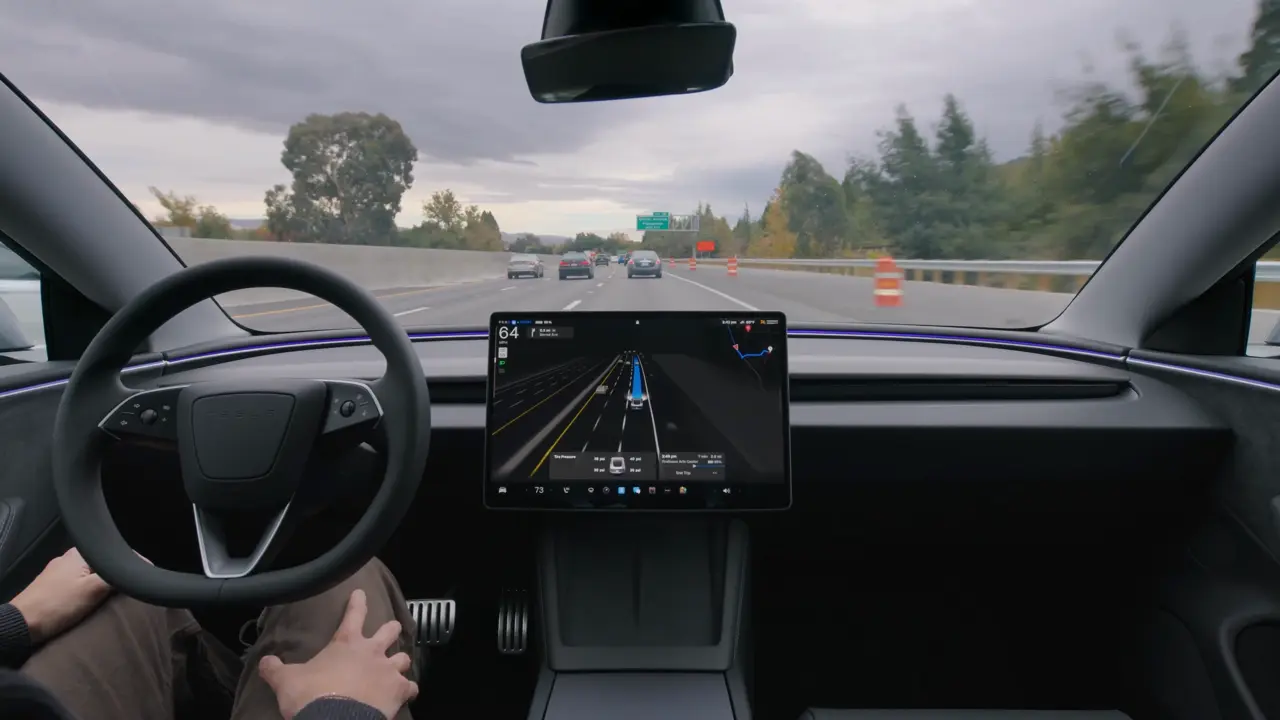
For years buyers expected their new electric car to steer itself down the highway at no extra charge. Basic Autopilot handled speed, and it kept the car centered in its lane. But the automaker stripped that free steering tier in early 2026. As a result, buyers who want lane-centering must now pay for FSD Supervised. And the paid software does a lot more than just hold a lane on the freeway. It handles city streets, stops at red lights, and drives through parking lots. Recent v14 updates rely on an end-to-end neural network. Then the software attempts to drive the car from a parking spot to a destination with little human input.
The reality of supervised driving
Tesla still classifies the software as a Level 2 driver-assist system. That indicates the human sitting in the driver seat holds all the legal responsibility, and the car is not fully autonomous yet. But Musk continues to push boundaries in his public statements. He told users late last year they could text when using the software under certain traffic conditions. Yet safety experts quickly pushed back against that claim. Texting behind the wheel remains illegal in almost every jurisdiction. Still, the CEO clearly views the technology as a massive leap forward.
The smartphone comparison perfectly matches Tesla’s new business playbook. Musk announced in January that the company would stop selling the software for a flat fee. Instead, new buyers must pay 99 dollars a month for a subscription. Analysts say the move forces a choice on new owners, and they can settle for basic cruise control or pay up for the full experience. Removing the free steering feature makes the monthly fee look much more appealing. And that helps the automaker build a steady stream of recurring revenue.
A lot of owners are still holding onto their flip phones. Credit card data points to a very low number of drivers keeping the software after a free trial ends. Many find the monthly cost too high, or they find the system too unpredictable for daily commutes. In fact, the U.S. National Highway Traffic Safety Administration is continuing to investigate the technology. A frozen app on a smartphone just requires a reboot. But a glitch in driving software can cause a real accident on the highway.
Early adopters completely agree with the CEO’s smartphone analogy. Drivers who use the software every day say manual steering feels incredibly outdated. They view the current system as a rough early version of something massive. Tesla uses data from its robotaxi tests in Texas to improve the software for regular consumers, so the cars learn and improve over time. The company is betting that more drivers will eventually see manual driving as a thing of the past. Until then, the debate over safety and cost will continue.
You may also like to read:
- Musk replies to “make a minivan” with a cooler Tesla is coming »
- Tesla begins first European FSD rollout in the Netherlands after RDW approval »
- Musk says 90% of million lives saved via 10X Tesla, 10% sue anyway »
We’ve launched an official Tesla Owners Online Forum. Join early and claim your "Founding Fuel" badge.