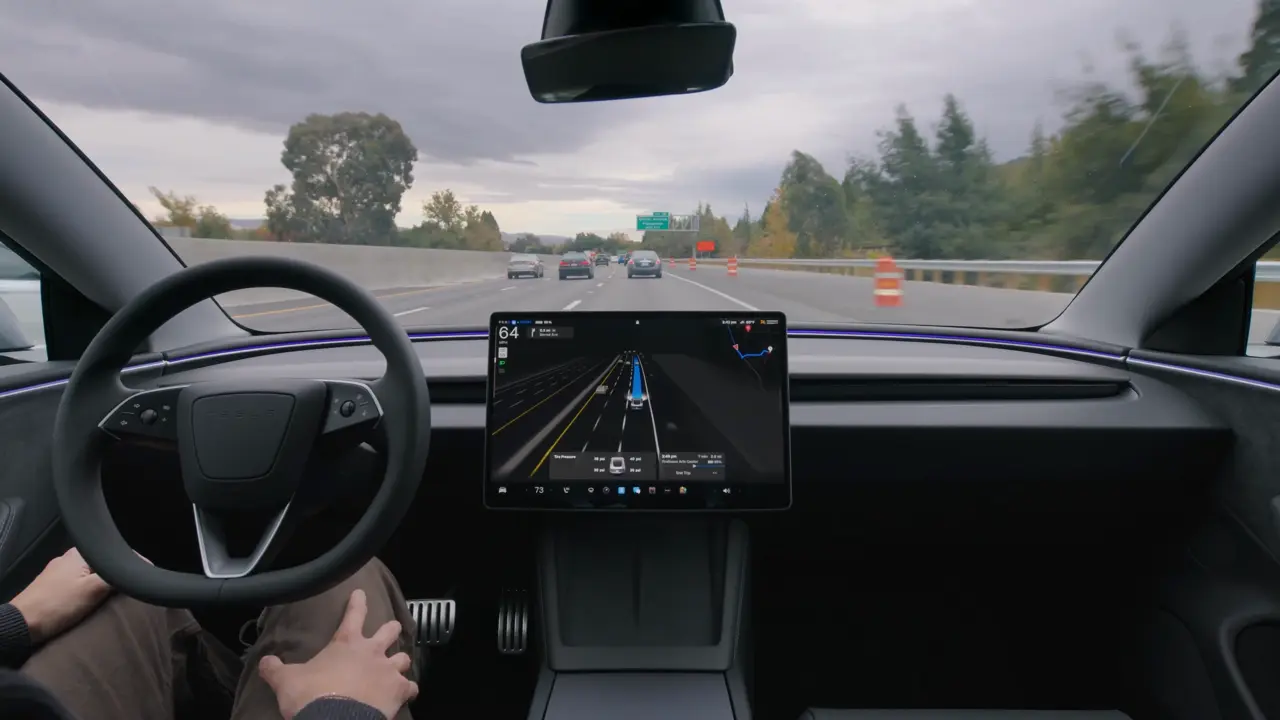

Tesla has started its first European deployment of the Full Self-Driving (Supervised) software, marking a major milestone in a highly regulated market. The company released software update 2026.3.6 right after the Netherlands vehicle authority, RDW, granted formal type approval on April 10, 2026.
Later, Director of Autopilot Software Ashok Elluswamy confirmed the rollout on April 11, 2026, when Dutch owners began receiving the update. The deployment is starting as a “surgical” release that targets a small group of Early Access Program members, and these users have vehicles with AI4 (Hardware 4) technology. The HW3 update remains delayed for now.
Software upgrades and the new self-driving app
Now, the system runs on FSD version V14.2.2.5 and includes a complete rewrite of the AI compiler and runtime using a machine learning intermediate representation (MLIR) stack. This engineering change delivers a 20% faster reaction time for the car’s decision-making computers.
Next, European drivers get a unique “Self-Driving App” that acts as a mandatory onboarding system. Users must watch an instructional video and finish a safety quiz before they can turn on the software for the first time, confirming they know their legal responsibilities and the limits of the technology.
The interface features a redesigned start page with an exclusive “FSD Stats” dashboard for the region. The screen tracks the Self-Driving Percentage to measure how much driving the computer handles, and it monitors Daily Streaks to encourage regular use. Drivers can track their cumulative Monthly Distance under supervision.
Regulatory rules and European pricing
Before this launch, company records show the RDW approved the system after an 18-month testing phase that covered more than 1.6 million kilometers of real-world driving. The software manages steering, braking, and route guidance, but the agency classified the technology as Level 2 automation under UN R-171 rules. The driver stays legally responsible at all times and must be ready to take over instantly.
Cabin cameras use stricter continuous monitoring to check driver focus and attention to keep everyone safe on the road. And the system issues warnings or can disable itself temporarily if it detects the driver looking away from the wheel.
The software costs €99 per month for a subscription or between €7,500 and €7,800 to buy outright. Owners who already have Enhanced Autopilot get a reduced subscription rate of €49 per month. The update renames “Navigate on Autopilot” to “Navigate on Autosteer”, and it brings Active Road Noise Reduction alongside new “AI Computer” terminology.
Real-world performance and future expansion
Still, early Dutch testers report the software handles difficult city environments well, managing narrow streets and tram lines in Amsterdam and Arnhem. Some edge case problems persist, as the car occasionally gets confused at “double” traffic lights or hesitates around heavy bicycle traffic.
But the European version drives much more conservatively than the North American software and lacks aggressive profiles like the “Mad Max” mode by default. Regulators demanded this restraint, so the vehicle errs on the side of safety in dense transit areas.
Today, the RDW type approval holds “provisional validity” across the European Union. Soon, other countries like Belgium, Germany, and France are expected to accept the Dutch decision nationally. Tesla plans to achieve full harmonization across all 27 member states by the summer of 2026, replacing the current mix of national rules with one unified standard.
We’ve launched an official Tesla Owners Online Forum. Join early and claim your "Founding Fuel" badge.