

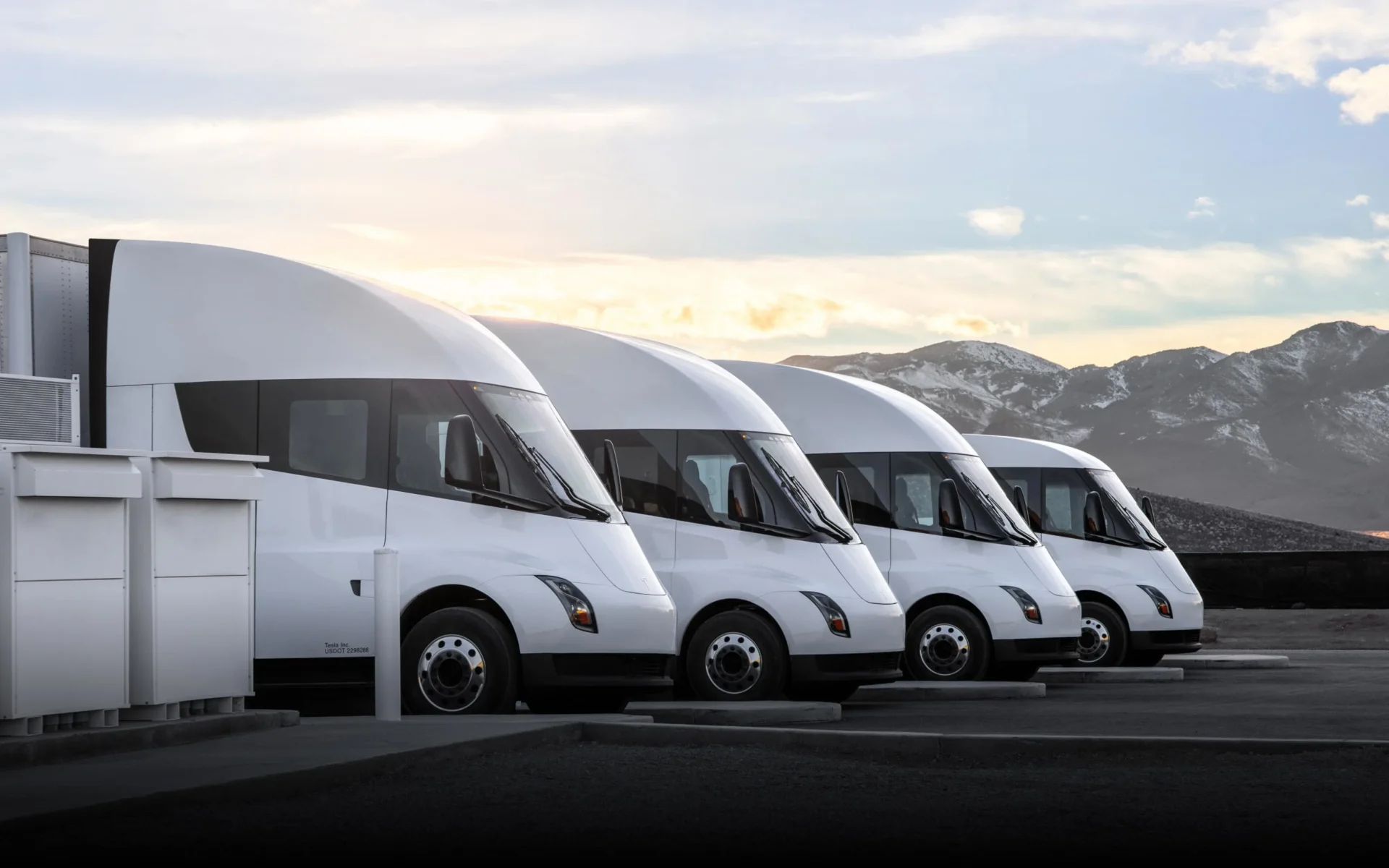

Tesla has now locked in two production versions of its Semi truck on its official site, and that is a clear signal that broader deliveries are getting nearer in 2026. The company lists a Standard Range model rated at about 325 miles and a Long Range model at about 500 miles, both at 82,000 lbs gross combination weight.
The Standard Range truck keeps curb weight under 20,000 lbs, which can help fleets that watch every pound of payload. The Long Range version comes in at 23,000 lbs curb weight, yet it offers the extra distance long‑haul operators look for on fixed routes.
Shared motors and efficiency targets
Both trims use the same basic electric layout. Three independent motors on the rear axles and drive power of up to 800 kW. Energy consumption is listed at 1.7 kWh per mile for each version, and that figure lines up with earlier company claims and limited real‑world runs that partners have reported.
Tesla still positions the Semi as a way to cut long‑term operating costs when compared with diesel, and the argument rests on fuel and maintenance savings over several years. Many fleet managers will wait for more field data before they accept those numbers, yet early adopters already test that math on selected routes.
Charging is now spelled out in more detail. Both Semi trims use the MCS 3.2 Megawatt Charging System connector, which is the heavy‑duty standard emerging for big electric trucks. Each truck can recover up to 60% of its rated range in about 30 minutes at a compatible high‑power site, so turn‑around times at depots and truck stops may shorten for some operations.
For the Long Range model, Tesla lists a peak charge rate of 1.2 MW, or 1,200 kW, and that matches a public test in late 2025 where a Semi reached about 1,206 kW on a Megacharger. The company has not yet published a peak figure for the Standard Range truck, but both use the same connector and charging standard, so many analysts expect broadly similar behavior at lower total energy.
ePTO capability and autonomy label
Each Semi trim includes up to 25 kW of ePTO, or Electric Power Take Off, to run external equipment such as refrigerated trailers or site loads. That could let fleets retire separate diesel units on some trailers and keep all energy use on the main battery, though it will also add to total draw from the pack.
Tesla labels both versions as “designed for autonomy,” linking the Semi to its broader Full Self‑Driving (Supervised) program. Company statements over the years have mentioned future “convoy mode” and automated freight corridors, yet any wide deployment will depend on regulation, safety outcomes, and how quickly customers accept higher levels of automated driving.
Factory build‑out and delivery plans
The Semi program has taken a long route to this point. Tesla first unveiled the truck in 2017, and early production targets slipped as the company focused on other vehicles and battery supply. A limited number of trucks has already gone to customers such as PepsiCo and DHL, where they run high‑profile freight lanes and pilot projects.
Now a dedicated facility near Gigafactory Nevada is close to full build‑out, and hiring plans for more than 1,000 workers point to a ramp in 2026.
The Semi enters a freight market where a large share of loads in the United States run on routes under 500 miles, so both trims sit in a range that can cover many regional hauls and some long‑distance work.
Tesla has not posted fresh pricing for the updated trucks. Back in 2017, the company talked about roughly $150,000 for a 300‑mile version and about $180,000 for a 500‑mile version, yet those figures came before recent cost and inflation shifts.
You may also like:
- RoadOne begins operating first Tesla Semi »
- Tesla Semi gets new look and features ahead of 2026 production »
- PepsiCo to Build 18-Stall Tesla Semi Charger Hub in Charlotte »
We’ve launched an official Tesla Owners Online Forum. Join early and claim your "Founding Fuel" badge.