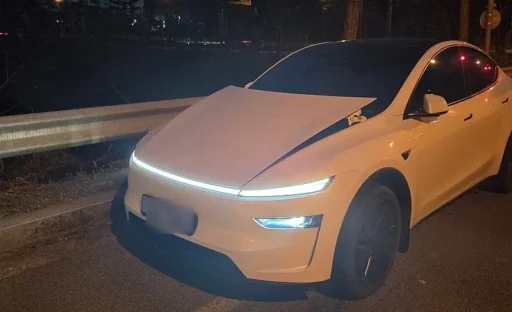

A Tesla Model Y was seen with its Active Hood deployed in South Korea. The driver is saying the Active Hood deployed after striking a roe deer. Tesla Active Hood system is built to reduce head injuries in a collision with a pedestrian or cyclist by lifting the rear edge of the hood after an impact is detected.
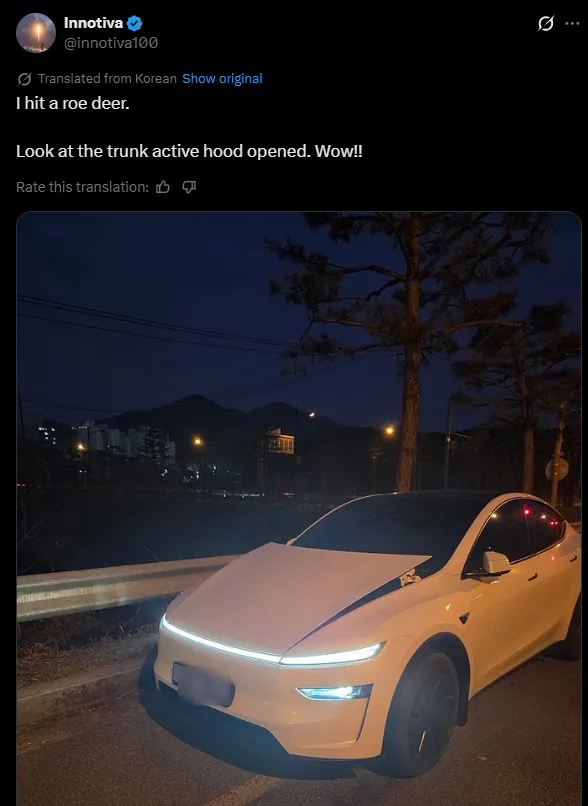
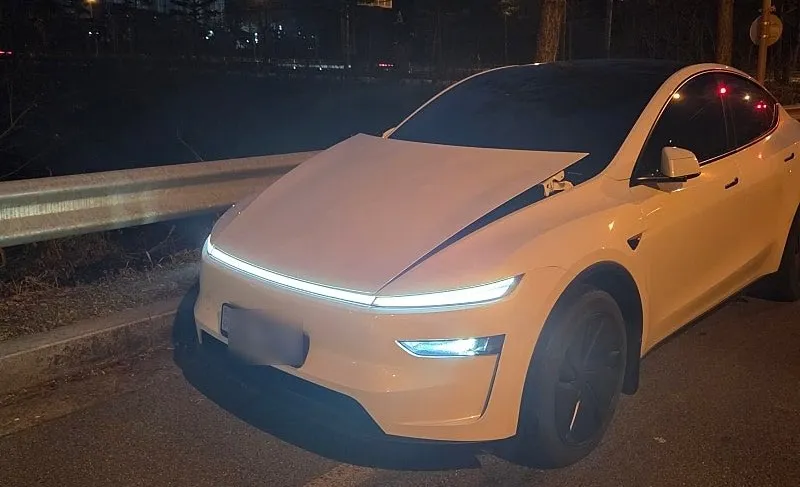
The Active Hood is part of Tesla’s pedestrian protection comes standard on all 2024+ Model 3 and 2025+ Model Y vehicles. And once sensors detect a qualifying impact, the system raises the rear part of the hood to create more clearance above hard components underneath, which can reduce the severity of head trauma in a strike.
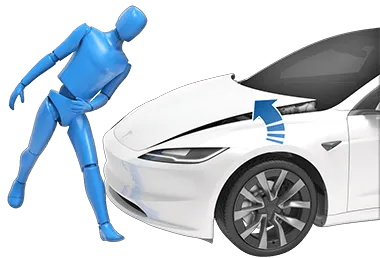
But when it deploys, Tesla’s guidance indicates the vehicle needs service attention afterward, since deployment is treated as a safety event rather than a user-reset feature.
Tesla introduced the Active Hood on the refreshed 2024 Model 3 in many markets as part of the “Highland” update. Yet, North American Model 3 and Model Y versions have generally not included the Active Hood hardware that appears on cars sold in markets that follow UN-type pedestrian protection requirements.
Why the regional split exists
Pedestrian protection rules differ by region, and European frameworks have long pushed automakers to manage head impact risk at the front of the vehicle. And the U.S. has been moving in that direction more recently; NHTSA announced a proposed pedestrian head protection standard in 2024 that would set test procedures aimed at reducing head injuries in pedestrian crashes. However, until a U.S. standard takes effect, manufacturers can end up offering different front-end pedestrian safety solutions depending on local regulatory expectations.
Real deployments have sparked owner cost concerns in some markets where Active Hood is fitted. Australian reporting describes cases where the hood deployed after impacts with animals or road hazards, followed by repair bills that owners said were significant. Also, Tesla’s position cited in that reporting is that collision-related repairs are not covered under warranty, this leaves drivers responsible for costs tied to an impact event.
Pedestrian fatalities have been a growing U.S. road safety issue, and NHTSA has linked its proposed pedestrian head protection rule to potential lives saved each year once vehicles compliant with the standard enter the fleet. And as more countries align with UN-style pedestrian protection testing, more vehicles sold outside North America are likely to keep using solutions like pop-up hoods or added front-end energy management.
You may also like to read:
- Musk says unsupervised FSD is “pretty much solved” »
- Tesla extends battery and drive unit warranty by two years »
- Tesla Holiday Update brings one-tap car wash mode »
We’ve launched an official Tesla Owners Online Forum. Join early and claim your "Founding Fuel" badge.