
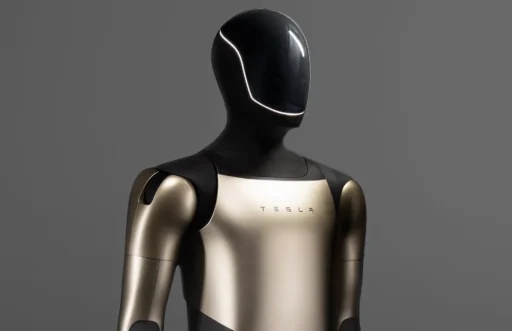


Elon Musk says a time is coming when people will not need to work for a living, as AI and robotics take over most jobs. He told Zerodha co‑founder Nikhil Kamath on the “People by WTF” podcast that, in his view, work could become a choice rather than a requirement in less than two decades, and maybe much sooner.
Musk repeated that prediction at other events in November 2025, including a US‑Saudi investment forum, where he said his forecast is that human work will be “optional” within about 10 to 20 years. He compared future work to playing sports or video games: something people do because they enjoy it, not because they must.
Work “Like a hobby”
On Kamath’s podcast, Musk said he expects AI systems and general‑purpose robots to reach a point where they can handle most forms of human labor. He framed this as a shift to an “age of abundance,” where machines cover all essential needs and human labor is no longer the basis of survival.
Musk used a simple example to explain his view. He said future work would be “like a hobby,” and likened it to growing vegetables in a home garden instead of buying them at a store.
Musk admits his forecast is bold and could be proved wrong, but he still stands by it. On the Kamath podcast, he said he thinks the change could arrive “in less than 20 years,” and then added that it might happen in “10 or 15 years” if AI and robotics keep improving at their current pace.
He has repeated similar timelines in other interviews and public forums in 2025, tying them to his belief that AI will soon be smarter than any human and that billions of humanoid robots could enter the economy over time. In another talk earlier in the year, he also predicted that most driving will become autonomous.
Video:
JUST IN: Elon Musk says working will be 'optional' in less than 20 years because of AI and robotics. pic.twitter.com/l3S5kl5HBB
— Watcher.Guru (@WatcherGuru) November 30, 2025
Role of Tesla’s Optimus robot
Musk connects this “optional work” future directly to Tesla’s Optimus humanoid robot program. At Tesla’s 2025 Annual Shareholder Meeting, he said Optimus could help “eliminate poverty” by driving down the cost of labor and, with it, the cost of goods and services.
He has said he expects Optimus to become Tesla’s most valuable product line over time, potentially accounting for the bulk of the company’s value. Public reports in late 2025 describe plans for more advanced Optimus versions and long‑term goals to deploy large numbers of humanoid units into factories and, later, into broader industries.
Musk has spoken for years about concepts like Universal Basic Income, but his recent comments go further. He now talks about a world where goods and services become “close to free” and where money itself could become much less relevant as a way to allocate labor.
In recent statements, he has suggested that in a highly automated future, the limiting factor might be energy rather than human work. He has floated the idea that “power generation” could act as a kind of base unit of value once AI and robots handle most productive activity.
What life might look like
Musk says that in such a future, people would have access to “any goods and services that they want” as long as AI and robotics continue to advance. He adds that if someone can think of a product or service, automated systems will be able to provide it, at least up to the point where AI “runs out of things to do to make humans happy.”
He also expects that location will matter less for work. On Kamath’s podcast, he said he does not think people will need to be in a city for a job, since remote and automated production would change how companies operate.
In the same podcast, he said that people trying to build companies or solve hard technical problems will still need to put in “serious hours.”
He joked that shorter workweek experiments, like three‑ or four‑day trials in some countries, do not apply to him. He stressed that intense effort remains part of founding and scaling ambitious companies, even if long‑term trends point toward less required work for society as a whole.
Reports from groups such as the McKinsey Global Institute and the International Monetary Fund suggest that potential automation of work hours in the United States at up to 30% by 2030, and about 40% of jobs worldwide are exposed to AI‑linked automation.
These studies support the idea that automation will reshape labor markets, yet they do not confirm Musk’s full vision of work becoming optional or money losing relevance.
Musk’s remarks across the Kamath podcast, international forums, and Tesla events paint a single broad picture of a future in which AI and robots do nearly all productive work, leaving humans free to choose if they want to work. He links this to an “age of abundance,” a potential end to poverty, and a deep shift in how economies function.
Still, he concedes that people may replay his words in 20 years and say he was wrong. For now, his prediction sits between technical optimism and open debate, as governments, workers, and companies watch how quickly AI and robotics move from promise to practice.
You may also like to read:
- Elon Musk says Optimus will end poverty, and deliver top medical care »
- Elon Musk predicts Optimus robots will stop crime »
- Optimus now handles chores and walks like a human, Tesla says »
- Tesla to launch Optimus V3 robot in early 2026 »
We’ve launched an official Tesla Owners Online Forum. Join early and claim your "Founding Fuel" badge.
The only place these are going is to mega corporations with the money to afford them. That way those corporations can lay off workers and trim the fat from their money making operations. In the near future, if your not a producer that can’t afford an autonomous work force, you will be homeless. Consumers need to wake up to this truth because you can’t consume when you don’t produce.