Tesla chief executive Elon Musk says the company will launch its planned “Terafab” chip project in about a week, marking the start of a major push into in‑house semiconductor production. The move comes after months of comments from Musk that chip supply could cap Tesla’s growth in artificial intelligence.

How the Terafab idea emerged
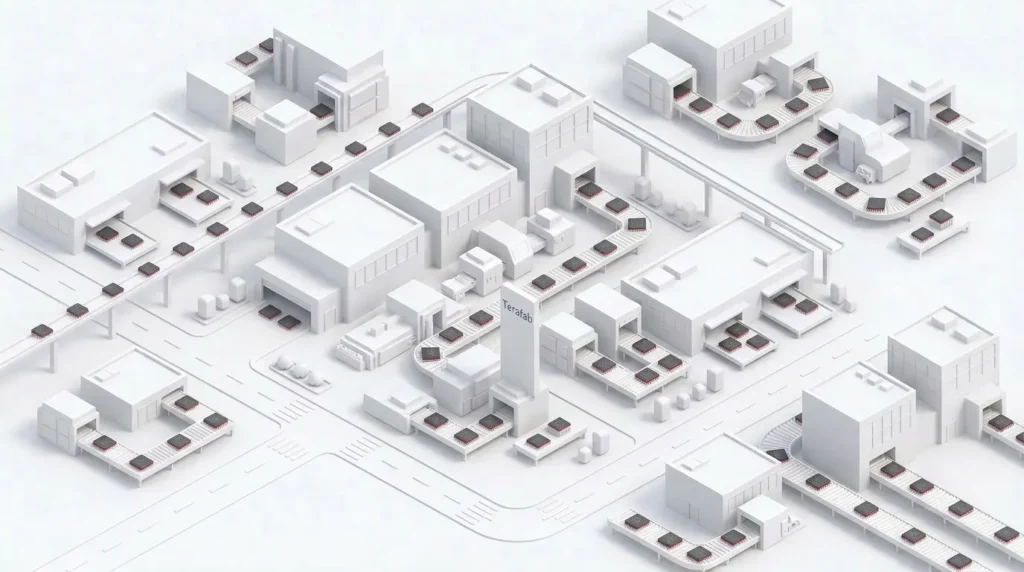
Musk first outlined the Terafab concept at Tesla’s 2025 annual shareholder meeting, describing a giant fabrication site that he compared in scale to the largest plants run by Taiwan Semiconductor Manufacturing Company. At the time, he framed it as a long‑term option rather than a firm project, but he still stressed that Tesla might “have to do it” if suppliers could not keep up.
The idea gained weight in early 2026. During Tesla’s fourth‑quarter earnings call, Musk said the company would “have to build a Tesla TeraFab, a very big fab that includes logic, memory and packaging, domestically” to avoid hitting a hard ceiling on chip supply in three to four years.
Why Tesla wants its own chip plant
Tesla already works with major foundry partners such as TSMC and Samsung, and has held talks with Intel. Still, Musk has warned that even with multiple suppliers, output may not match the company’s plans for robotaxis, Optimus humanoid robots and AI data centers. He has argued that demand for Tesla’s AI chips could outstrip “the best‑case scenario” from external fabs.
At the same time, Musk has pointed to geopolitical risk. Most advanced chipmaking capacity sits in Taiwan, and he has said more than once that this concentration could become a serious issue for global supply. For that reason, he has tied the Terafab plan to domestic production in the United States, saying the facility should combine logic, memory and advanced packaging at a single site.
The scale is large, Tesla is targeting an initial capacity around 100,000 wafer starts per month, with a long‑term goal that could reach one million. If the company achieved that, it would place Tesla among the largest chip producers by volume.
What Terafab will support
Tesla is working on new generations of its AI chips, including an “AI5” part Musk has described as his top engineering focus. He has said he spends his Saturdays on that work. The chip is expected to feed three main areas including vehicles running advanced driver‑assistance systems, Optimus robots and AI training clusters.
Mass production of AI5 could start around 2027, followed by an “AI6” chip with roughly twice the performance, targeted for mid‑2028. While Terafab is meant to support this roadmap, Tesla has also lined up external capacity. Samsung’s fab in Texas has agreed to a multiyear deal worth about $16.5 billion to produce AI6, giving Tesla a parallel path while its own project ramps up.
Building an advanced semiconductor plant is expensive and technically difficult. Even established manufacturers can struggle with yields as they move to smaller process nodes. Nvidia chief executive Jensen Huang has previously argued that chip fabrication demands long‑built expertise in process control and manufacturing.
Tesla plans to spend about $20 billion in 2026, according to executives. Some outside estimates have floated potential spending of $25 billion for the project over time, though Tesla has not given a detailed breakdown in public. Musk has said more information will come with a broader announcement.
For now, the “launch” in seven days is likely to mark the formal kickoff of the Terafab initiative. The facility itself will take years to build and qualify before it can feed Tesla’s AI roadmap at scale, analysts say.
You may also like:
- Elon Musk says AI could get 100x smarter without new chips »
- Tesla to restart Dojo3 after progress on AI5 chip »
- Musk sets aggressive 9‑month cycle for Tesla’s next AI chips »
We’ve launched an official Tesla Owners Online Forum. Join early and claim your "Founding Fuel" badge.