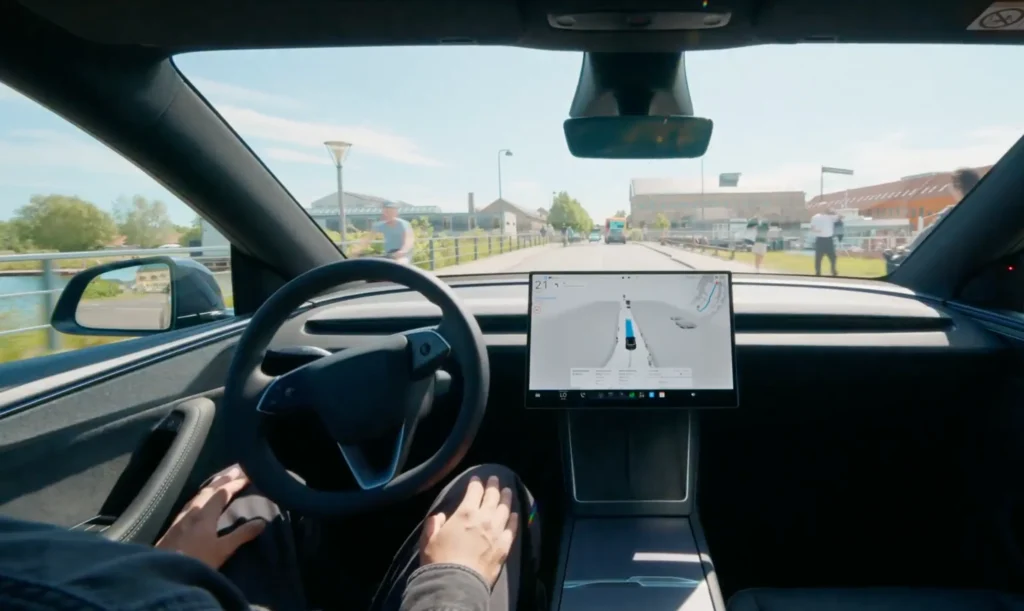
Tesla secured provisional approval for its advanced driving software in Denmark today, and the Danish Road Traffic Authority officially cleared the Full Self-Driving Supervised system for public roads. This decision makes the nation the fourth European market to accept the technology.
Local regulators leaned on earlier work done in the Netherlands rather than running an entirely separate review process. The Dutch vehicle authority known as RDW granted a preliminary approval for the software back on April 10. European Union rules let member states recognize these early approvals from neighboring countries, so Denmark opted to accept the Dutch findings.
The Danish agency reviewed the technical documents that formed the basis for the original Dutch decision before signing off. The agency released a statement detailing the process: “After a thorough review and assessment of the technical documentation, the Danish Road Traffic Authority agrees with the RDW’s assessment that the system will contribute positively to road safety by assisting the driver while driving. The Danish Road Traffic Authority therefore accepts the provisional type approval of FSD Supervised.”
FSD Supervised now approved in Denmark
— Tesla Europe, Middle East & Africa (@teslaeurope) June 9, 2026
Rollout will begin soon pic.twitter.com/Xpxwcme10k
Drivers remain strictly in charge
The product name includes the word supervised for a distinct reason, and regulators heavily stress the need for constant human oversight. The Danish approval documents remind owners they sit fully responsible for the car at all times. The technology handles acceleration and steering along with lane changes, but the person behind the wheel must keep an active eye on traffic. Drivers have to remain ready to intervene instantly if a situation demands it. The vehicle uses an internal cabin camera to track eye movement and monitor attentiveness, and this setup keeps safety protocols intact.
The current clearance remains provisional as Tesla seeks a common type approval from the European Commission. A positive ruling there would make the software valid across all member states automatically. All proceedings relating to the European Commission’s processing are currently subject to legal confidentiality. The public cannot track the ongoing discussions or check the timeline for a final vote.
There is a catch attached to this provisional setup. If the EU Commission decides to reject the system later, the Dutch preliminary approval becomes invalid after a six-month grace period. That rejection would cause the Danish clearance to lapse right alongside it. Tesla would then have to stop marketing or selling the supervised software anywhere within the European Union.
Preparing the ground for new markets
Tesla prepared the Danish market for this exact rollout over the past few months. The company hosted a series of ride-along experiences in the city of Køge to give prospective buyers a firsthand look at the software. These events helped local officials test the capabilities in real traffic conditions before the final paperwork went through.
The regional rollout seems to be gaining momentum fast right now, and analysts say Belgium is expected to be the next country to grant national approval soon. Adding Denmark helps Tesla maintain its sales pace in the area, and it gathers more real-world driving data from different environments. Every new country adds fresh road layouts and local driving habits to the massive data pool. The company uses this information to train the artificial intelligence models behind the software.
The software relies on the latest hardware suites built into modern Tesla cars. Newer models run on AI4 hardware and use a vision-based approach instead of radar or ultrasonic sensors. The system processes video from multiple cameras around the car in real time. Recent updates brought improvements to the monitoring systems, and these changes reduced incorrect warnings for drivers wearing glasses. The updates improved tracking in tricky lighting conditions.
The continuous stream of data from these European vehicles helps the engineering team refine the software further. Bringing these driver assistance tools beyond North America remains a major priority for the company. It generates additional software revenue for the automaker, and it provides a massive scale of testing that smaller competitors cannot match.
Reaching this milestone gives the automaker a solid foothold in Scandinavia. Buyers in Denmark can now activate the software on their personal cars and experience the latest updates firsthand. The company continues building a coalition of European countries willing to embrace its approach to automated driving assistance as it waits for a final continent-wide mandate.
We’ve launched an official Tesla Owners Online Forum. Join early and claim your "Founding Fuel" badge.