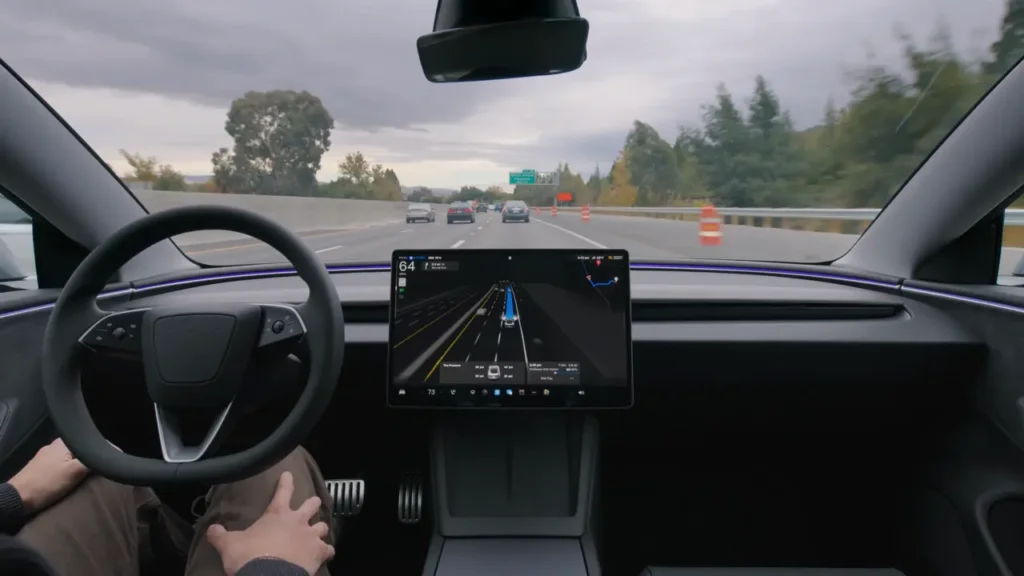
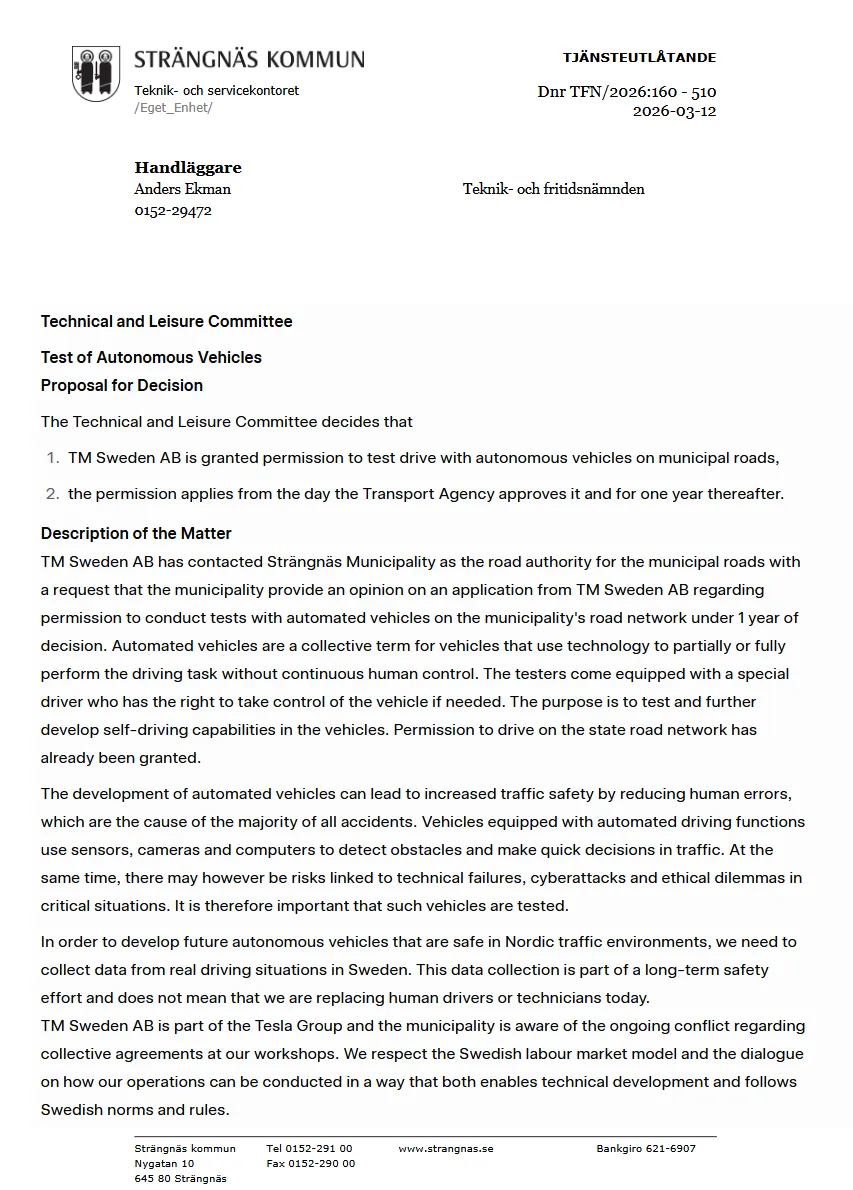
Tesla just gained permission from local officials to test its Supervised Full Self-Driving system on public streets in Strängnäs, Sweden. The municipality approved a request from TM Sweden AB to carry out automated vehicle trials on local roads for up to one year, pending final approval from Sweden’s Transport Agency.
This permit becomes active the day the Swedish Transport Agency grants its final approval, lasting exactly one year. Now, the company can gather more data in everyday city environments.
Moving into local street environments
Previously, Tesla secured permission to test its technology on Swedish state roads and highways. Earlier in 2026, the company gained similar local authorization in Nacka, marking its first move into Swedish municipal boundaries. Today, the Strängnäs decision adds another local testing ground.
Analysts note this gradual progression from highways to city streets lets engineers test the software against complex intersections and mixed neighborhood traffic. A safety driver must remain present in the vehicles at all times. Naturally, this physical tester has the right to take control of the car whenever needed. Transportstyrelsen regulations mandate that applicants prove their tests can run safely, requiring human oversight either inside or outside the vehicle.
Local officials view this testing as a step for better road conditions. In fact, the municipality stated that automated driving could “significantly improve traffic safety” by cutting down on human error, which causes the majority of all accidents.
These vehicles rely on sensors, cameras, and computers to detect obstacles and make quick decisions in active traffic. Still, officials acknowledge the downsides. For instance, they outlined potential risks like technical failures, cyberattacks, and ethical dilemmas during critical situations on the road. In the end, the local government concluded that real-world testing is vital to identify and solve these exact problems.
Gathering data for winter driving
Sweden offers unique weather and infrastructure challenges compared to Tesla’s core markets. In this case, the municipality stressed the need to collect data from real driving situations in Nordic environments. Winter weather and specific road designs require distinct software tuning. And engineers must expose the vehicles to these exact local elements.
The company must wait for final sign-off from the national regulator before any cars hit the streets of Strängnäs. Eventually, the long-term plan involves preparing these driver-assistance systems for broader European deployment, step by step.
We’ve launched an official Tesla Owners Online Forum. Join early and claim your "Founding Fuel" badge.