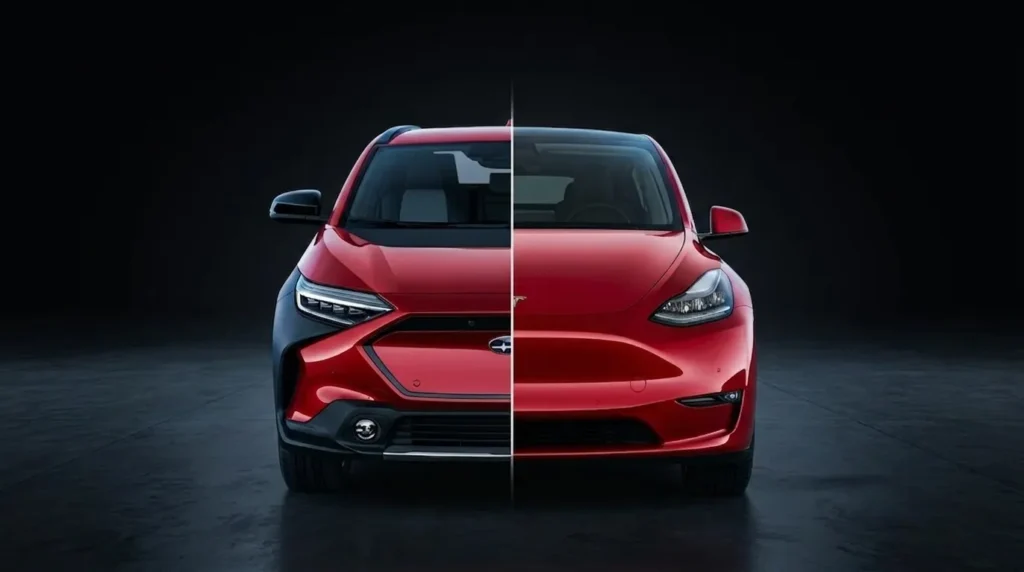
Tesla vehicles are roughly twice as likely as Subarus to reach 250,000 miles, according to a new longevity study by automotive research firm iSeeCars that also places the electric-car maker among the most durable brands on U.S. roads.
The latest edition of iSeeCars’ annual Longest-Lasting Cars study analyzed data from more than 174 million vehicles to estimate the probability that different brands and models will remain in service to at least 250,000 miles. Using odometer readings by vehicle age and a proprietary statistical model, the firm derived brand- and model-level survival probabilities and then aggregated them into brand rankings.
In the brand table, Tesla is estimated to have a 4.6% chance of its vehicles reaching 250,000 miles, compared with 2.3% for Subaru, making Teslas about twice as likely to hit the quarter‑million‑mile mark as vehicles from the Japanese brand. Tesla’s result also matches that of GMC and sits just below traditional durability leaders Toyota, Lexus, Honda and Acura.
| iSeeCars Longest-Lasting Car Brands | |||
| Rank | Brand | % Chance of Lasting 250,000+ Miles | Compared to Average |
| 1 | Toyota | 17.8% | 3.7x |
| 2 | Lexus | 12.8% | 2.7x |
| 3 | Honda | 10.8% | 2.3x |
| 4 | Acura | 7.2% | 1.5x |
| Overall Average* | 4.8% | — | |
| 5 | GMC | 4.6% | 1.0x |
| 6 | Tesla | 4.6% | 1.0x |
| 7 | Chevrolet | 4.5% | 0.9x |
| 8 | Cadillac | 4.5% | 0.9x |
| 9 | Mazda | 3.6% | 0.7x |
| 10 | Ram | 3.5% | 0.7x |
| 11 | Lincoln | 3.4% | 0.7x |
| 12 | Ford | 3.1% | 0.7x |
| 13 | Dodge | 2.5% | 0.5x |
| 14 | Nissan | 2.4% | 0.5x |
| 15 | Subaru | 2.3% | 0.5x |
| 16 | Volvo | 2.2% | 0.5x |
| 17 | Infiniti | 2.1% | 0.4x |
| 18 | Mercedes-Benz | 1.7% | 0.4x |
| 19 | Jeep | 1.3% | 0.3x |
| 20 | Mitsubishi | 1.1% | 0.2x |
| 21 | Kia | 0.6% | 0.1x |
| 22 | Hyundai | 0.6% | 0.1x |
| 23 | Buick | 0.6% | 0.1x |
| 24 | Porsche | 0.5% | 0.1x |
| 25 | Chrysler | 0.5% | 0.1x |
| 26 | BMW | 0.4% | 0.1x |
| 27 | Volkswagen | 0.4% | 0.1x |
| 28 | Audi | 0.3% | 0.1x |
| 29 | Land Rover | 0.1% | 0x |
| 30 | Jaguar | 0.0% | 0x |
| 31 | MINI | 0.0% | 0x |
| 32 | Maserati | 0.0% | 0x |
*Excludes heavy-duty vehicles | Credit: iSeeCars
Across all 32 high‑volume brands, Toyota ranks first with a 17.8% predicted chance of its vehicles reaching 250,000 miles, nearly four times the industry‑wide average of 4.8%, followed by Lexus at 12.8%, Honda at 10.8% and Acura at 7.2%. Tesla slots into sixth place overall with its 4.6% score, ahead of mass‑market manufacturers including Chevrolet, Mazda, Ford, Nissan, Subaru, Kia, Hyundai and Volkswagen, as well as luxury marques such as BMW, Mercedes‑Benz, Volvo and Porsche.
Within the luxury segment, Tesla ranks third for durability at the 250,000‑mile threshold, behind Lexus and Acura but ahead of Cadillac, Lincoln, Volvo, Infiniti, Mercedes‑Benz, Buick, Porsche, BMW, Audi, Land Rover, Jaguar and Maserati, according to a breakdown of premium brands. The study found that only a handful of luxury marques exceed the segment’s 3.2% average chance of reaching 250,000 miles, a group that includes Lexus, Acura and Tesla.
At the model level, iSeeCars’ separate longest‑lasting passenger‑car list estimates the Tesla Model S has a 4.6% chance of reaching 250,000 miles, placing it above the overall passenger‑car average of 2.6% and alongside established long‑running nameplates such as the Mercedes‑Benz E‑Class. SUVs and pickups continue to dominate the broader top‑25 longest‑lasting models ranking, led by the Toyota Sequoia with a 39.1% predicted chance of hitting 250,000 miles.
The findings come as Japanese brands extend their long‑held lead in longevity metrics while newer players such as Tesla challenge assumptions about the durability of electric vehicles. “Luxury EVs like Tesla exceed expectations,” the study noted, with analysts pointing to the relative mechanical simplicity of electric powertrains and the absence of components such as multi‑speed automatic transmissions as potential contributors to long‑term reliability.
iSeeCars said its methodology excluded heavy‑duty vans and models with insufficient data, but included heavy‑duty pickups in truck‑specific rankings. The company, which has published its longest‑lasting vehicle studies since 2013, said it used odometer readings from almost 400 million cars to build its current prediction model, then applied that to estimate each brand’s likelihood of reaching high mileage thresholds.
While the rankings do not account for owner maintenance practices or regional driving conditions, they add fresh data to a long‑running debate over whether modern vehicles, and particularly battery‑electric cars – can deliver lifespans comparable to or better than traditional combustion models.
We’ve launched an official Tesla Owners Online Forum. Join early and claim your "Founding Fuel" badge.