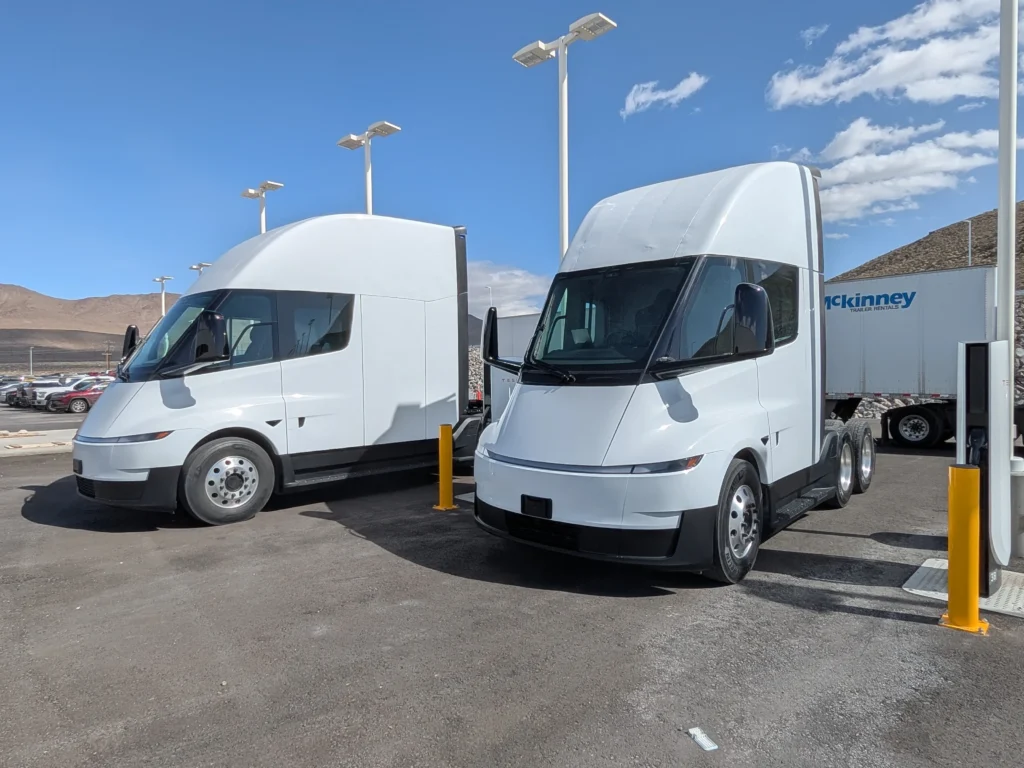
Tesla’s long-awaited Semi electric truck is entering production with a game-changing battery redesign borrowed straight from the Cybertruck playbook. Engineers have reconfigured the same 4680 cells into a compact “cube” structural pack that slashes cold-weather range degradation, solving one of electric trucking’s toughest hurdles for long-haul fleets.
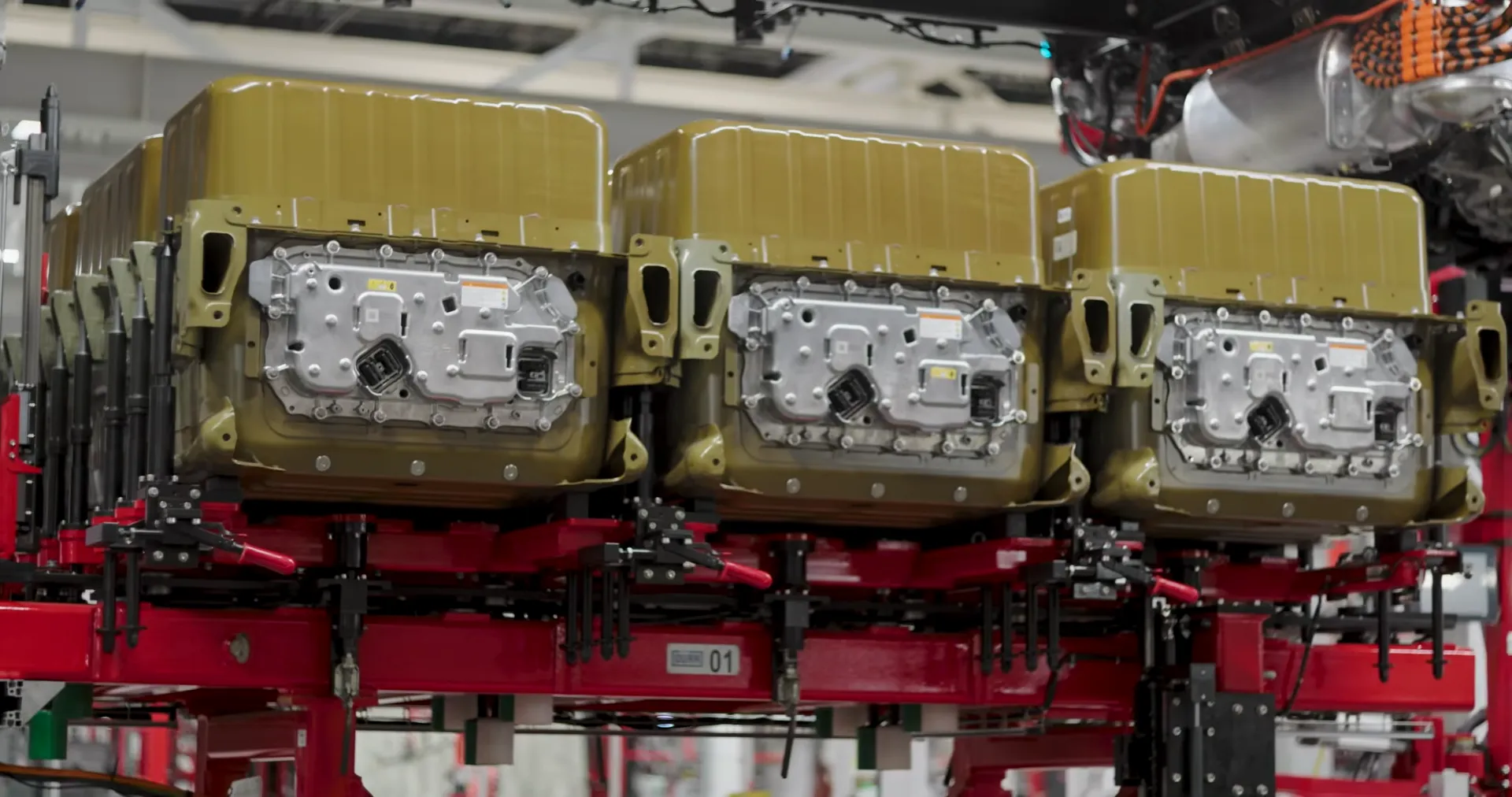
The Nevada Gigafactory footage reveals this evolution in real time, showing massive yellow-green modules bolted directly to the chassis in a highly automated line.
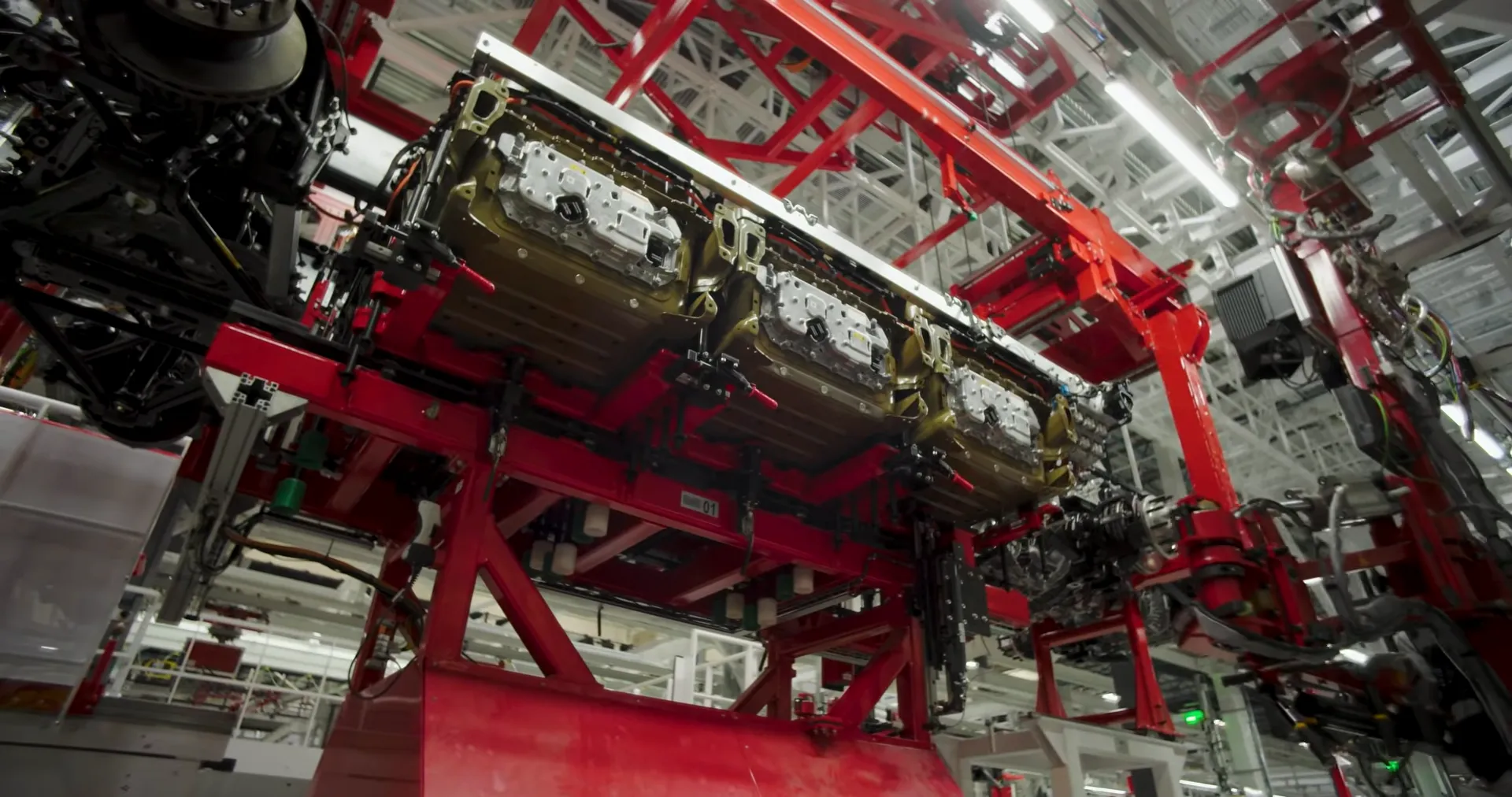
Dan Priestley, Head of the Tesla Semi program, explained the ingenuity, “We’re using essentially the same cell out of Cybertruck, but our car packs are more like a pancake. Whereas these are more like a cube. You get a lot of energy stored in a small space.”
Cube design targets trucking’s winter weakness
Traditional EV battery packs lose efficiency fast in freezing temps due to high surface-area exposure. Tesla’s solution stacks 4680 cells vertically into three dense cubes, minimizing external surface while maximizing energy density for the Long Range Semi’s targeted 500-mile real-world range.
This geometry acts like a thermal insulator, retaining heat better during highway hauls in sub-zero conditions, a must for fleets operating across Canada, the northern U.S., or Europe. Priestley noted the Semi’s cold-weather performance “is not as bad as usually thought,” backed by Alaska testing that validates minimal range drop under load.
The structural integration also lowers the center of gravity, stiffens the frame, and simplifies assembly, while aiming for a million-mile battery lifespan to match diesel economics over a truck’s full cycle.
Tesla’s long-awaited Semi electric truck is entering production with a game-changing battery redesign borrowed straight from the Cybertruck playbook. Engineers have reconfigured the same 4680 cells into a compact “cube” structural pack that slashes cold-weather range degradation, solving one of electric trucking’s toughest hurdles for long-haul fleets.
Cross-pollination powers Semi’s Gen-2 leap
Tesla excels at platform-sharing, and the refreshed Semi pulls heavily from Cybertruck tech: 48-volt architecture, electric power steering, and heavy-duty actuators cut wiring weight and boost reliability.
Production at the dedicated Nevada Semi plant uses massive overhead carriers to handle 10,000-pound sub-assemblies, confirming high-volume readiness.
Internal fleets already prove the concept, hauling battery packs between Nevada and Fremont at lower costs than diesel, now amplified by this cube pack’s efficiency gains.
With 1.2-megawatt charging recovering 60% capacity in 30 minutes, the Semi targets turnkey depot integration via Tesla’s Megacharger network. Cold-weather resilience removes a key objection, positioning it against rivals like Daimler or Volvo in a market hungry for proven million-mile batteries.
As 4680 cell yields improve, this shared architecture should drive costs down across Tesla’s lineup, cementing the Semi as a logistics disruptor built electric from the ground up, just as Priestley envisioned.
Full video: First look at the massive Tesla Semi factory
We’ve launched an official Tesla Owners Online Forum. Join early and claim your "Founding Fuel" badge.