A Tesla owner has completed a full drive from the Pacific coast to the Atlantic coast using Full Self-Driving Supervised. And the trip finished with no driver interventions reported. The drive links back to a target Tesla set almost ten years ago.
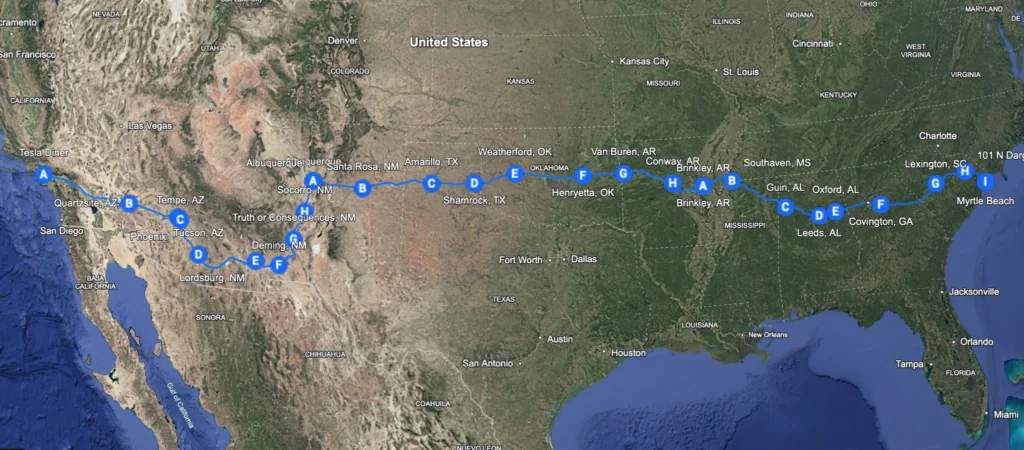
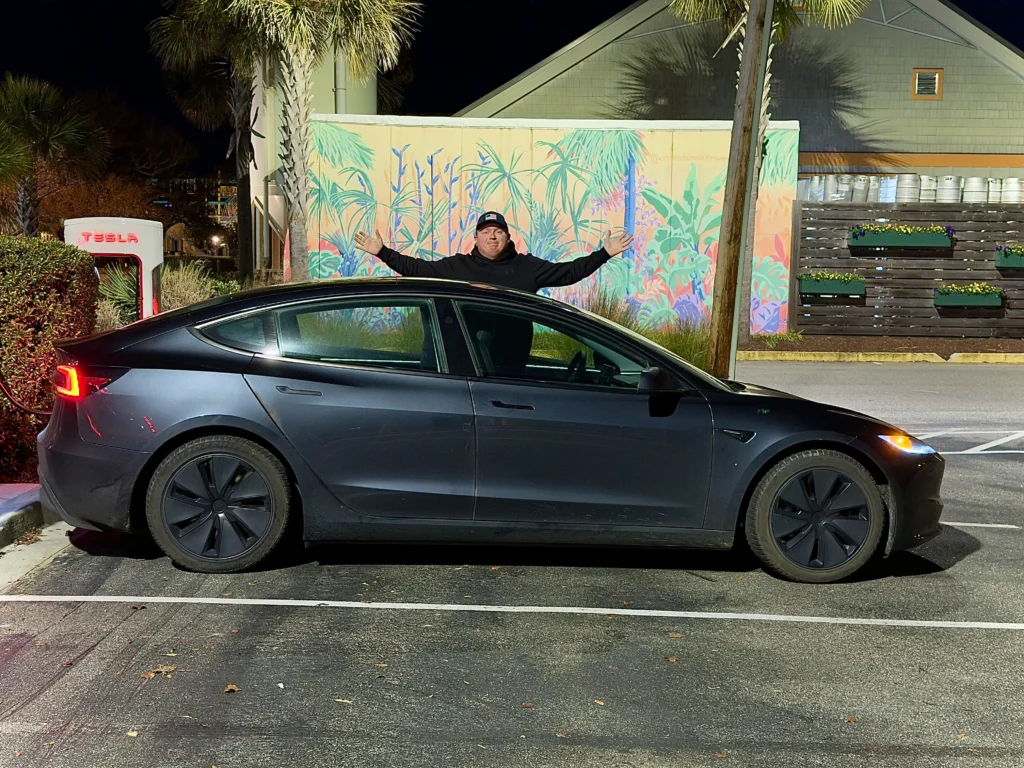
The driver was David Moss who owns a stealth gray Tesla Model 3 with AI4 hardware and FSD Supervised. He started at the Tesla Diner in Los Angeles, California, finished in Myrtle Beach, South Carolina. The total distance was 2,732.4 miles, and the full run took 2 days and 20 hours from start to finish.
The route crossed several states, and it included city streets, freeways, ramps, and local roads. Moss said the car stayed in FSD mode for the full drive: “I am proud to announce that I have successfully completed the world’s first USA coast to coast fully autonomous drive!”
He reported no handovers. And public tracking data matched his account. The car handled lane changes, exits, and merges on its own.

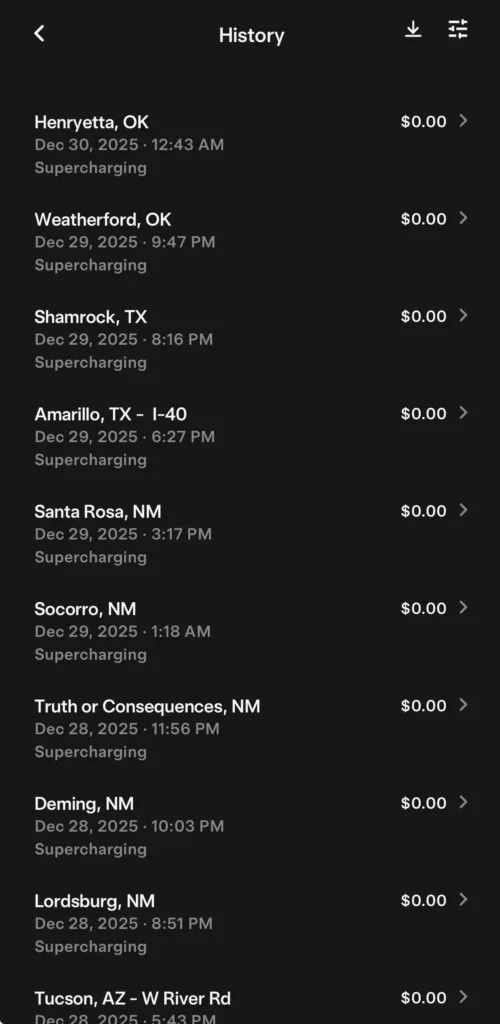
Every movement stayed under FSD control. And that included entering and leaving Supercharger sites. Parking in charging stalls was handled by the system too. Moss still stepped out to plug in the charging cable. But he did not touch the steering wheel, pedals, or brakes during driving or parking.
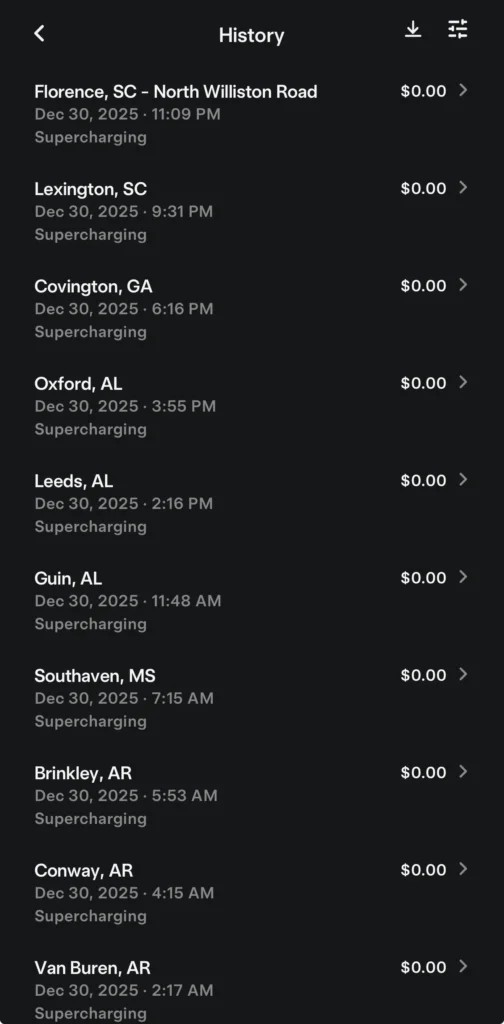
Charging stops
Software and hardware setup
The Model 3 used FSD version 14.2.1.25. This build arrived on the car 11 days before the trip. And it runs on Tesla’s AI4 computer (Hardware 4). The system relies on a camera-only vision stack, and it uses Tesla’s end-to-end neural network approach that began rolling out with version 12.
Community data from an FSD tracking database adds more detail. Moss had logged 10,638.8 miles with FSD active before this trip. And those miles were driven with FSD engaged for 100 percent of the distance.
What changed in FSD v14
FSD v14.2.1.25 builds on earlier releases. And it focuses on smoother handling and better lane choice. Users of this build have reported stronger behavior in roundabouts and during lane changes.
Supercharger lot behavior has improved too. And merges feel more confident based on user feedback.
A goal set in 2016
Tesla first spoke about a self-driving coast-to-coast drive in October 2016. This came with the launch of Autopilot 2.0 hardware. At the time, Elon Musk suggested the drive could happen by the end of 2017.
That timeline slipped. Software development took longer than expected. And progress came in stages through FSD v9, v10, v11, then v12 and now v14. The shift moved steadily toward neural networks, and reliance on hand-coded logic was reduced step by step.
Engineers and regulators still point to hard problems. Work zones, unclear lane markings, and unpredictable drivers remain difficult cases. So, this drive does not claim to solve all of them.
Still, the run offers a real-world example and covers a long route completed without manual input under supervision. However, the Tesla owner community called it a major step for consumer FSD use.
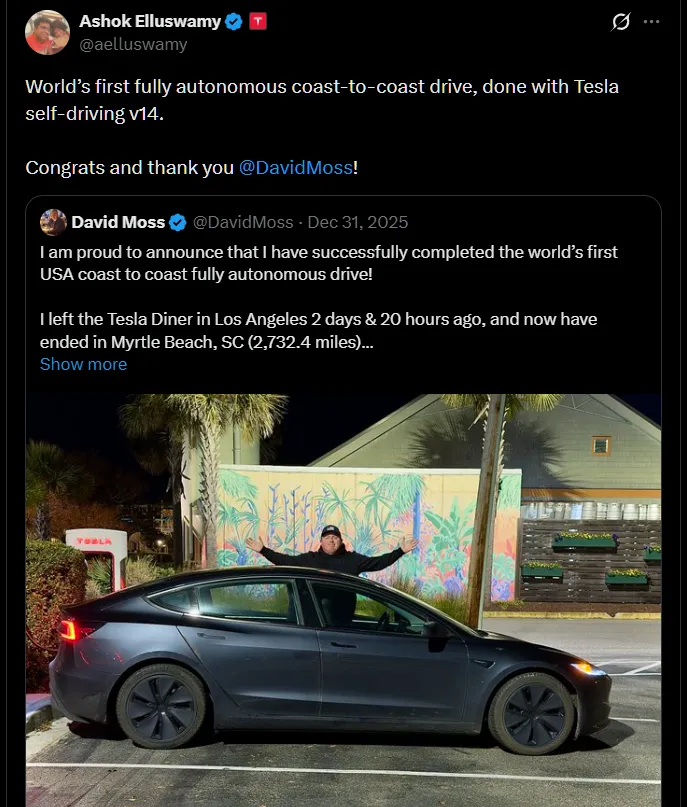
Tesla Vice President of AI Software Ashok Elluswamy added his own message. He wrote: “World’s first fully autonomous coast-to-coast drive, done with Tesla self-driving v14. Congrats and thank you @DavidMoss!”
The Tesla North America X account followed up. It posted: “First Tesla to drive itself from coast to coast w/ FSD Supervised. 0 interventions, all FSD.”

You may also like to read:
- Tesla expands FSD (Supervised) rollout with v14.2.2.2 release »
- NVIDIA Robotics Chief says Tesla FSD v14 passes “Physical Turing Test” »
- Tesla speeds out FSD v14.2.2.1 in holiday weekend rollout »
We’ve launched an official Tesla Owners Online Forum. Join early and claim your "Founding Fuel" badge.