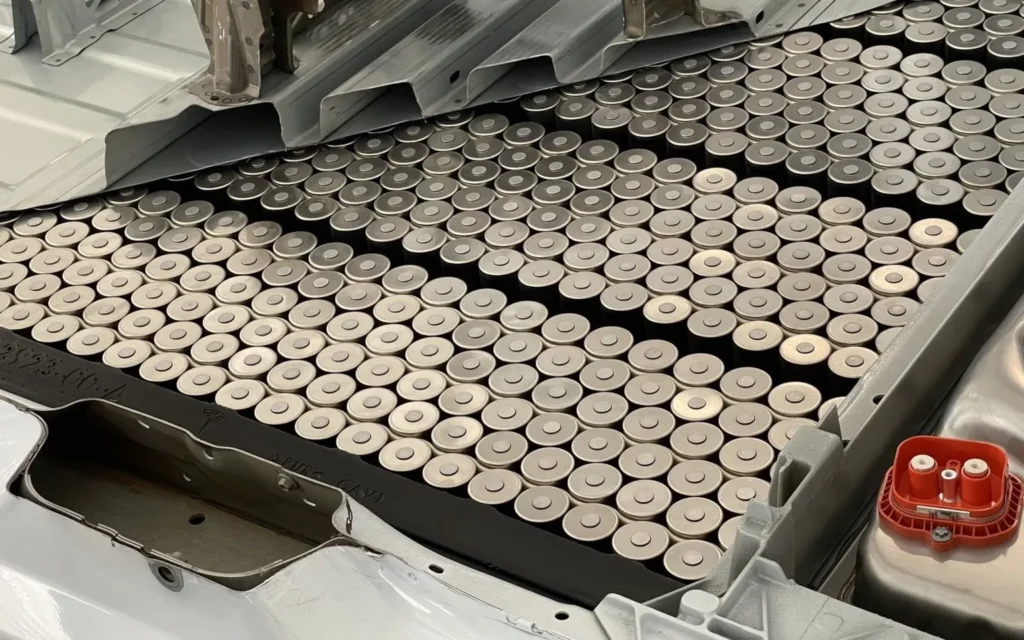
Tesla now makes both the anode and cathode of its 4680 battery cells with a dry‑electrode process. The company disclosed this in its Q4 and full‑year 2025 update letter to investors.
Bonne Eggleston, Tesla’s vice president for 4680 batteries, reinforced the update in a post on X, stating that “both electrodes use our dry process”. That brief line gave direct confirmation from the executive running the program.
Long effort aince Maxwell deal
Tesla’s push toward dry‑electrode technology dates back to its 2019 acquisition of Maxwell Technologies, which brought in expertise in solvent‑free coating. At its 2020 Battery Day event, the company laid out plans to cut costs, shrink factory space and raise energy density by shifting away from traditional wet electrode production.
The path turned out to be harder than early slides suggested. Tesla managed to apply dry coating on anodes earlier in the ramp, yet the cathode process kept causing trouble at industrial speed. Engineers faced adhesion issues, uneven layer thickness and delamination, which slowed progress and led to repeated redesigns of the line. Still, the team kept working on it through several generations of 4680 equipment.
How dry-electrode differs from wet coating
Conventional lithium‑ion cell production mixes active materials with solvents such as N‑Methyl‑2‑pyrrolidone (NMP), then spreads the slurry onto metal foils that run through long, high‑temperature dryers. This setup uses large amounts of energy and floor space, and it involves handling toxic and flammable chemicals that require recovery systems and ventilation.
Dry‑electrode processing uses a different route. The method compresses dry powders and binders into a film and bonds that film to the current collector without liquid solvent. As a result, it removes big drying ovens, shortens process time from hours to minutes, and cuts a large share of the energy demand for each kilowatt‑hour of output.
Dry electrodes can support thicker, denser coatings, so they can improve energy density if engineered correctly. And stronger particle bonding can reduce cracking over many charge cycles, which may help with fast‑charging durability and safety.
Impact on Tesla’s vehicles and supply chain
Tesla’s 4680 cells already sit in production vehicles. The format has been used in the Cybertruck, and company filings indicate Tesla has now placed its in‑house 4680 packs back into certain Model Y versions from its Texas plant.
This step gives the automaker another stream of packs for high‑volume models at a time when it is winding down Model S and Model X production. And by making more cells in the United States, Tesla gains some insulation from tariffs and trade limits that affect imported battery materials and packs.
The company plans to start domestic cathode material production in Texas and launch LFP production lines in Nevada in 2026, which would deepen its vertical integration around cell supply.
Dry‑electrode manufacturing sits at the center of Tesla’s plan to push battery cost per kilowatt‑hour lower. By removing solvents and massive drying infrastructure, the company aims to cut both capital and operating expenses at its cell plants. Studies on dry coating suggest potential cost reductions approaching 50% for some electrode lines compared with wet processes, once fully scaled.
By late 2024 and into 2025, Tesla’s 4680 cells had become its lowest‑cost cells on a per‑kWh basis within its supply chain. With full dry‑cathode production now confirmed.
Tesla has said it wants its cell portfolio to support different use cases, from long‑life robotaxis to high‑energy performance models. With dry‑electrode technology now running on both anode and cathode in 4680 lines, it gains a flexible base to tweak chemistry and electrode design while trying to hold costs down.
You may also like:
- Musk backs “incredible” Tesla Roadster after Brownlee calls it “cooked” »
- Musk: V14 Lite and free HW4 swap put HW3 Teslas back in focus »
- Musk says Tesla’s HW4 cars are ready for unsupervised FSD »
We’ve launched an official Tesla Owners Online Forum. Join early and claim your "Founding Fuel" badge.