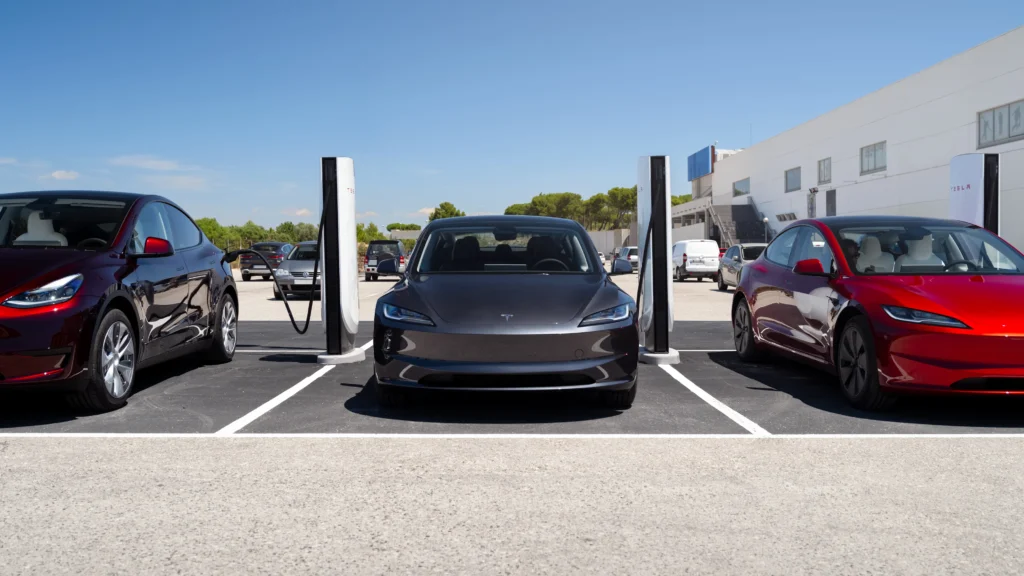
Tesla has quietly added a new on-screen notice at a San Francisco Supercharger that asks drivers to lower their music during charging, and the notice includes a one-tap shortcut on the center display. The change appears tied to the Lombard Street station in Cow Hollow, where neighbors have spent months complaining about noise, traffic, and late-night activity around the charging lot.
Prompt appears at a troubled station
The prompt did not arrive as part of a widely announced product rollout. Instead, it surfaced at the San Francisco location that has drawn the strongest complaints from nearby residents and local officials.
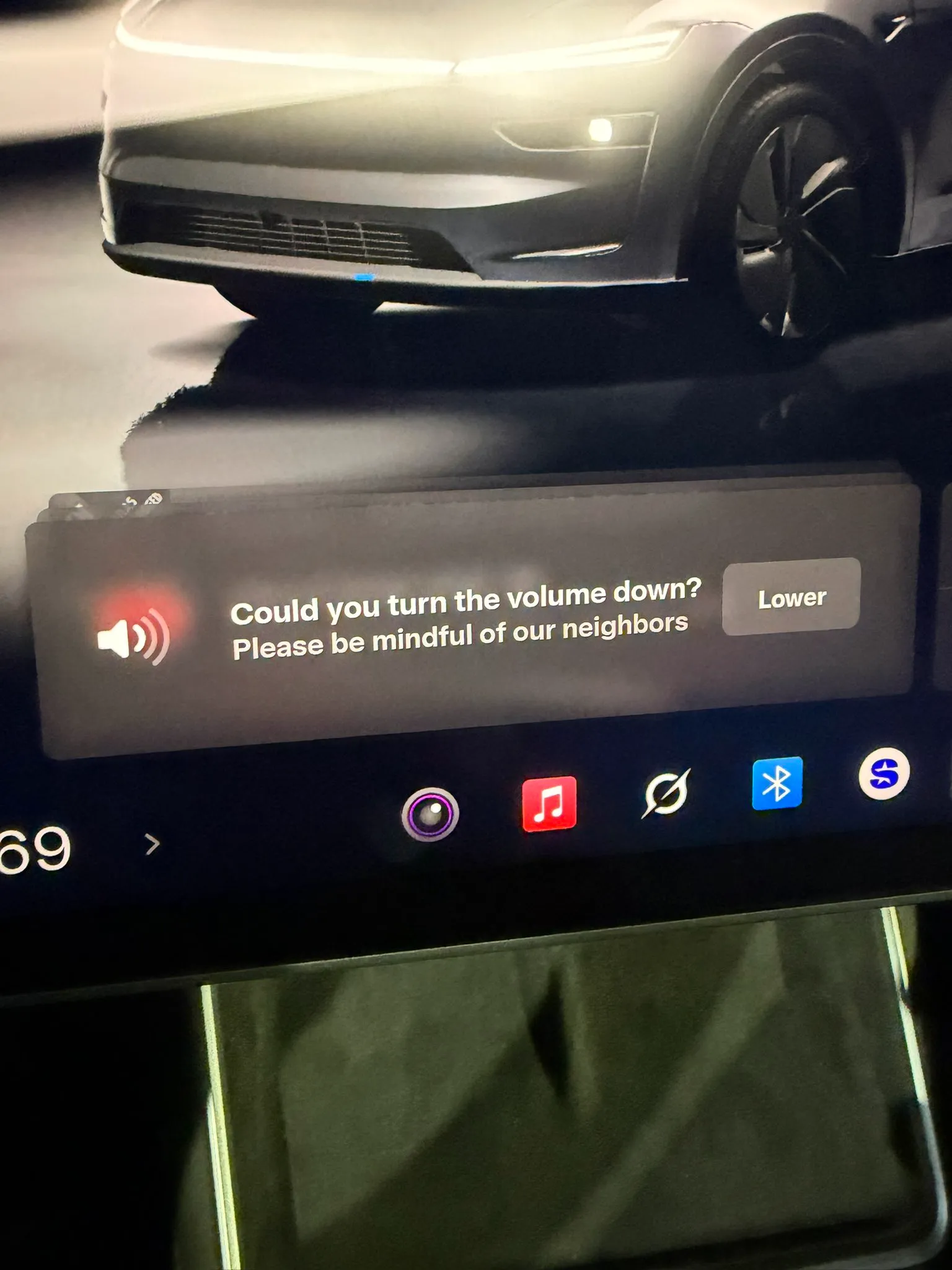
Drivers now see a request to reduce volume when they plug in at that station. And the shortcut on screen cuts out extra steps, giving the driver a fast way to lower the cabin audio without opening menus.
Neighbors had been pushing for relief
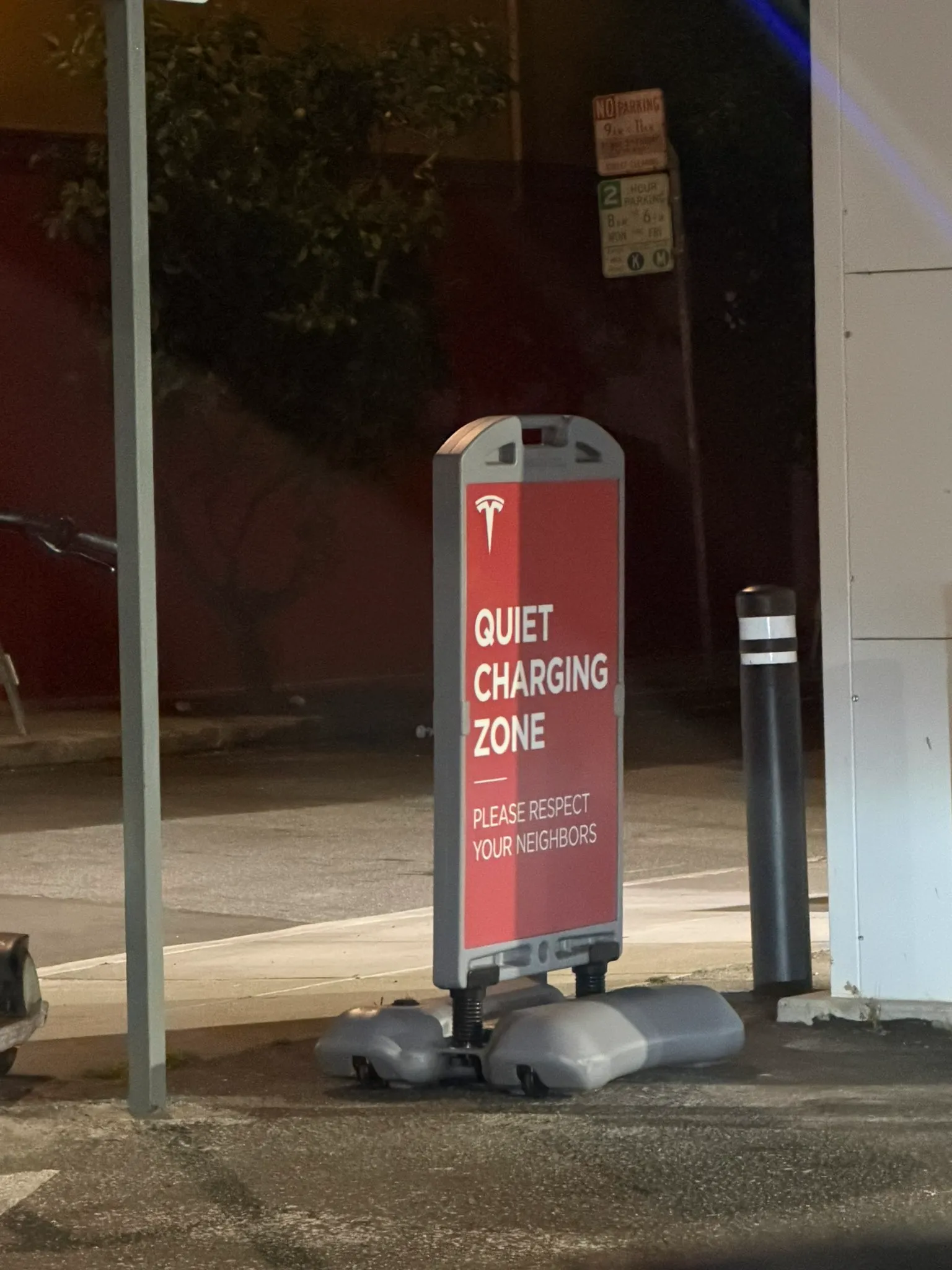
Residents living near the Lombard Street Supercharger told local media that the lot had turned quiet nights into a regular problem, with cars lined up late, music playing at high volume, and groups lingering near the chargers after midnight. Some neighbors said bass from parked vehicles carried into apartments, garages were blocked, and public urination had become part of the overnight disorder around the site.
Meanwhile, San Francisco officials moved ahead with steps meant to calm the area. The city backed a gate to restrict alley access, and reports said an overnight attendant was brought in on certain nights from 9 p.m. to 5 a.m. to help manage traffic and noise.
Tesla already controls the vehicles, the software inside them, and the Supercharger network itself. And that gives the company room to answer a neighborhood complaint with a software change delivered right to the dashboard at a single charging site.
Tesla has often used software to change how its cars behave after delivery, and this case applies that same playbook to a local quality-of-life dispute at one of its own charging hubs. Still, this update stands apart from a normal convenience feature, since it ties a neighborhood complaint to a direct prompt inside the car at the place where the issue surfaced.
The episode gives a clear view of Tesla’s vertical integration. The company did not need a third-party charging partner, a dealer network, or an outside infotainment supplier to act on the complaint. It could change the car, the charging experience, and the site response under one system.
And if the prompt cuts complaints at Lombard Street, Tesla may have a workable model for other urban Superchargers near homes.
You may also like to read:
- Tesla software 2026.14.6 refines rear light layout on older Model 3 and Y »
- Tesla begins releasing FSD v14.3.3 as part of Spring Update for 2026.14.6.6 »
- Tesla patents predictive suspension system to boost range and ride comfort »
We’ve launched an official Tesla Owners Online Forum. Join early and claim your "Founding Fuel" badge.