Published on February 19, 2026, a new Tesla patent application, US20260049824A1, outlines a system that lets the car decide when it can legally use HOV or carpool lanes by counting people inside the vehicle in real time.
The filing is titled “Automated Vehicle Management for Occupant-Count Restricted Road Segments” and focuses on roads where access depends on how many people are in the car, such as HOV 2+ or 3+ lanes.
The core idea is the car figures out how many occupants it has, compares that to local rules for nearby restricted lanes, and then plans a route that uses those lanes only when the vehicle qualifies.
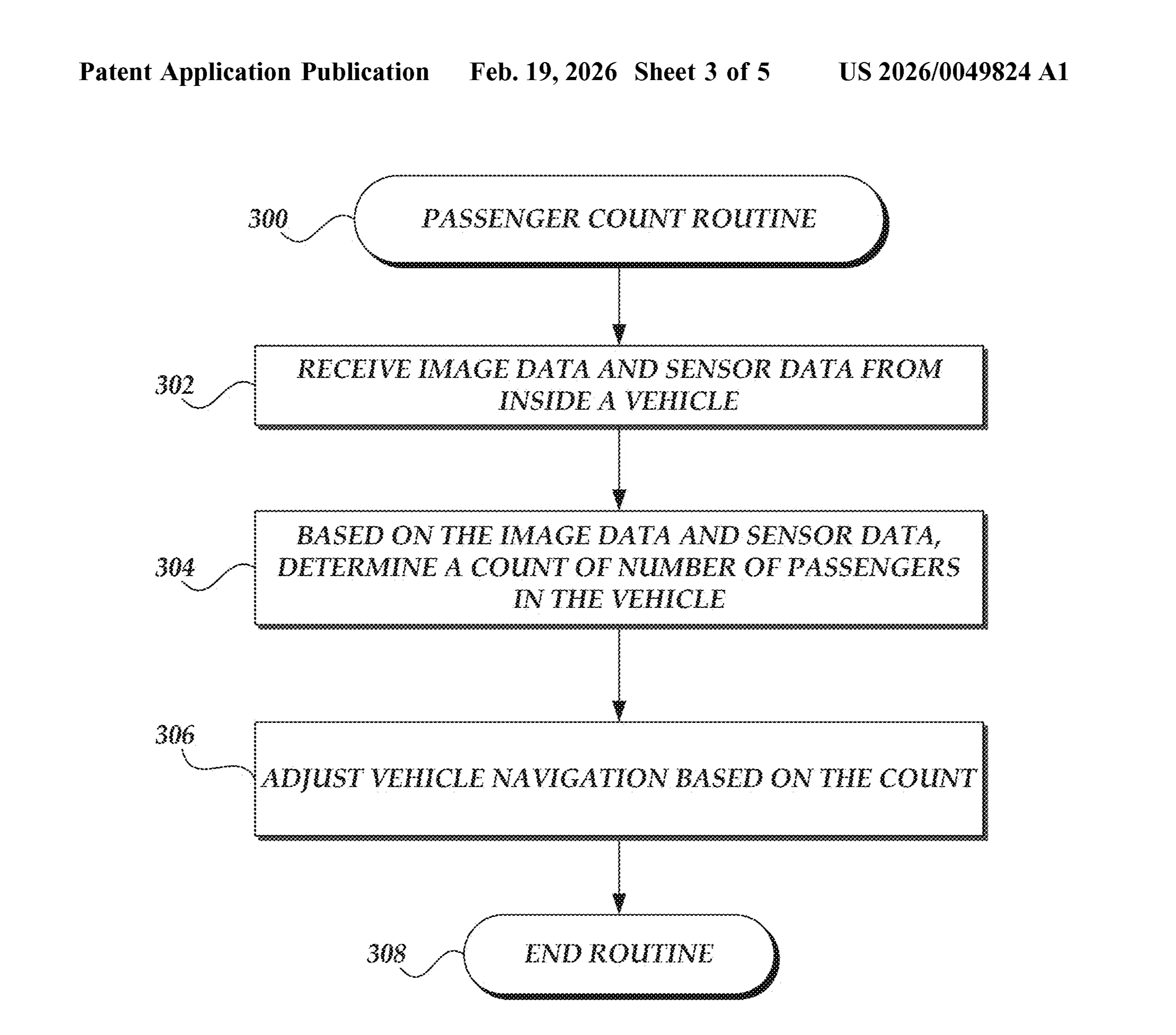
The system uses several in-cabin inputs, such as the cabin-facing camera and seat sensors, to detect and count passengers as the trip progresses.
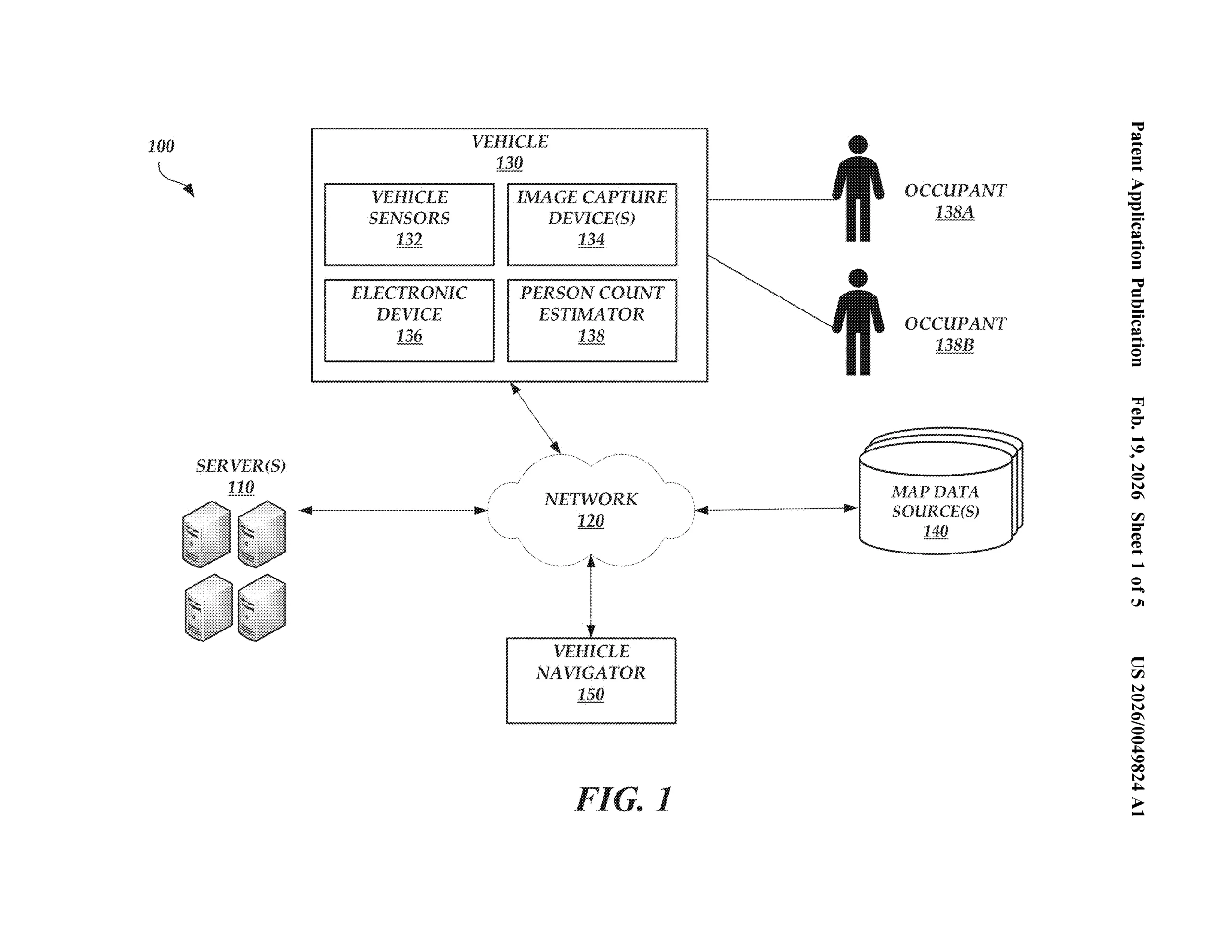
The patent also links this occupant data with map information that marks which road segments have occupancy limits, plus requirement thresholds for each lane type.
How the system is supposed to work
The car first determines the number of occupants using interior sensors and cameras, then checks a database of road segments to find lanes that require a minimum passenger count, like HOV 2+ or HOV 3+.
If the occupants meet or exceed that threshold, the navigation logic can route through the restricted lane; if not, the car stays in regular lanes and avoids those segments.
In some versions, the method can use external cameras or feeds to confirm the presence and location of these restricted lanes around the vehicle, adding another layer of verification before adjusting the route.
This approach aims to reduce human error, since drivers no longer need to guess eligibility or keep track of changing lane rules during a trip.
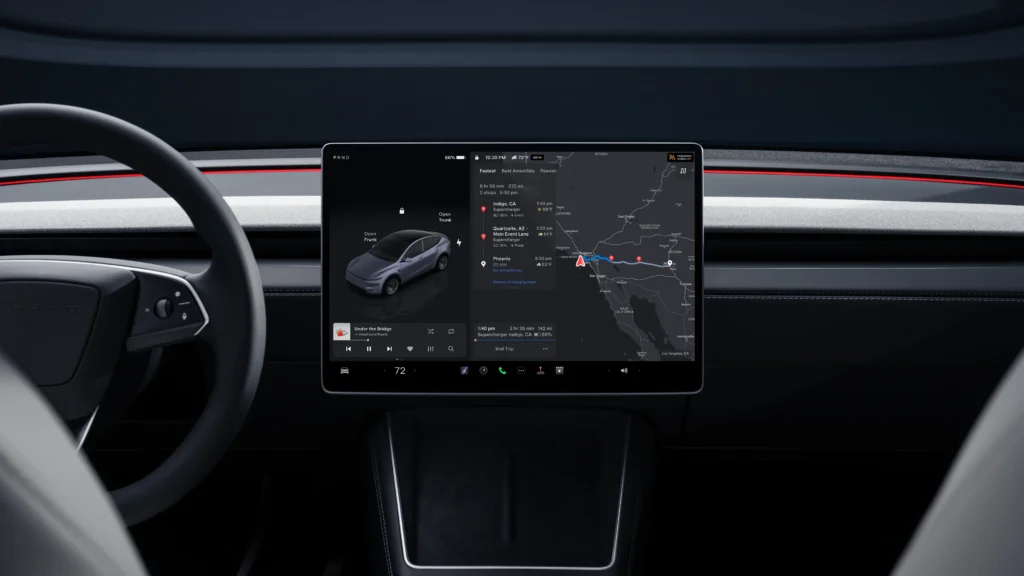
Tesla already took a major step in this direction with its 2025 Holiday Update, version 2025.44.25.1, which added an “Auto” setting for HOV use in supported regions.
With that feature, the car checks passenger presence using interior sensors, time-of-day restrictions, mapped HOV rules, and any local special access conditions before deciding to include carpool segments.
Previously, Tesla owners had a simple “Use HOV Lanes” toggle: on or off.
That older setup could route into carpool lanes even when the driver was alone, or skip them even after passengers got in, depending on whether the driver remembered to change the setting.
Now, automatic HOV routing uses an “Auto” behavior that adjusts decisions during the trip as conditions change, with owners still able to pick standard settings from Controls > Navigation > Use HOV Lanes.
The new patent appears to formalize and extend this concept by focusing on a more explicit occupant-count system tied to specific road segments labeled as “occupant-count restricted.”
Why HOV compliance is crucial for drivers
Carpool lanes are attractive for commuters, but the penalties for misuse are substantial. In California, state transportation guidance notes that HOV violations carry a minimum fine of about $490, and local fees can push that higher for some drivers
Local enforcement agencies in places like Texas and other states have reported regular ticketing campaigns for HOV misuse, with drivers sometimes claiming they were “on the way to pick someone up” or using props in the passenger seat, which officers do not accept.
Authorities in these regions treat compliance seriously as they try to keep violation rates below about 10 percent of observed traffic in those lanes.
Given that background, a system that keeps the car out of restricted lanes when it does not qualify could help owners avoid expensive tickets and confusion over local rules.
Implications for FSD and future Robotaxis
This kind of occupant-based routing could play a role in Tesla’s longer-term Full Self-Driving plans, especially for any future robotaxi service that may carry varying numbers of passengers during the day.
For a driverless or driver-supervised fleet, manual toggles for carpool lanes would not scale well; instead, each vehicle would need to rely on sensor data and map rules to decide which lanes are legal at any moment.
The patent’s focus on automated management of “occupant-count restricted road segments” fits into that picture, since it gives the car a framework to connect who is inside the cabin with what the road actually allows.
This could help autonomous systems plan more efficient routes on busy highways while staying within local regulations on occupancy.
The filing remains a patent application, so there is no guarantee every detail will reach production vehicles in its current form.
Still, the existence of live features like Automatic HOV Lanes Routing in the 2025 Holiday Update, already using interior sensors, time rules and mapped data, suggests Tesla is moving in this direction in real products.
Regions with detailed HOV mapping and clear schedule data are likely to benefit first, since these features depend heavily on accurate labeling and local rule integration.
Over time, and subject to regulation and software rollout plans, Tesla owners could see tighter links between interior occupant detection, FSD behavior and automatic compliance with lane restrictions on major highways.
You can read the full patent below:
You may also like to read:
- Tesla patent offers new life for HW3 FSD computers »
- Tesla patents new modular car assembly method »
- Tesla patents new aerodynamic tech for Roadster’s ultra-fast launch »
We’ve launched an official Tesla Owners Online Forum. Join early and claim your "Founding Fuel" badge.