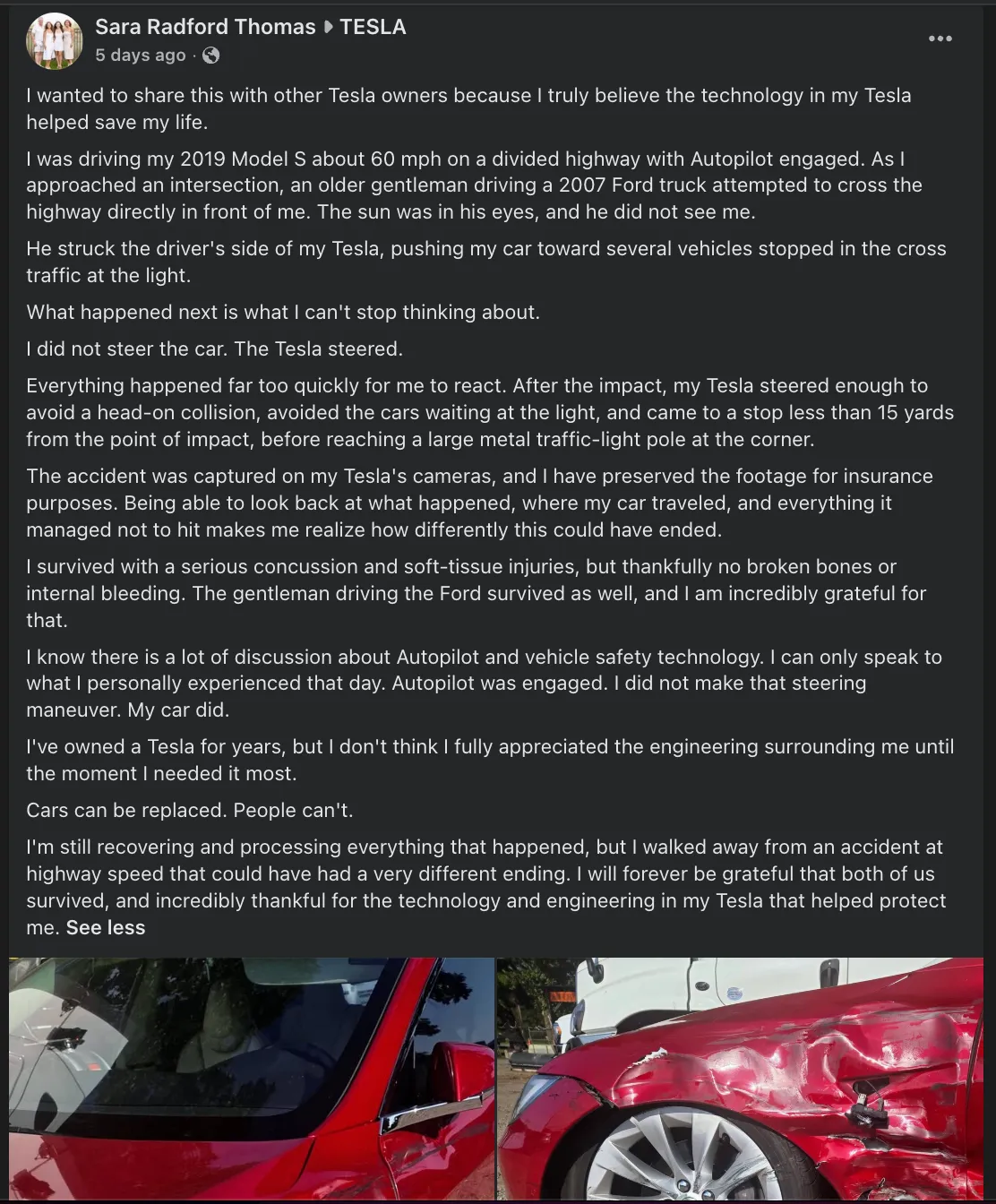
A Tesla owner says her 2019 Model S made a steering maneuver after a highway collision, helping the car miss stopped traffic, another vehicle, plus a metal traffic-light pole. Sara Radford Thomas described the crash in a Facebook post shared with Tesla owners. She said Autopilot was active before the impact, but she did not make the steering input that followed.
Crash happened at about 60 mph
Thomas said she was traveling at about 60 mph on a divided highway in her 2019 Model S when she approached an intersection. A man driving a 2007 Ford truck then attempted to cross the highway in front of her. She wrote that the driver had the sun in his eyes, leaving him unable to see her car before the collision. The Ford struck the driver’s side of the Tesla, pushing the Model S in the direction of several vehicles stopped for cross traffic at a light.
Still, Thomas said the movement after impact did not come from her.
“I did not steer the car. The Tesla steered.”
She said the crash unfolded too fast for her to react. According to the post, the Model S changed course enough to avoid a head-on collision, miss the vehicles waiting at the light, then stop less than 15 yards from the impact location. A large metal traffic-light pole stood farther ahead.
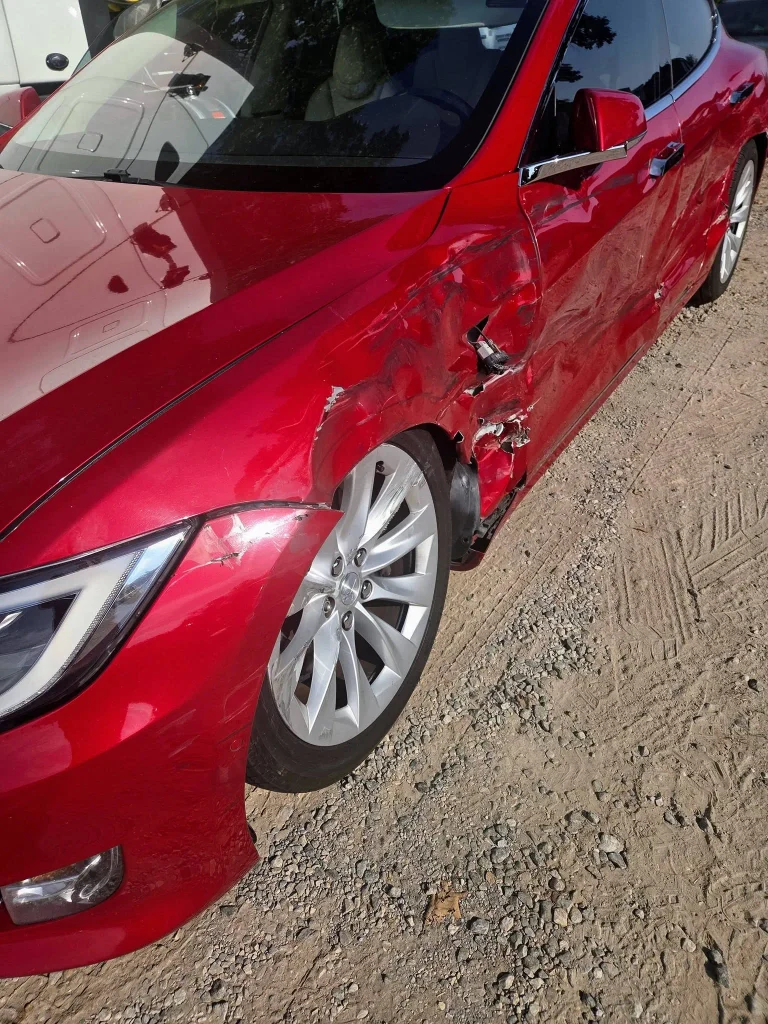
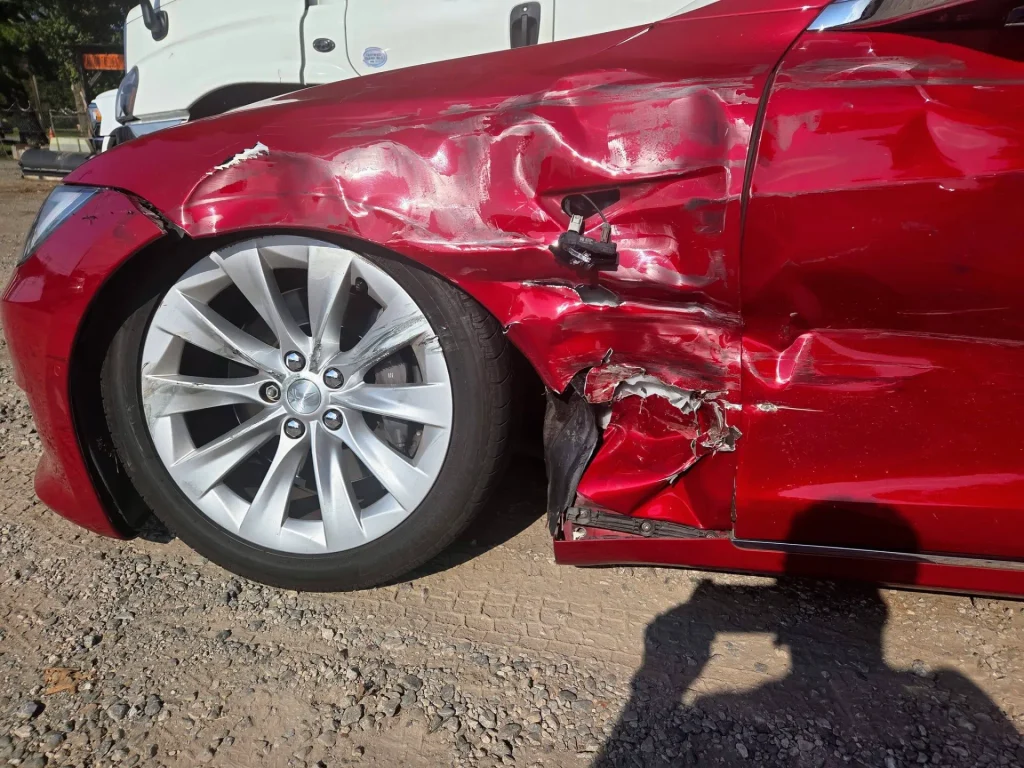
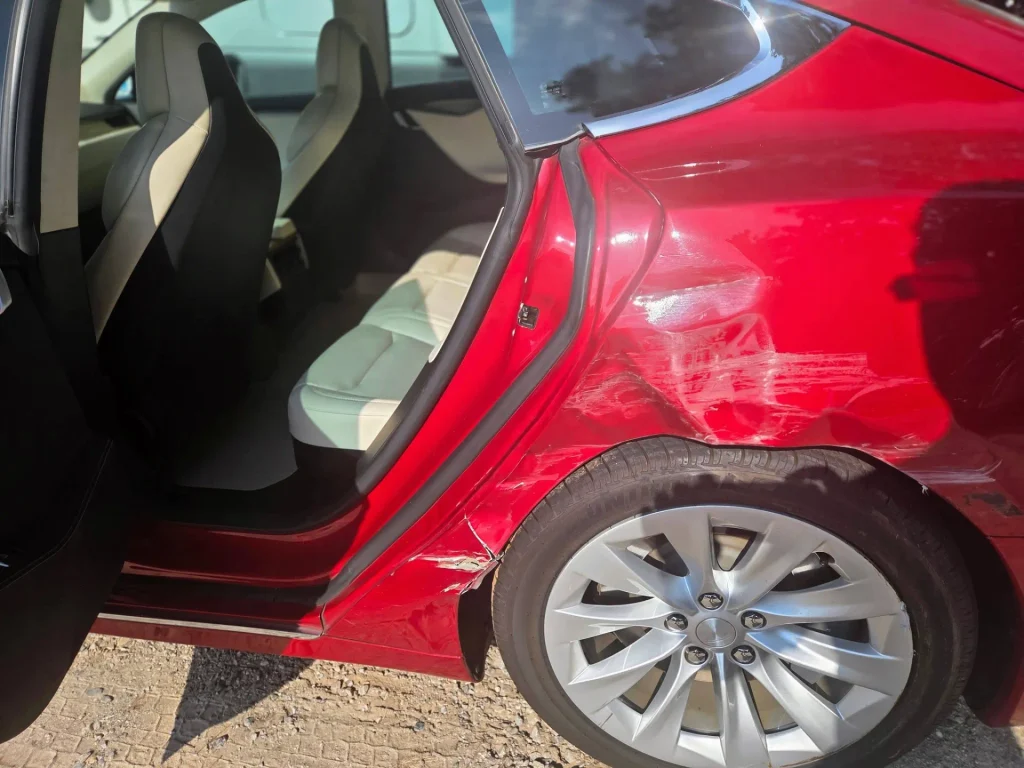
Photos included with the post depict heavy damage along the Tesla’s driver side. The front door area, rear door section, lower body panels, plus the area near the rear wheel carry visible collision damage.
Camera footage kept for insurance
Thomas said cameras on the Tesla recorded the crash, with the footage later preserved for insurance use. She wrote that reviewing the recording gave her a clearer view of the route the car took after it was hit, including the vehicles or roadside objects it did not strike.
Tesla describes Autopilot as a driver-assistance system rather than a fully autonomous driving system. Drivers are expected to stay attentive, retain control of the vehicle, then be ready to intervene when needed. Stability control, braking systems, steering assistance, plus the physical force of a collision can each affect vehicle movement after an impact.
Both drivers survived the collision
Thomas said she suffered a serious concussion plus soft-tissue injuries. She reported no broken bones or internal bleeding. The Ford driver survived too, according to her post. Thomas expressed gratitude that both people survived the crash.
Later in her account, she wrote that the collision changed how she viewed the engineering built into her Tesla. She said she had owned a Tesla for years but had not fully appreciated those systems until she needed them during the crash.
“Cars can be replaced. People can’t.”
Thomas said she remains in recovery, with the event still fresh in her mind. She credits the Tesla’s technology with helping protect her.
The central question is what caused the post-impact steering maneuver. Thomas is certain that she did not make it, plus she said Autopilot was engaged at the time.
Still, the Facebook post does not include the complete camera recording. Those records would be needed to determine if Autopilot made the steering input or if the movement came from another safety system, collision dynamics, or another source.
The outcome, however, is clear from Thomas’ account. Both drivers survived, the Tesla sustained major side damage, plus Thomas reported serious but non-life-threatening injuries.
Her post places the vehicle’s steering response at the center of why she believes the crash did not become more severe. She said the car avoided traffic near the intersection before stopping a short distance from the initial impact.
The original account was posted by Sara Radford Thomas in a Tesla owners Facebook group.
We’ve launched an official Tesla Owners Online Forum. Join early and claim your "Founding Fuel" badge.